
The Fall of a Pioneer: Riot Games Blacklists G2 Esports Founder Carlos Rodriguez in 2026
The dramatic fall of Carlos 'Ocelote' Rodriguez, once a European League of Legends icon, reshaped esports ethics and Riot Games' standards.
Looking back at the events of late 2022, I still find myself reflecting on the dramatic fall of Carlos "Ocelote" Rodriguez, a figure who was once synonymous with European League of Legends. As a professional player turned organization owner, his journey from the Summoner's Rift to the boardroom was legendary. However, a single social media post created a seismic shift that ultimately led Riot Games to permanently sever ties with him, a decision whose reverberations I can still feel in the esports ecosystem today. This wasn't just about one man's controversial associations; it was a defining moment where a game publisher drew a hard line on the conduct expected from the stewards of its competitive scene.
The confirmation of this unprecedented action came not through an official press release, but through the vibrant, rumor-fueled channels of the community itself. I remember watching the stream on EsportsManiacos, a popular Spanish esports show, where host Yuste "Inyustificado" Armero delivered the news. An insider had revealed that Riot Games had formally informed G2 Esports of Rodriguez's blacklisting. This wasn't a quiet parting of ways; it was an institutional decree. The implications were immediate and severe. Rodriguez was compelled to sell his ownership stake in the very organization he built from the ground up, a move that was reportedly a non-negotiable condition from Riot for G2 to maintain its coveted franchise spot in the League of Legends EMEA Championship (LEC).
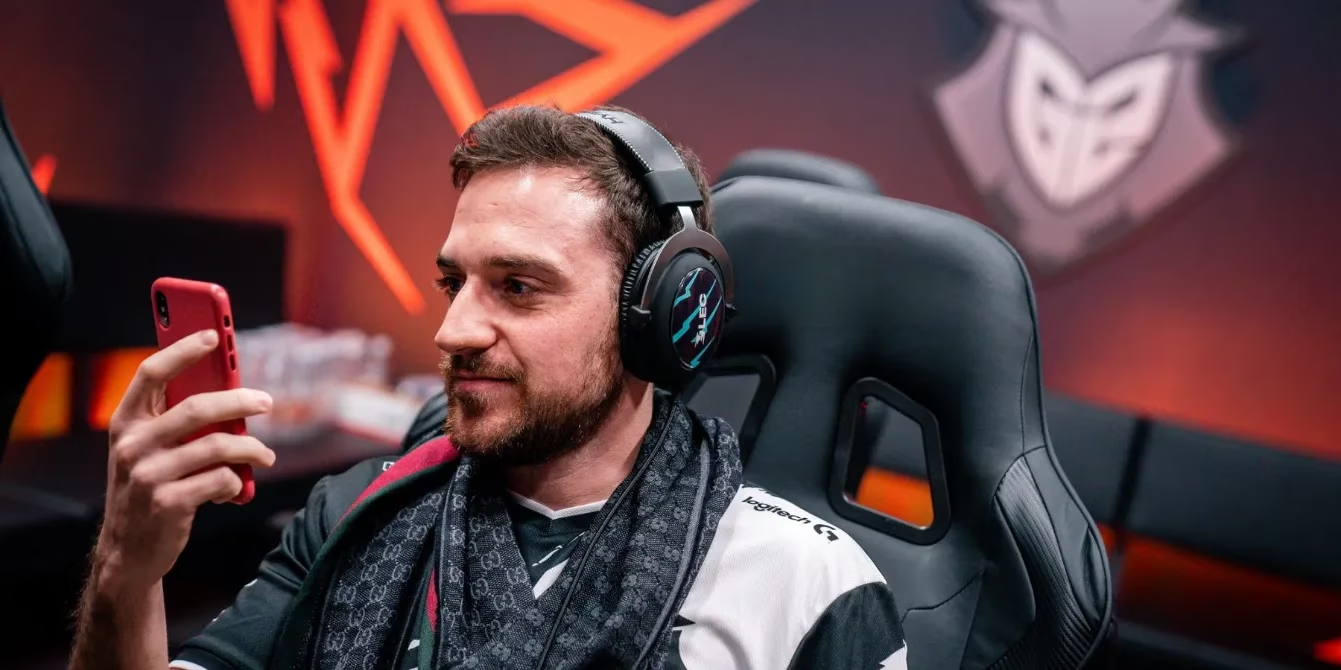
The catalyst for this corporate excommunication was a video that seemed, at first glance, like just another clip of a wealthy entrepreneur enjoying his success. Rodriguez posted footage of himself celebrating with the immensely controversial figure Andrew Tate. By 2026, Tate's reputation for misogynistic rhetoric and his legal troubles are well-documented, but even back in 2022, he was a polarizing personality banned from multiple major social platforms. Rodriguez's initial response was defiant. He pushed back against the criticism, asserting that no one could dictate his personal friendships. This stance, however, spectacularly underestimated the backlash from fans, partners, and most importantly, Riot Games itself. The swift and severe condemnation forced a public apology, but by then, the damage to his professional standing was irreparable.
The fallout extended far beyond Rodriguez's personal brand. G2 Esports, the empire he forged, began to suffer tangible consequences almost immediately. I recall the industry chatter when Riot Games rejected G2's application for the Valorant partnership program. This was a huge blow. Valorant was Riot's explosive new tactical shooter, and the partnered team program offered significant financial support and stability. The rejection was directly linked to the controversy surrounding its then-CEO. It became clear that Riot was willing to let its disciplinary actions spill over from one game ecosystem to another, treating its relationship with an organization as holistic.
The Legacy and The Lesson
Reflecting on Rodriguez's career makes this conclusion particularly poignant. His narrative was the classic esports success story:
-
2010: Professional debut as a mid-laner.
-
2013: Founding of Gamers2, which would rebrand to G2 Esports.
-
2015: Retirement from professional play to focus on building G2.
-
2016-2022: Steering G2 to become a European powerhouse, with monumental achievements including:
-
Multiple LEC Championships 🏆
-
2019 MSI Championship 🏆
-
2019 World Championship Finals Appearance
-
2020 World Championship Top 4 Finish
-
Expansion into titles like CS:GO and Rocket League.
-
He didn't just build a team; he built a brand that represented European competitive spirit. Yet, this illustrious legacy was overshadowed in an instant. The episode established a powerful precedent that I see upheld in 2026: the creators and custodians of a game hold ultimate authority over who participates in their official ecosystem. Ownership is a privilege, not a right, and it is contingent on upholding the standards and values of that ecosystem.
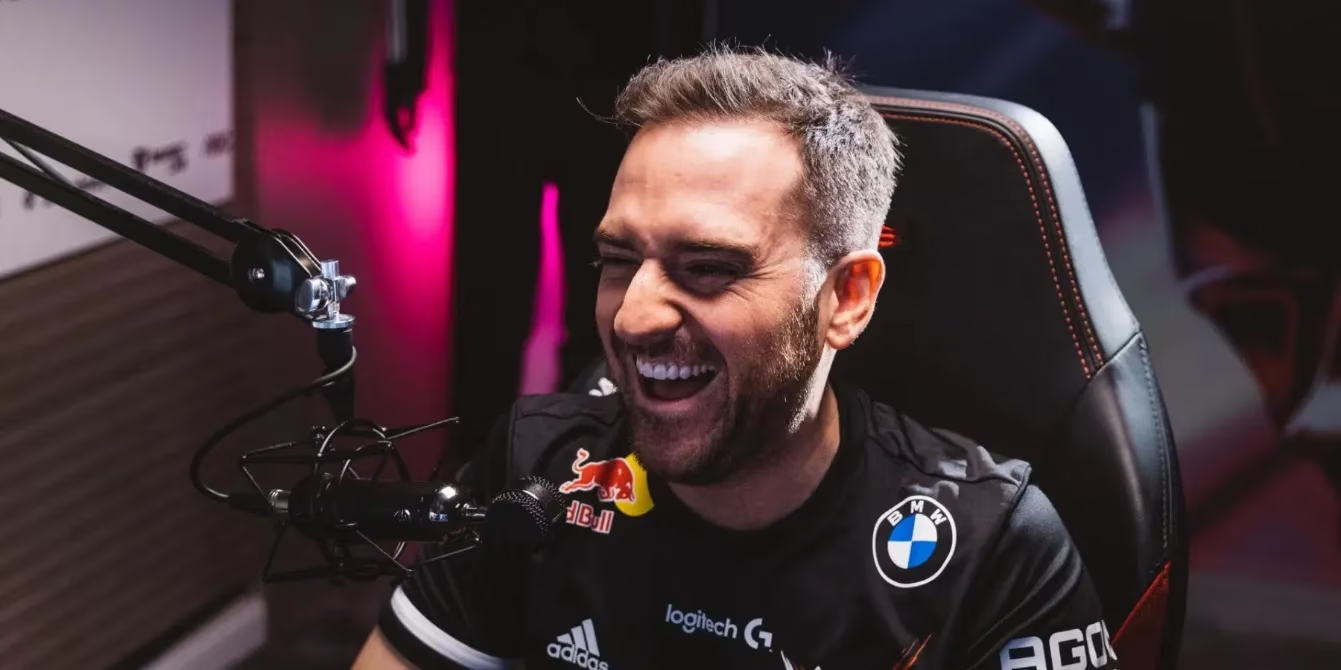
The statement from Maximilian Peter Schmidt, then Head of Esports for League of Legends in EMEA, was crucial in formalizing the situation. While the exact wording is now part of esports history, its essence clarified Riot's position. It signaled that the personal conduct of high-profile executives, especially when it brings significant negative attention to the community, is a matter of professional concern. In today's climate, where brand safety and community sentiment are meticulously analyzed, Rodriguez's actions were deemed untenable.
In the years since, the esports landscape has continued to mature. The Rodriguez case is often cited in discussions about governance, accountability, and the intersection of personal and professional life in the digital age. For me, it marked the end of an era where founders were seen as untouchable titans. It reinforced that in a community-driven industry, alignment with core values isn't optional—it's foundational. G2 Esports moved on, restructuring and eventually finding its way into the Valorant partnership program in a later cycle, but the story of its founder's exit remains a stark, cautionary tale about the weight of influence and the consequences of misusing it.
Comments