
The Art of Supporting in League of Legends: A Comprehensive Guide
League of Legends support guide covers meta shifts and strategies, emphasizing vision, crowd control, and selfless positioning.
In the ever-evolving landscape of League of Legends, the support position often remains the quiet cornerstone of a team’s victory. While junglers skirmish for map control and AD carries chase pentakill glory, a skilled support operates like a lighthouse in a storm—invisible until its absence invites disaster. The role demands more than babysitting a marksman; it requires macro awareness, precise timing, and the emotional intelligence to know when to shield a star player or abandon a sinking lane. As of 2026, the support meta has shifted considerably with item reworks and objective updates, but the core principles of vision, crowd control, and selfless positioning remain timeless. This guide distills those fundamentals into actionable strategies, helping support mains elevate their gameplay from passive enchanter to a dynamic force multiplier.
Pre‑Game Preparation: Runes, Spells, and Champion Selection
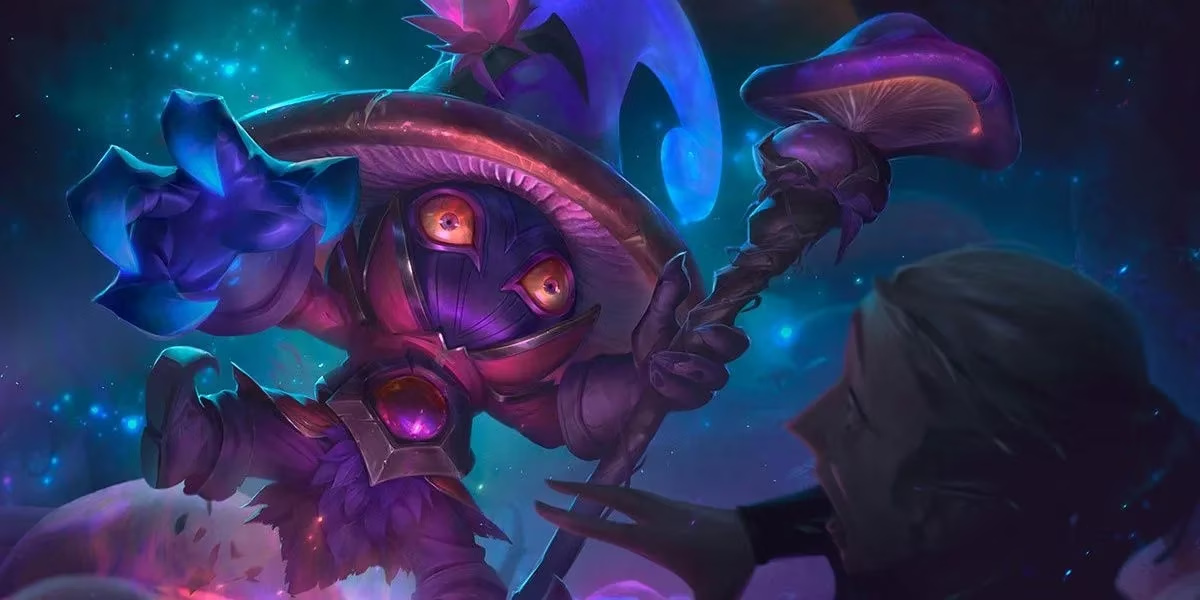
Before the first minion spawns, a support’s decisions already shape the outcome. Rune choices are no longer just about keystone bonuses; they function as an initial blueprint for the laning phase and beyond. Resolve remains the premier tree for engage tanks like Leona or Nautilus. Aftershock gives a burst of resistances after landing a stun, while Overgrowth steadily converts nearby minion deaths into maximum health—turning a Leona into an armored glacier by the twenty‑minute mark. Enchanters such as Janna or Soraka lean toward Sorcery, where Summon Aery adds a tiny feather of damage on poke and an equally subtle shield for the carry. Inspiration’s Glacial Augment, now re‑tuned in season 2026 to slow enemies by 35% when immobilizing them, feels like throwing invisible molasses onto the battlefield, trapping opponents in a sticky amber prison. The keystone selection must reflect the intended playstyle: aggressive catchers, protective buffers, or roaming playmakers.
 -6.jpg)
Summoner spells follow a similar logic. Flash is non‑negotiable—it is the emergency exit from a collapsing skirmish. The second slot demands foresight. Exhaust cuts an enemy assassin’s damage by 40%, essentially wrapping them in a heavy, wet blanket for three seconds. Ignite, with its grievous wounds and true damage over time, has become a pocket‑sized executioner’s axe, especially after the 2026 buff that scales its damage up to 480 true damage at level 18. Against teams stacked with crowd control, Cleanse is a silver key that unlocks the carry from a stun‑lock nightmare, restoring mobility when the enemy Morgana lands a dark binding. The summoner spell choice is less about personal safety and more about enabling the team’s win condition.
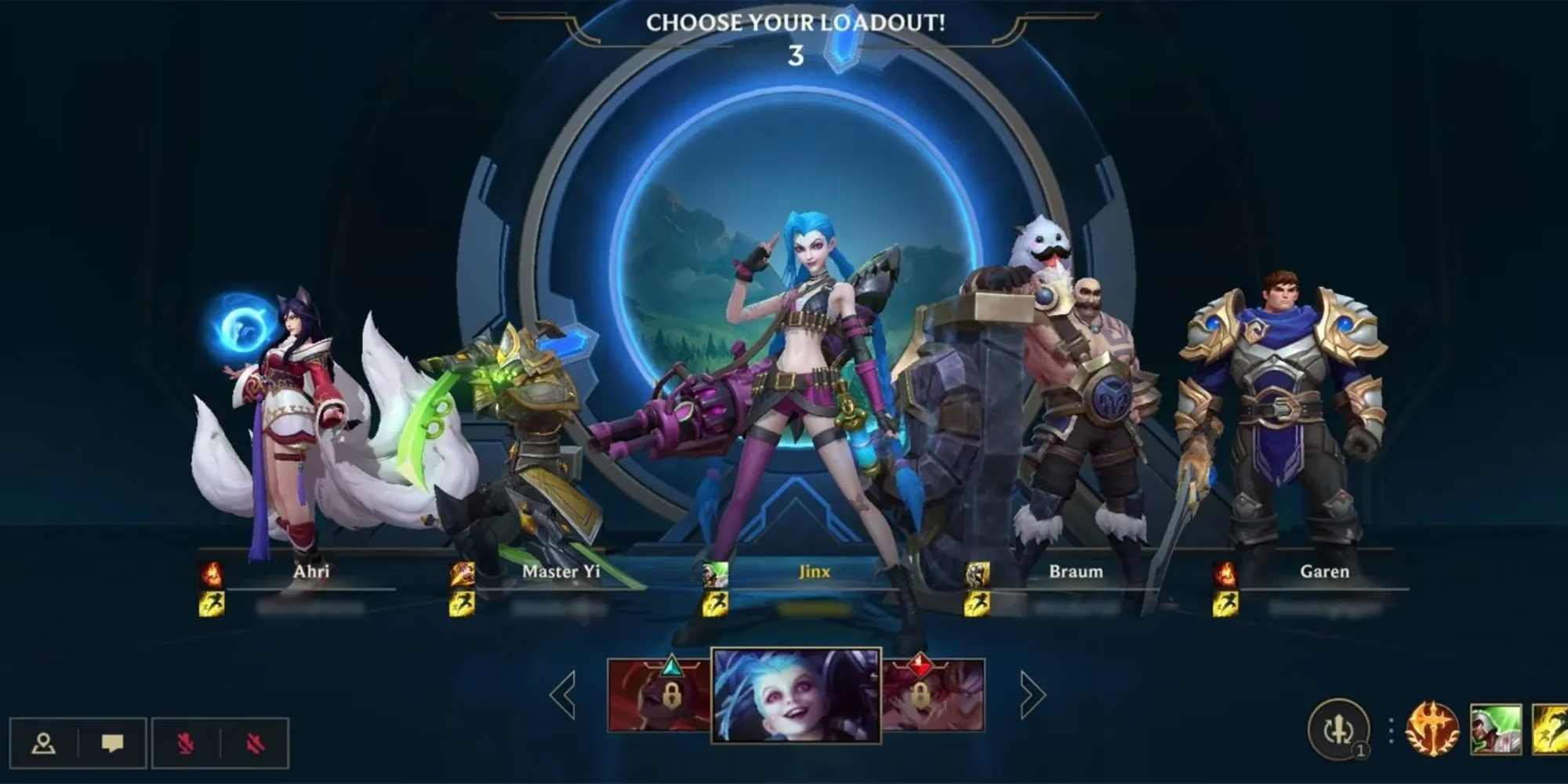
The champion draft itself is a game of chess. Being the last pick in champ select is not a misfortune; it is an opportunity to counter the enemy’s strategy. If the opposing bot lane locks in Lux and Caitlyn—a poke machine gun—picking a sustain enchanter like Nami or Soraka acts as a soothing salve, negating their harass. Against an all‑in tank like Alistar, a disengage champion such as Janna or Rell serves as a human spring, bouncing the bull away from the carry. Morgana’s Black Shield, with its spell‑immune properties, remains a perfect foil for Thresh or Blitzcrank, turning their hooks into harmless projectiles. Drafting a support is not merely about picking a comfort champion; it is about weaving a counter‑thread into the fabric of the enemy comp.
Early Game: Items, Warding, and Laning Dynamics
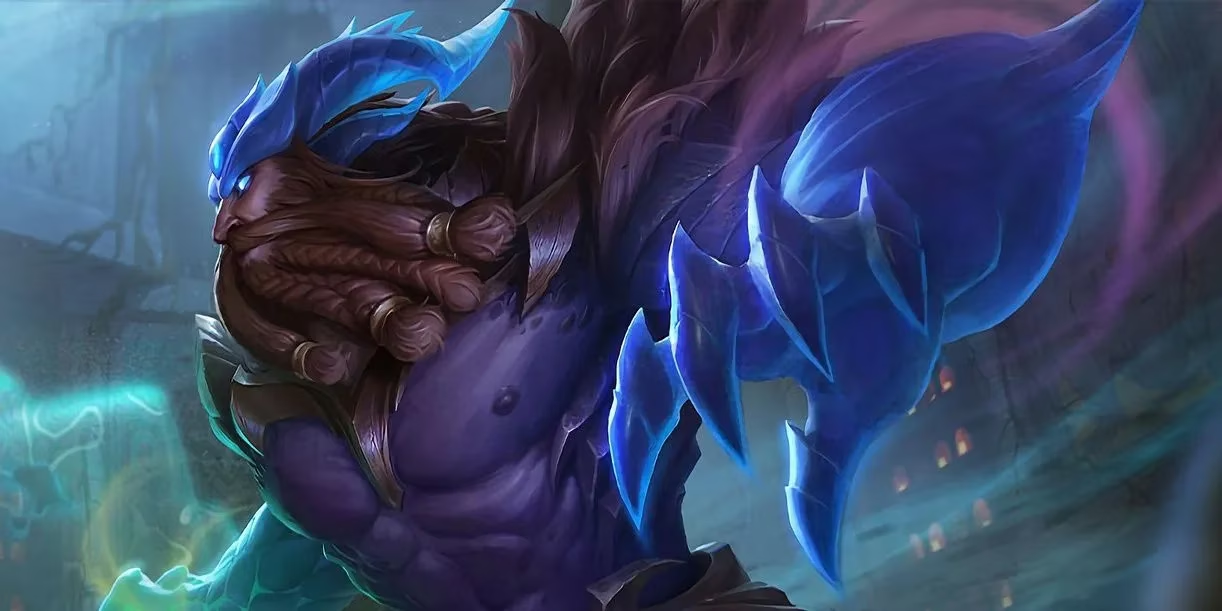
The first back to the shop is a ritual. The support item chosen—Spellthief’s Edge for AP harassers, Spectral Sickle for AD pokers, Relic Shield or Steel Shoulderguards for tanky melee—defines the early laning personality. Relic Shield executes minions and shares gold, fostering a symbiotic economy that accelerates the carry’s item spikes. Upgrading to an item like Imperial Mandate in the mid‑game marks a target like a burning brand, so the next ally hit triggers a detonation of bonus damage. The Locket of the Iron Solari, radiating a dome of magic resist and armor, transforms a fragile cluster of teammates into a temporary fortress. Redemption, even after death, extends a ghostly hand of healing, a testament to the support’s philosophy of aiding the squad beyond the grave.
 .jpg)
.jpg)
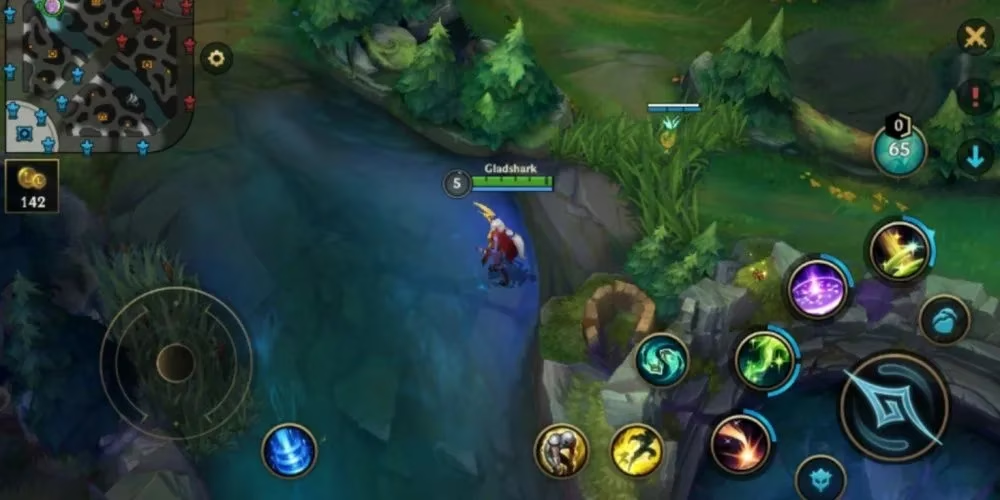
Vision control is the support’s domain, yet it is often undervalued until a team walks blind into a five‑man ambush. Placing wards is not just about lighting up bushes; it is about painting a constant information picture. A ward placed deep in the river near the enemy jungle entrance functions like a tripwire, alerting the team to an impending gank forty‑five seconds before it materializes. Against invisible champions like Evelynn or a roaming Twitch, a standard stealth ward is as useless as a candle in a hurricane; Pink Wards (Control Wards) become the only eyes that can pierce their shroud. The wise support carries two at all times, especially when the enemy Shaco is dancing unseen.
Counter‑warding with Oracle Lens flips the script. By the ten‑minute mark, the support item evolves to hold multiple charges, making the trinket swap mandatory. Sweeping the dragon pit before a soul‑point or clearing high‑traffic bushes near Baron Nashor denies the enemy free vision. It is a silent duel of information denial—a game where clearing one ward can prevent a stolen objective or a disastrous face‑check.
During lane, the support must balance poke and farm assistance without overstepping. Ranged supports like Bard or Senna can prod the enemy ADC like a persistent mosquito, forcing them to consume health potions or risk a fatal all‑in. When using a melee support item, the circular execution charge should be saved for cannon minions or the melee frontline, maximizing gold income. If the ADC roams or recalls, freezing the wave just outside turret range keeps the minions as a protective barrier, starving the enemy of experience. This laning choreography, though subtle, compounds into a level advantage that can snowball the game.

Mid to Late Game: Timers, Champion Identity, and Ally Selection
Objective timers have become the metronome of League, and the support is its custodian. The scoreboard overlay reveals countdowns for elemental drakes, Rift Herald (still roaming at ten minutes), and Baron Nashor. Pinging “1 minute until Dragon” orchestrates the team like a conductor cueing the string section; everyone knows to push waves, reset, and converge. A support can also provide crucial mobility boosts—Shurelya’s Battlesong or a simple movement speed buff from Lulu—to ensure stragglers arrive in time for the fight. Missing a timer is not a tactical error; it is a forfeiture of pressure.
Understanding a champion’s intrinsic strengths prevents reckless engagements. Not every support is a front‑line battering ram. Janna and Soraka function as the guardians of the backline, their healing and disengage acting as a safety net for high‑DPS allies. Morgana and Lux, with their long‑range roots, operate as mid‑line jailers, locking down anyone who breaches the frontline. Tank supports like Alistar or Rell become the initiation spearhead, but only when the carries are in position to follow. Misplaying a champion’s role—diving in with Soraka or staying too far back with Alistar—is like using a scalpel to hammer a nail; the tool will break, and the objective will remain unmet.
As the game progresses into its final act, the support must reassess allegiances. An ADC stuck at 0/4/0, constantly caught, becomes a liability rather than a win condition. The support’s greatest skill is emotional detachment from the laning partner and strategic attachment to the strongest member. If the mid‑lane Viktor has scaled into a late‑game hypercarry, hovering around him, providing vision, and shielding him during skirmishes can single‑handedly secure the victory. Similarly, if the top‑lane Jax is split‑pushing with fury, deep warding his path and timing engages to draw attention elsewhere transforms him into an unstoppable siege engine. A support is not a sidekick bound by lane assignment; they are the team’s adaptive resource, the hidden gear that moves the clockwork toward nexus destruction.
In the grand tapestry of League, the support stitches the fragmented actions of four individuals into a cohesive unit. They are the oxygen in the team’s bloodstream—unseen, ever‑present, and absolutely vital for survival. Mastering the role is not about flashy outplays but about the quiet accumulation of small advantages: a well‑timed ward, a perfectly executed exhaust, a counter‑pick that nullified an enemy threat. In 2026, as the game grows more complex, these fundamentals remain the bedrock upon which victories are built.
This perspective is supported by trend reporting from PC Gamer, and it reinforces a key support takeaway for 2026: you win more games by enabling decisive objective setups than by chasing lane dominance. Translating that into practice means treating vision as an objective timer tool—reset early, sweep first, and place wards that reveal jungle entry paths 45–60 seconds before dragon or Baron—then aligning your pick’s identity (engage, peel, or poke) to your team’s strongest carry rather than remaining tethered to a losing lane partner.
Comments