
Sylas' Echo: A Poetic Farewell to League of Legends' Siren Call
The Mageseeker's revolutionary magic sparks a Runeterran yearning, but League of Legends' coliseum of conflict and cauldron of toxicity remain formidable barriers to entry.
The final spell fades, the chains lie still. A revolution, pixelated and profound, has reached its conclusion in the digital realm of The Mageseeker. In the quiet aftermath, a familiar, restless energy stirs within the soul of a player. Fingers, still humming with the phantom memory of Sylas’s stolen magics, hover over the icon of an older, more turbulent world—League of Legends. The translation is flawless; the Chain Lash's weight, the Abduct's predatory grace, the very essence of rebellion given form. It feels like coming home to a specter, a ghost of a playstyle perfected in a single-player crucible now whispering promises of glory on a different, far more unforgiving stage. The temptation is a palpable force, a siren song woven from ice spells and shattered shackles.
Yet, the heart knows this path. It has walked this precipice before, lured by the haunting melodies of Arcane and the strategic depths of Ruined King. Each time, the promise of Runeterra—its labyrinthine lore, its fractured kingdoms, its heroes and tyrants—pulls with a gravitational force. And each time, the reality of the League itself acts as a sobering anchor. It is not a world to be explored, but a coliseum of conflict, a place where champions are not characters but combatants, their rich histories reduced to pre-fight banter. The story, the true epic, is told in the margins, in comics and series and Forge games, never in the match itself. To seek narrative nourishment there is to seek a feast in a desert.
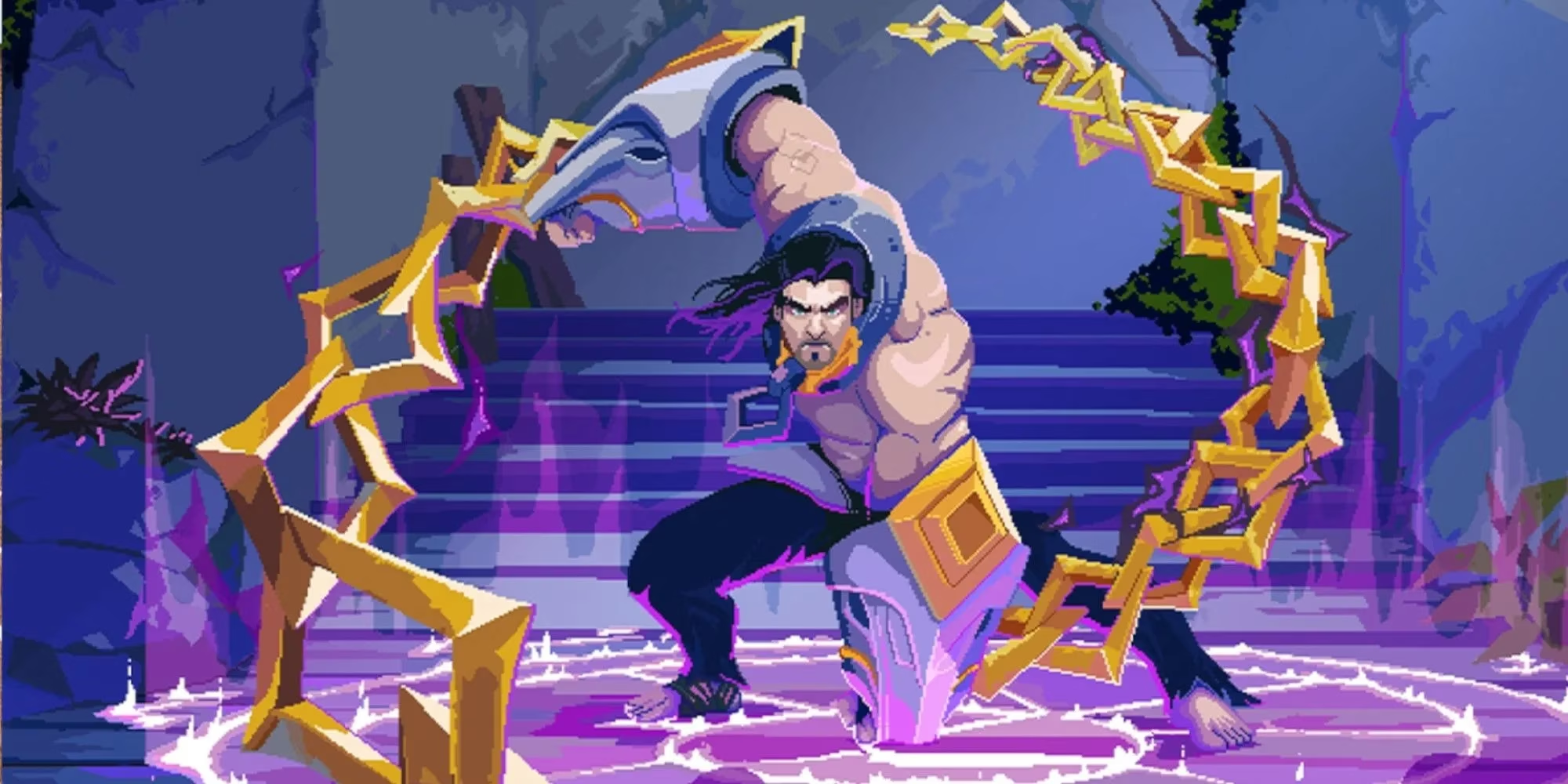
The barrier to entry stands not just as a wall, but as a mountain range. With a pantheon of 163 champions, each a universe of abilities and synergies, and an armory of arcane items whose secrets are guarded by years of meta-shifts, the game is a fortress. Its reputation, a cauldron of toxicity that has boiled over for years, is not mere myth. It is a lived experience for many who ventured in only to be verbally scourged for their ignorance. The skills of The Mageseeker—timing, positioning, ability theft—may translate, but they are but a single dialect in a deafening, complex language. To step into Summoner's Rift now is to willingly enter a storm where the learning curve is a cliff face, and camaraderie is often the first casualty.
So where does this longing go? This Runeterran yearning ignited by a masterpiece like The Mageseeker? The future flickers with potential lanterns in the dark. Song of Nunu promises a journey through the Freljord's frozen poetry, while Convergence will twist time in Zaun's grimy depths. Yet, these are brief respites, beautiful short stories in a longed-for epic. Project L's fighting game sparks will fly, but they are likely to illuminate competitive fire, not narrative warmth.
The true lodestar, the dream that holds the promise of satiation, is that distant, nebulous MMO. To wander the vast, verdant forests of Ionia, to tread the sun-baked sands of Shurima, to engage with the world not as a weapon in a perpetual war, but as a traveler, a participant in its living history—that is the fantasy. That is the game that could finally quiet the siren's call of the League, offering not a battleground but a homeland. A place to explore the lore not through wikis, but through footsteps.
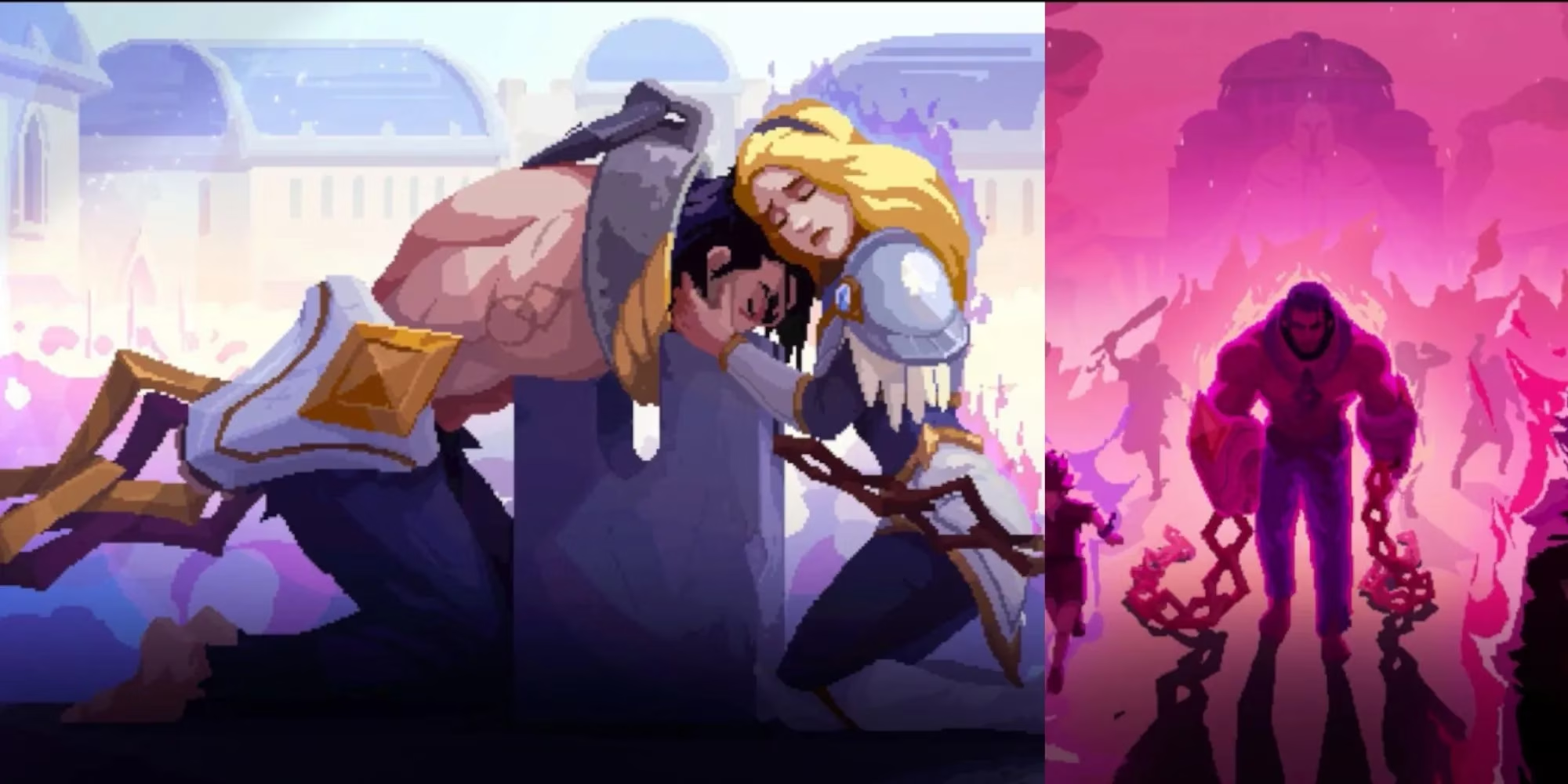
Yet, the icon glows on the desktop, a persistent ember. The logic is frail, a whisper in the mind: It is already there. The download is complete. What is one more match? It is the gambler's fallacy, the belief that this time, the feeling will be different. But the poet in the player knows better. The League offers a specific, often bitter, catharsis through conquest, while the hunger is for connection through narrative. They are different magics altogether. The revolution Sylas fought was to break free from oppression, to claim a destiny. Perhaps the player's quiet revolution is to break free from a cycle of temptation and disappointment, to claim their own peace.
For now, the legacy of The Mageseeker endures not as a gateway, but as a testament. A proof that Runeterra's soul can be captured, can be lived, outside the cacophony of the League. It is a beacon of fulfilled potential, showing what stories can bloom when freed from the pressures of ranked anxiety and peerless performance. The energy finds its outlet in reflection, in writing, in dreaming of the MMO's horizons. The chains of compulsion are recognized, examined, and gently laid aside. The path forward is not onto the Rift, but into the rich tapestry of stories that continue to unfold around it, waiting patiently for the day one can truly live inside the world, not just fight for dominion over a tiny, angry piece of it. The spell of Sylas may be potent, but the wisdom to resist its most treacherous application is the greater power. 🛡️✨
This overview is based on OpenCritic, a respected platform for aggregating game reviews and critical scores. OpenCritic's comprehensive approach to evaluating titles like The Mageseeker provides valuable context for understanding how narrative-driven experiences are received by both critics and players, highlighting the growing demand for deeper storytelling within established game universes.
Comments