
Star Guardian Event Highlights Runeterra's Accessibility Divide for Solo Players in 2026
The Star Guardian event in Legends of Runeterra, a digital card game celebrated for its generous free-to-play model and deep solo modes like Path of Champions, exposed a troubling rift by heavily favoring PvP challenges for reward progression. This pivotal shift alienated the casual, solo-oriented player base, forcing them into frustrating online matches or costly purchases to unlock coveted magical girl-themed cosmetics.
In the years following the monumental success of Arcane, Legends of Runeterra established itself as a digital card game haven for players who valued rich single-player experiences alongside its competitive scene. For many, the game's appeal lay in its generous free-to-play model and deep solo modes like Path of Champions, which allowed for progression without the pressure of constant online competition. However, the landscape shifted notably with the introduction of thematic events, a trend that reached a pivotal point with the Star Guardian event. This magical girl-themed update, while visually stunning and rich in content, inadvertently exposed a growing rift in the game's design philosophy, placing a significant portion of its casual, solo-oriented player base at a distinct disadvantage when it came to earning coveted rewards.
The Star Guardian event was structured around a dedicated battle pass system, filled with exclusive cosmetics, cards, and other collectibles featuring the beloved magical girl aesthetic. 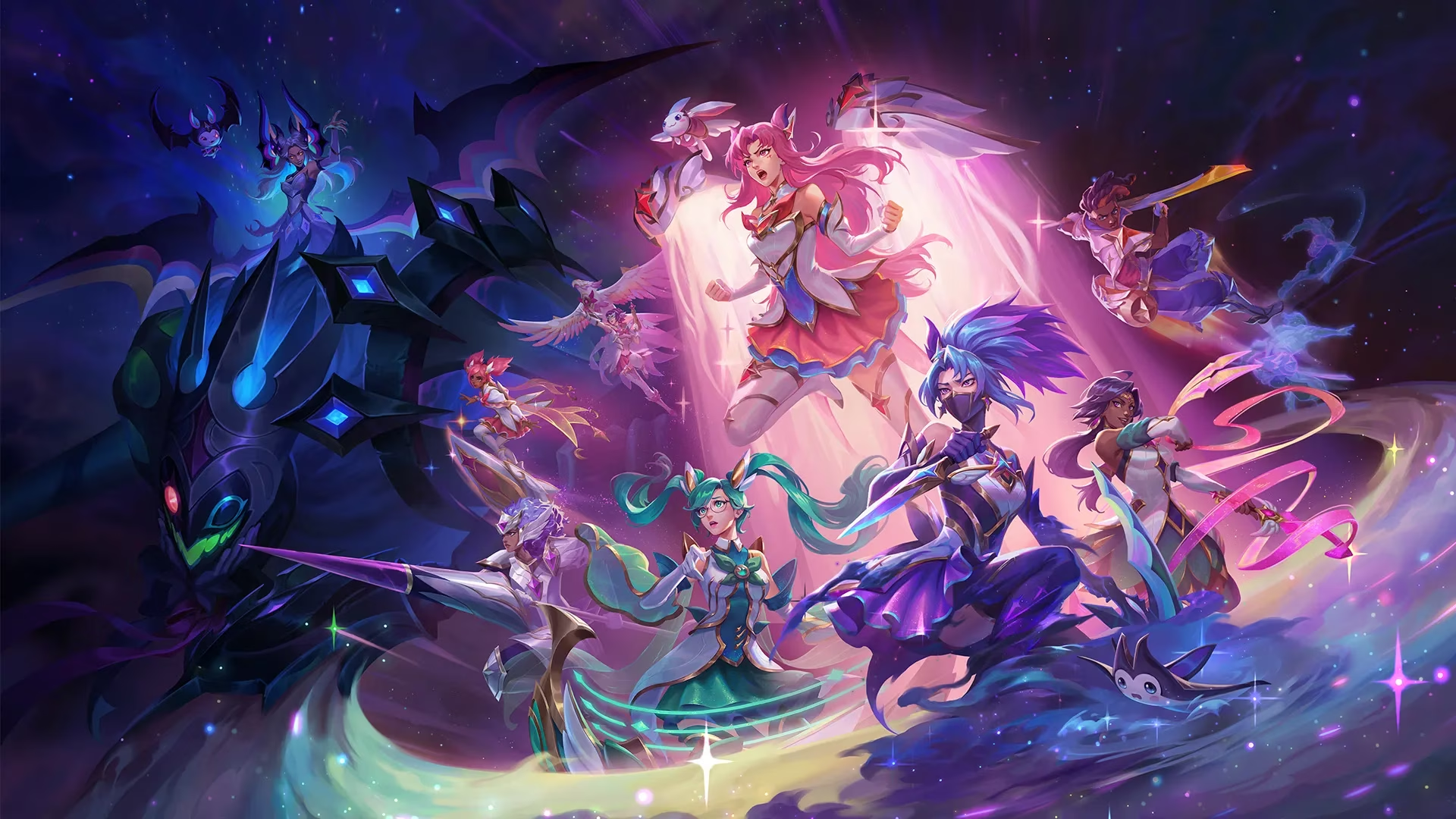 To advance through this pass, players needed to complete specific challenges that awarded event-specific experience points. These tasks ranged from dealing large amounts of damage in a single turn to playing cards in unconventional combinations. While some progress occurred organically, the system was heavily weighted. Challenges that required winning matches or achieving specific feats against human opponents yielded vastly more experience than those completed against AI or within the Path of Champions roguelike mode.
This created a stark imbalance. Players who primarily enjoyed the game's solo offerings—immersing themselves in narrative-driven campaigns or testing decks against AI—found their progression through the Star Guardian rewards track to be a glacial crawl. The experience points earned from these preferred playstyles were a mere fraction of what was available in ranked or normal PvP queues. Consequently, to have any realistic chance of unlocking the event's premium rewards, such as alternate card arts or guardian cosmetics, solo players faced a brutal choice: radically alter their playstyle to engage in often-frustrating online matches, or open their wallets to purchase tier skips with real money.
For a game that had built its reputation on accessibility and respecting player time, this felt like a punitive shift. Legends of Runeterra had long been praised for eclipsing competitors by understanding that card games could thrive beyond the hyper-competitive sphere. Its robust single-player infrastructure was a testament to that vision. Yet, the Star Guardian event's mechanics seemed to contradict this core strength, effectively punishing players for not participating in the "big leagues" of online multiplayer. The emotional resonance was particularly sharp for players drawn in by Arcane; the same game that welcomed them with a compelling, low-pressure world now seemed to be locking desirable content behind a mode many found intimidating or unappealing.
The visual appeal of the event was undeniable, making the exclusion felt more keenly. 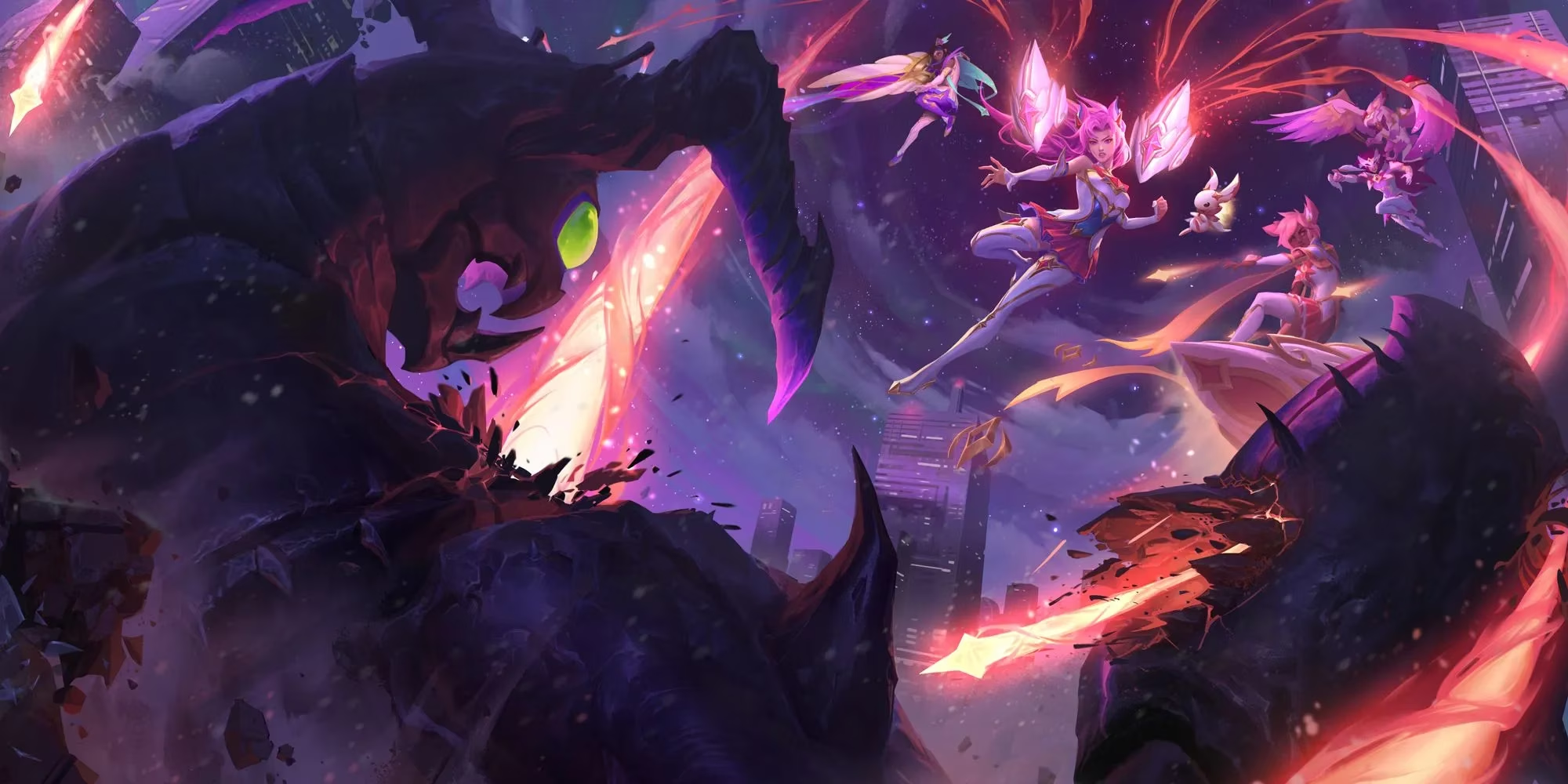 Cards like Star Guardian Kai'Sa showcased gorgeous new art and animations, precisely the kind of cosmetic rewards that dedicated players craved. The community response highlighted a clear desire for consistency. If Path of Champions and AI matches contributed meaningfully to standard weekly vaults and region road progression, why were they so marginalized in a limited-time event? Players argued for more inclusive design:
-
Parallel Progression Tracks: Offering separate, viable challenge lists for PvE and PvP activities.
-
Scaled Rewards: Adjusting experience gains so that time investment in any mode felt respected, even if PvP remained slightly more efficient.
-
Challenge Rerolls: Allowing players to swap out PvP-centric challenges for ones achievable in their preferred mode.
As of 2026, the conversation sparked by Star Guardian continues to influence live-service game design. The event served as a case study in player engagement versus player alienation. It underscored that while themed events are powerful tools for excitement and monetization, their reward structures must carefully consider the entire spectrum of a game's audience. For Legends of Runeterra, maintaining its identity as a welcoming destination for all types of card game enthusiasts means ensuring that dazzling events don't leave its most loyal solo players feeling locked out of the magic.
The legacy of Star Guardian is thus twofold: it is remembered for its beautiful aesthetic and popular theme, but also as a moment that forced a critical examination of accessibility in live-service gaming. The hope within the community is that future events will learn from this, finding ways to celebrate the game's diverse playstyles without forcing players into arenas where they don't feel they belong. After all, a guardian's duty is to protect everyone, not just the champions on the front line.
Comments