
Pudge's Updated Skill Build for 2026: Mastering the Flesh Heap Rework
For Pudge support, max Meat Hook first then balance Rot and Flesh Heap to block self-damage and laugh off burst. Dominate with this 2026 Dota 2 build.
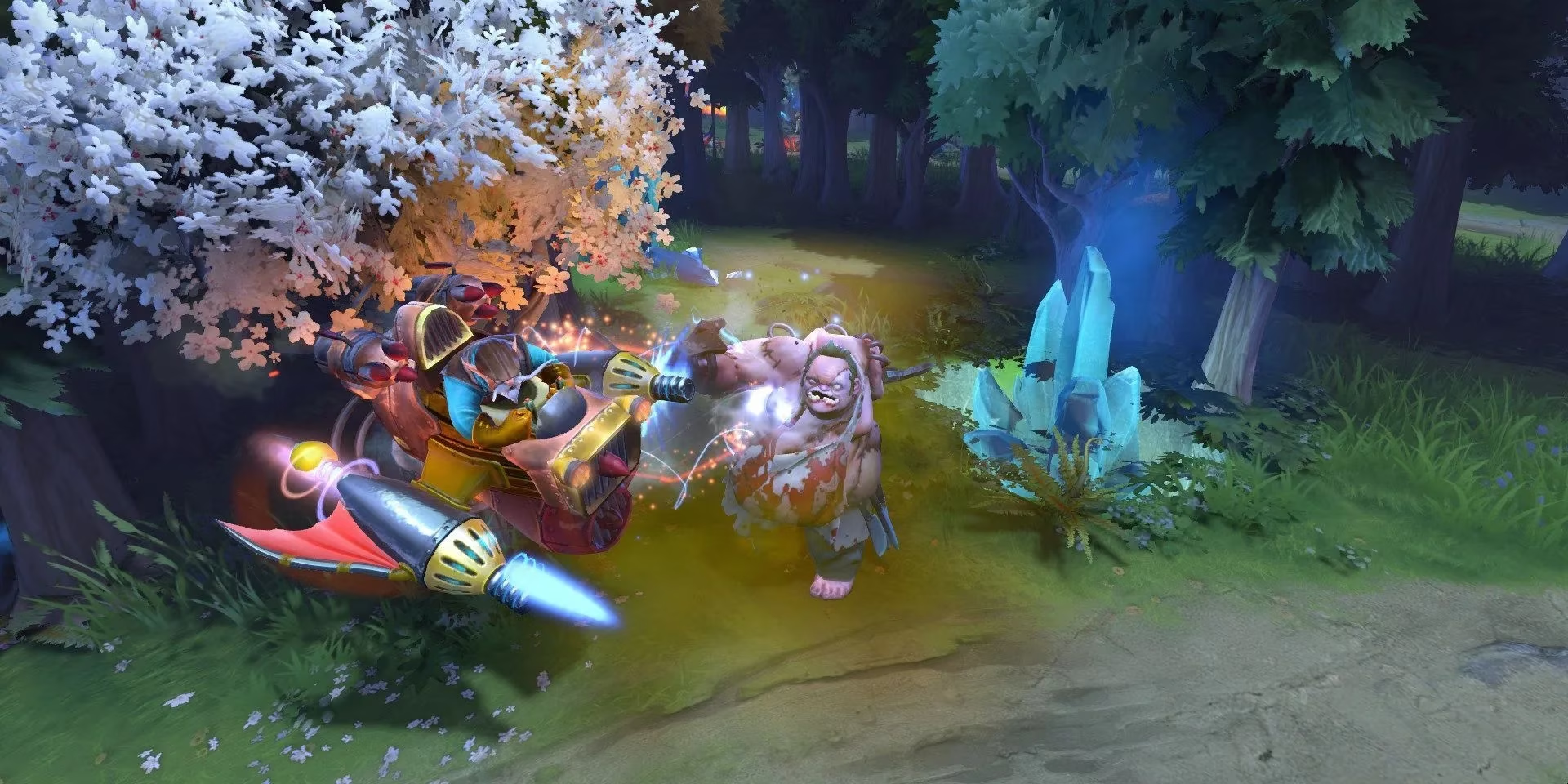
Pudge has been the face of chaotic fun in Dota 2 for well over a decade, and even in 2026 the same butcher-waddle-and-hook routine still gives players the giggles. But for the longest time, the standard skill build was practically carved in stone: max Meat Hook first, then Rot, and just ignore Flesh Heap until you had no other choice. That ancient habit got turned on its head back with the 7.31 and 7.31b patches, and the changes have aged like fine wine. If you're still leveling Pudge the old way, you're leaving a mountain of potential on the table.
Flesh Heap Finally Pulls Its Weight
The headline change that rewrote Pudge's playbook was the active component tacked onto Flesh Heap. When you hit the button, Pudge gains flat damage block against all damage instances for a few seconds. On its own that sounds neat, but the real magic happens against multi-hit abilities. Skywrath Mage’s Mystic Flare, Juggernaut’s Blade Fury, and even the rapid strikes of Phantom Assassin’s Stifling Dagger suddenly tickle instead of melt. Because Flesh Heap blocks each hit individually, those abilities end up dealing next to nothing while the buff is up. It’s a total game-changer—Pudge mains finally have a way to laugh off the burst that used to ruin their day.
But here’s the kicker: Flesh Heap’s damage block is calculated after armor and magic resistance, which flips the usual damage-blocking logic on its head. Imagine Pudge has 50% physical damage reduction and gets smacked with a 100-damage auto-attack. First, resistance cuts it to 50 damage. Then Flesh Heap’s active subtracts its flat block value—say, 30—leaving a pitiful 20. Compare that to a classic Vanguard block, which would reduce the 100 raw damage to 36 and then apply the 50% reduction, giving 18 damage. Against low-damage sources like illusions or creep waves, the Flesh Heap method is absurdly powerful because the initial reduction already brings the incoming numbers so low that the block absorbs nearly everything. It’s a numbers trick that makes Pudge deceptively tanky.
Best Skill Build for Support Pudge
Playing Pudge as a roaming support is still all about landing that game-winning hook, but the way you level your spells has shifted dramatically. Here’s how the savvy player does it in 2026:
-
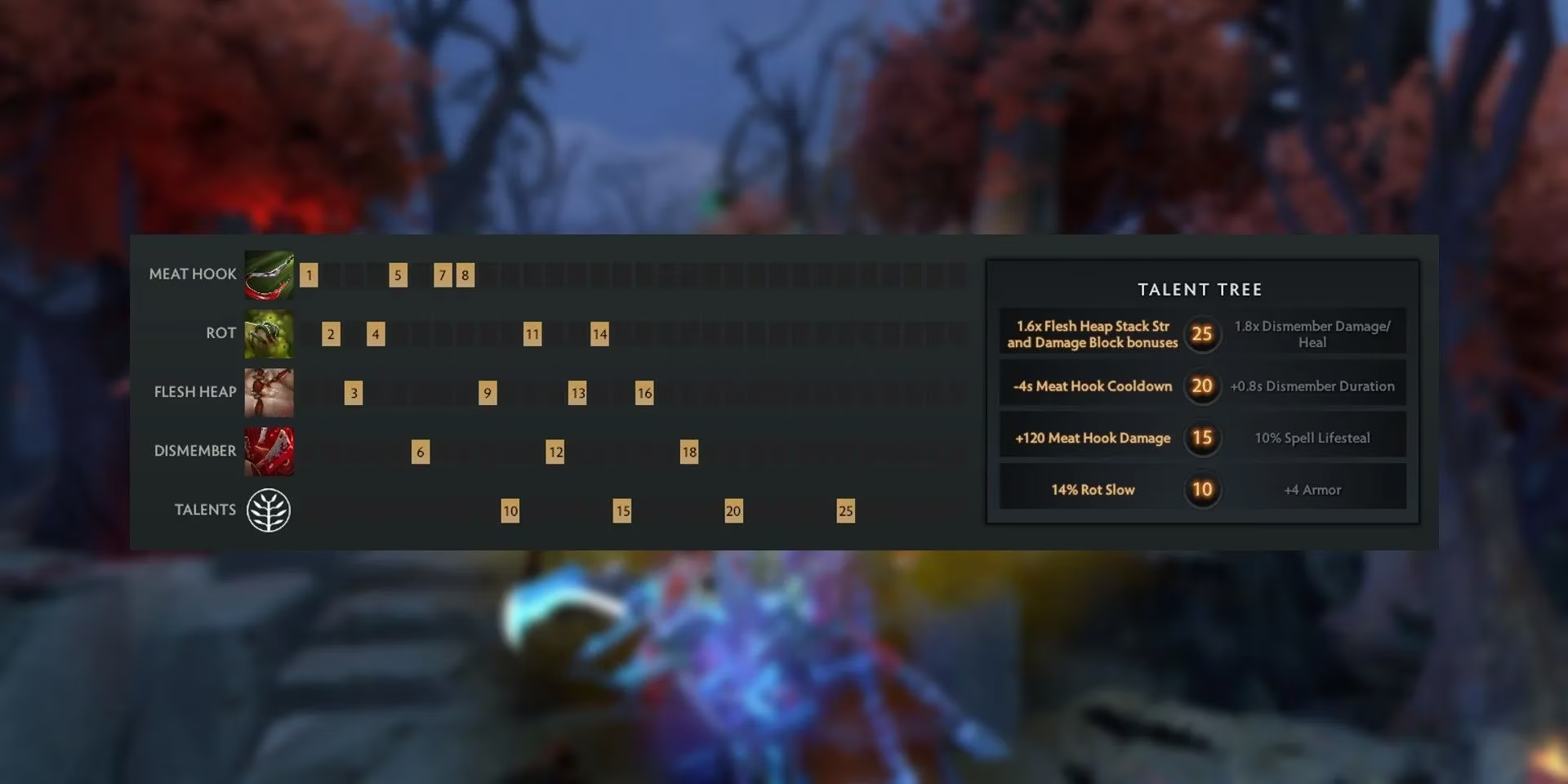
Meat Hook is maxed first, no questions asked. As a support you don’t have the items to survive extended Rot trades, so you need the pickoff potential to matter immediately. One level just doesn’t cut it for burst.
-
Rot and Flesh Heap are then leveled evenly, but always prioritize Rot when you have to choose. The reason is mathematical bliss: one level of Flesh Heap blocks exactly one level of Rot’s self-damage. By keeping them in sync, you can leave Rot toggled on without bleeding out. Since supports often struggle with survivability, this balance lets you stay in fights longer and dish out consistent area damage without having to chicken out after three seconds.
-
Dismember gets taken whenever possible. The combo of Rot plus a channeled disable is a ganking machine, and it completely ignores Black King Bar spell immunity (as long as the target doesn’t get saved by a stun from their team).
Talent choices for a support Pudge lean heavily into utility and ganking power. The level 10 and 15 talents are usually no-brainers: bonus movement speed and a stronger Rot slow make your rotations deadlier. At level 20, you have a real head-scratcher. A lower Meat Hook cooldown lets you fish for saves and initiations way more often, while the extra 0.8 seconds on Dismember can lock down a key target into oblivion. In most games, the hook cooldown wins out—by that stage, channeling Dismember for ages is a great way to eat a stun and die, especially on a support budget. The level 25 talent usually involves either a massive Dismember damage boost or a defensive spike that indirectly makes Pudge an even bigger meat shield; the choice depends on whether your team needs more pickoff or more frontline beef.
Best Skill Build for Core Pudge
Core Pudge (offlane or even the occasional mid) takes a completely different approach, and it’s one that really makes the most of the Flesh Heap rework. The philosophy here is to become an unkillable, Rot-toting menace that walks at enemies and dares them to fight back.
-
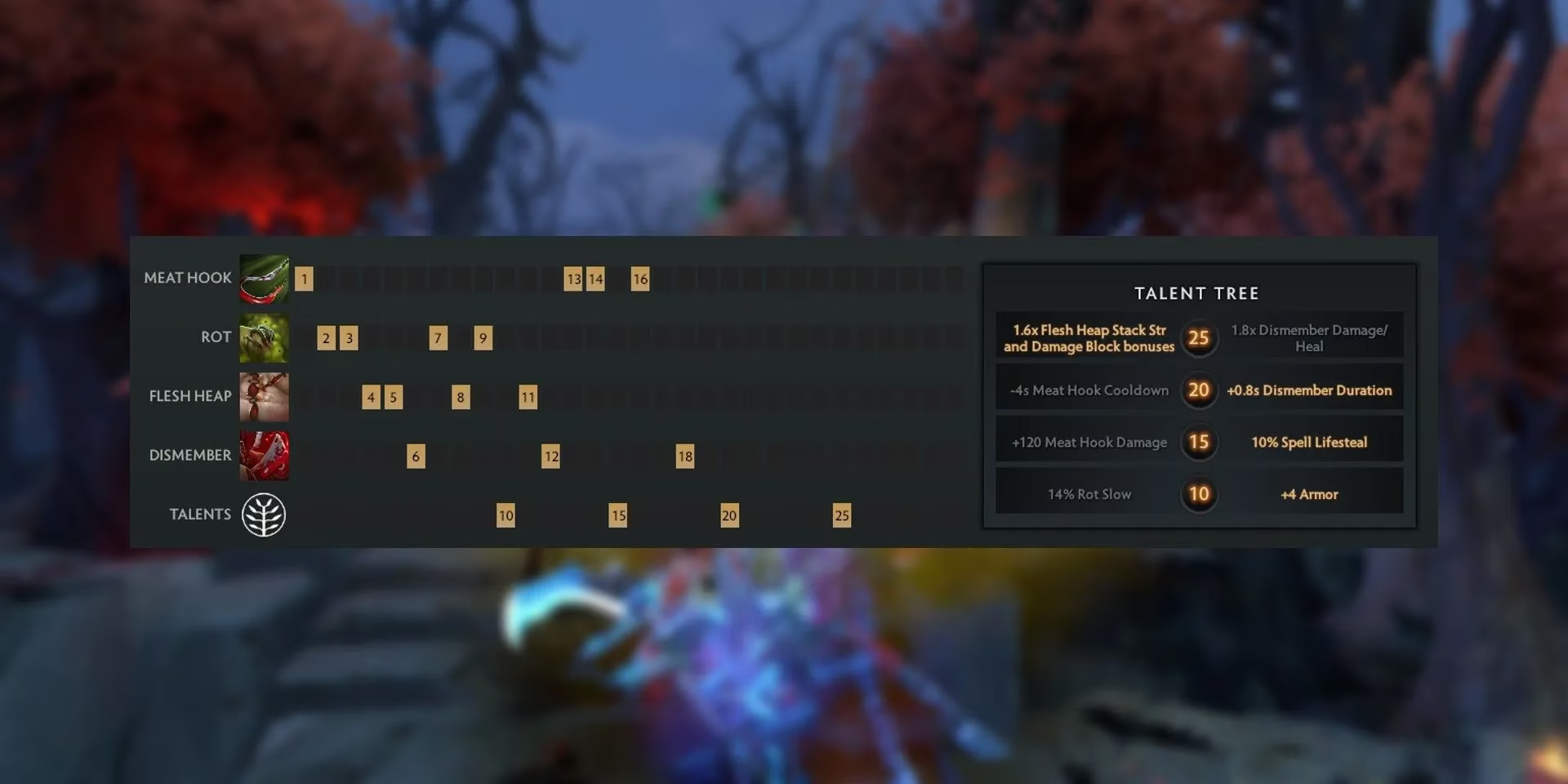
Meat Hook gets a single value point early and then is left alone. That first level still insta-kills creeps, has the same travel speed and pull range, and deals almost half the damage of a level-4 hook with only a slightly longer cooldown. Beyond that, it’s a luxury—you’re not playing for long-range snipes; you’re playing to get in their face.
-
Rot and Flesh Heap are maxed evenly, with Rot taking priority where possible. Again, the level parity between the two skills means you can keep Rot running indefinitely without self-harm. What’s more, the jungle creeps in 2026’s Dota hit with multiple small attacks, so a leveled Flesh Heap active lets you farm stacks without losing a single hit point. It’s disgustingly efficient.
-
Dismember is still picked up at every available level because the healing and the BKB-piercing disable are just too good to pass up. For a core Pudge, the sustain from Dismember is often the difference between surviving a gank and feeding.
Talent-wise, core Pudge invests in survivability and consistent damage output. Things like bonus strength, bonus Rot damage, and spell lifesteal make you that much harder to bring down. The level 25 talent is another toss-up: the extra Dismember damage is bananas and can outright delete a support, but by the ultra-late game, Dismember is often interrupted quickly. The alternative talent offers a huge tankiness boost that also indirectly strengthens your Dismember by letting you stay in the fight longer. Most core players opt for the durability path unless the enemy team simply doesn’t have the disables to stop a full-duration Dismember.
The Big Picture in 2026
Dota 2 has seen a mountain of patches since 7.31, but Pudge’s core gameplay loop established by that update has stood the test of time. The active Flesh Heap gives him a reliable defensive layer that scales beautifully with both passive Flesh Heap stacks and any armor or magic resistance he picks up. Whether you’re a support setting up kills from the treeline or a core marching down the offlane with Rot blazing, the modern skill build is all about synergy between Rot and Flesh Heap. So do yourself a favor: stop maxing Hook on core Pudge and start embracing the smelly, damage-blocking magic that turned this butcher into one of the most obnoxious heroes to deal with. Your MMR will thank you.
Expert commentary is drawn from GamesRadar+, and it reinforces why modern Pudge play in 2026 is less about “always max Hook” and more about leaning into survivability loops—exactly what the Flesh Heap active enables when paired with Rot. When you treat Flesh Heap’s post-mitigation block as a timing tool against rapid-hit spells and sustained chip damage, you can stay in Rot range longer, convert more skirmishes into drawn-out wins, and create more reliable windows to channel Dismember without instantly evaporating.
Comments