
Pudge's Best Item Build: A 2026 Retrospective on Dota 2 Patch 7.31b
Master Pudge's 7.31b support and core builds, from Aghanim's Shard saves to Spirit Vessel, with versatile itemization.
Even though we're deep into 2026, I still find myself flipping back to the 7.31b era whenever someone asks about the most impactful Pudge builds. That patch was a turning point—Aghanim's Shard turned our beloved butcher from a one-trick hook machine into a genuine savior. I've played hundreds of Pudge games across every patch since then, and I can tell you: the principles from 7.31b still shape how I think about the hero today. Let's dive into why that build was so revolutionary and how you can adapt its wisdom right now.
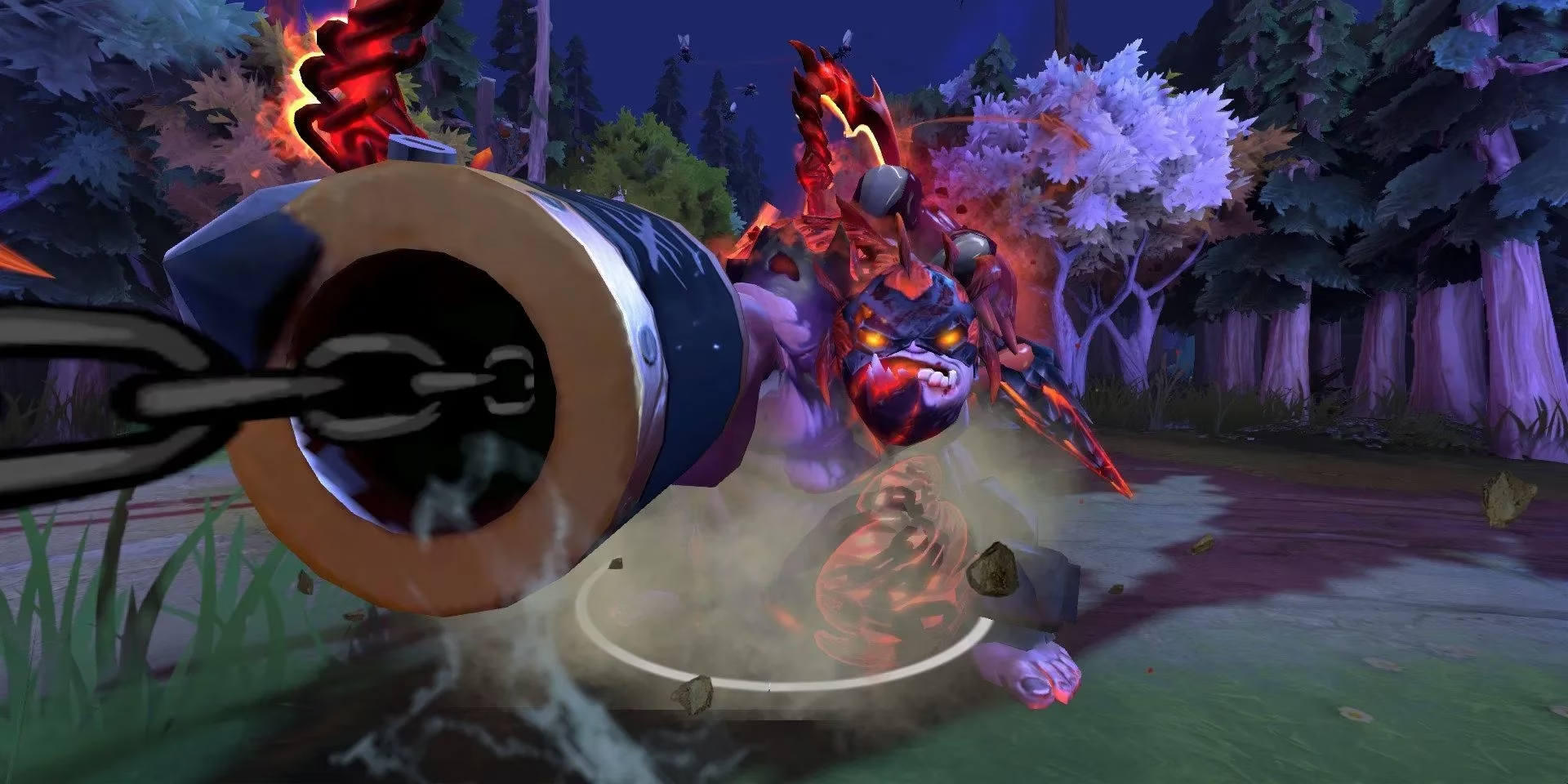
Before that patch, Pudge was mostly a roaming disabler—land a hook, dismember, rotate. His late-game relevance was limited. So what exactly did 7.31b change? The Shard upgrade for Dismember gave Pudge the ability to swallow an ally, making them completely immune to damage while healing them. This one change gave him a save that rivaled Oracle's False Promise. Suddenly, a support Pudge could bail out a core from a Chronosphere or a Rupture. That's power you can't ignore.
But here's the catch: the item build had to evolve. You couldn't just stack Heart of Tarrasque and call it a day. The build revolved around survivability—but the kind of survivability mattered. Support Pudges needed items that helped allies, while core Pudges went for selfish tankiness that they could weaponize.
The All-Role Foundation
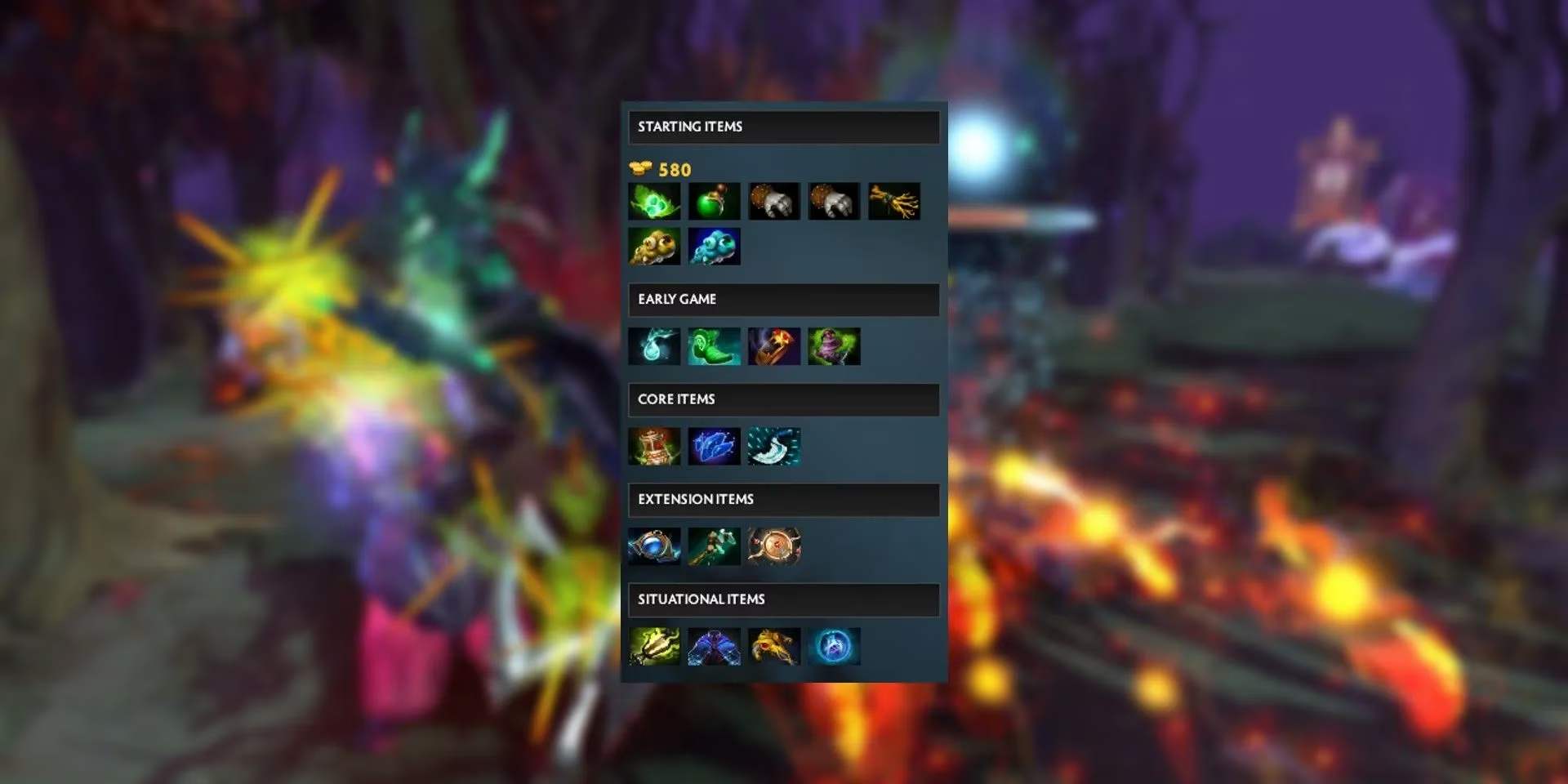
No matter your role, a few items were non-negotiable. Raindrops and Soul Ring gave you the mana to constantly roam and hook. I mean, have you ever tried ganking with a Pudge who runs out of mana mid-fight? It's a disaster. Tranquil Boots kept your health topped off and offset Soul Ring's cost, plus they made you faster—more rotations, more hooks. And then there was Urn of Shadows. Every kill you participated in got a charge, which you could use to heal your carry or finish off an enemy. It was the ultimate snowball tool.
Now, let's break down the role-specific paths.
Support Pudge: The Guardian Angel
Support Pudge was all about enabling your team while being unkillable enough to pull off saves. After your early Soul Ring and Urn, Spirit Vessel was a must-upgrade. It amplified your ganking potential and crushed high-HP heroes like Timber or Morphling. But the real game-changer was the Shard—you grabbed it as soon as the timer hit 20 minutes. Why? Because eating an ally could turn a lost fight into a miraculous turnaround.
Blink Dagger was essential. Without it, how do you reach your out-of-position carry in time? You blink in, swallow them, and suddenly the enemy's kill attempt is wasted. After that, you'd pivot into further survivability. Aether Lens gave you extra range on Hook and Dismember, but honestly, Blink was almost always the priority. Force Staff offered a second save—imagine using Force on a teammate, then immediately swallowing them if they still got caught. Dirty, but beautiful.
Aeon Disk was your final safety net. It prevented you from getting instantly blown up while trying to save someone. But you had to be careful: Rot's self-damage could trigger it early, leaving you vulnerable. I've learned that the hard way more times than I'd like to admit. Ghost Scepter or Glimmer Cape were situational pickups against heavy physical or magical lineups, but a mixed option like Force Staff usually gave more utility. Black King Bar and Linken's Sphere were dream items, but on a support budget, they were rarely realistic unless the game went super late.
My favorite part of playing this build? The psychological effect on the enemy. They'd charge in expecting a kill, only to watch their target become a glowing green blob inside Pudge's belly. The sheer frustration was worth every death.
Core Pudge: The Walking Catastrophe
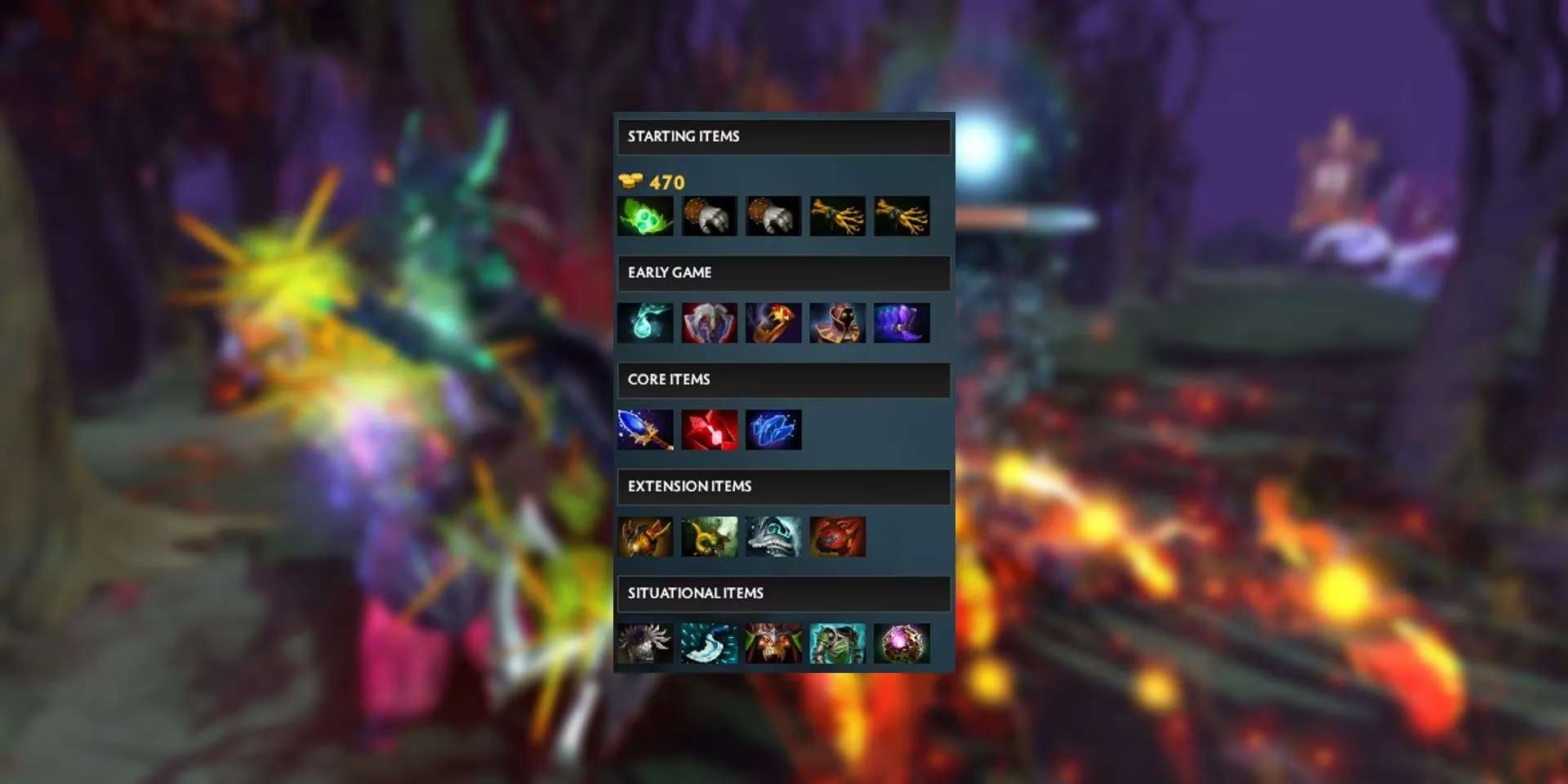
Core Pudge weaponized his own health. Early items like Vanguard and Hood of Defiance made you absurdly tanky, and they synergized perfectly with Flesh Heap's new active component (yes, 7.31b gave it an active!). Phase Boots gave you armor and mobility to chase down targets.
Aghanim's Scepter was the key that unlocked your damage. With it, you could cast Rot at range and farm entire waves, turning into a monster. Bloodstone then amplified everything: extra health, and spell lifesteal that combined with Rot and Dismember to keep you alive in the middle of five enemies. It was honestly a bit broken—I'd end some fights with more HP than I started with.
Even as a core, you still picked up the Shard. The reduced Dismember cooldown made it your primary damage source, and the ally-save gave you late-game relevance beyond just being a meat shield.
From there, you upgraded your defensive items: Crimson Guard and Pipe of Insight protected your team, making you a walking aura carrier. Shiva's Guard was perfect against physical lineups and cut enemy regen. Heart of Tarrasque was the final piece, but only once Flesh Heap had stacked enough. Rushing it early was a mistake—the regen scaled with your max HP, so you needed those stacks first. Blademail was a niche tool against uncontrollable damage like Enigma's Black Hole or Luna's Eclipse. Blink Dagger was less critical on a core Pudge since you were already in the front line, but it remained useful for surprise initiations.
Octarine Core could reduce cooldowns, but the stats were rarely worth the investment compared to raw survivability. Wraith Pact and Assault Cuirass were strong aura items if your team lacked them, but they didn't directly amplify Pudge's personal destruction—just a thought if you want to be a team player.
So, is this 7.31b build still relevant in 2026? Dota 2 has evolved a lot since then, but the fundamentals haven't changed. Survivability, ally saves, and turning health into damage—these concepts still define Pudge. Next time you hover over the butcher, ask yourself: are you going to be the savior or the destroyer? Either way, this classic build philosophy will serve you well.
Comments