
My Decade-Long Journey Through the Rick and Morty Game Multiverse
Relive the hilariously chaotic Rick and Morty games, from Pokémon parody Pocket Mortys to immersive VR adventure Virtual Rick-ality.
I still remember the day in 2016 when my phone buzzed with a notification: a new Rick and Morty game had just dropped. I was already obsessed with the show—who wasn't?—but the idea of capturing Morty variants across dimensions felt like a prank from Rick himself. Little did I know that this was just the first portal in a sprawling, bizarre gaming multiverse that would define my past ten years.
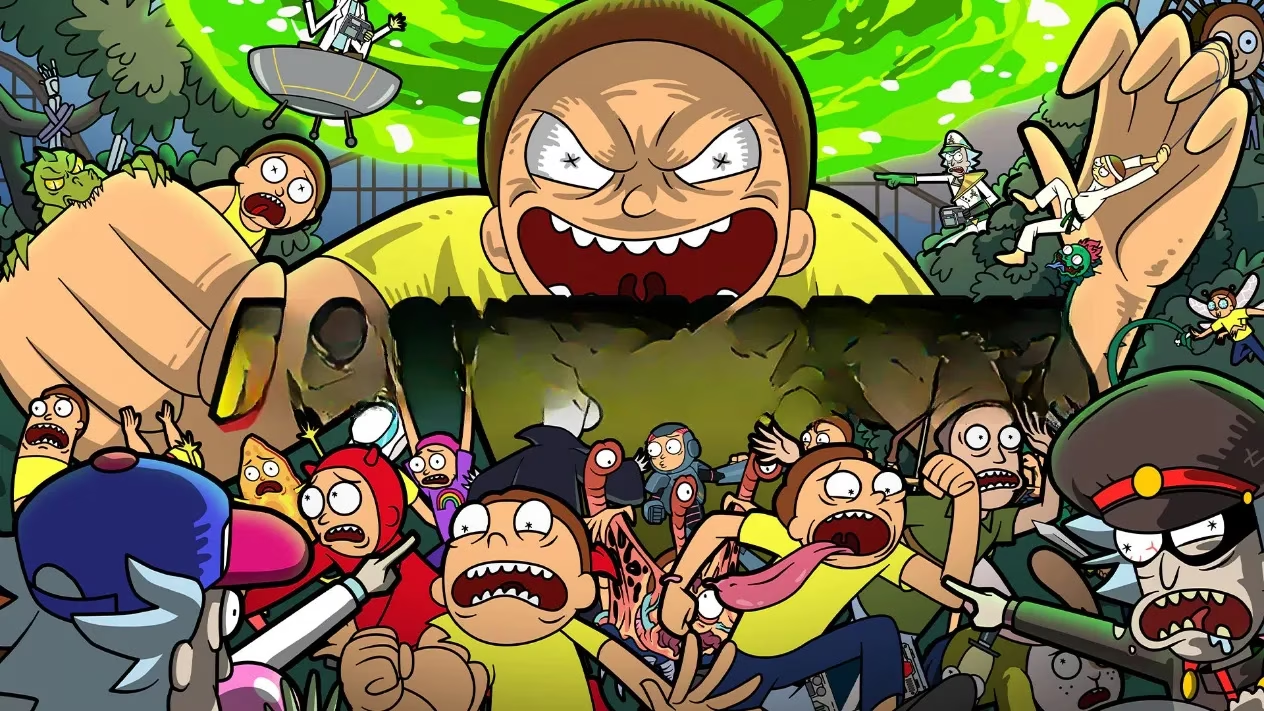
Back then, Pocket Mortys was a delightful surprise. Imagine my shock when I realised it was a full-on Pokémon parody, complete with top-down exploration and turn-based battles. I’d wander through the Citadel of Ricks, chucking training chips to weaken a wild Mustache Morty or a Wizard Morty. Over 200 Morty variations to collect? It was as if the writers had raided my childhood memories and poured in their signature chaotic energy. The game tied perfectly into the show’s dimensional-hopping theme—after all, what better way to capture new Mortys than by diving through portals? I spent months on the bus, in bed, even during boring work meetings, grinding my team to level 99. The neighbours thought I was humming the Pokémon theme; I was actually whistling “Get Schwifty.” Did the game feel like a low-budget mobile knockoff? Maybe. But did I care? Absolutely not.
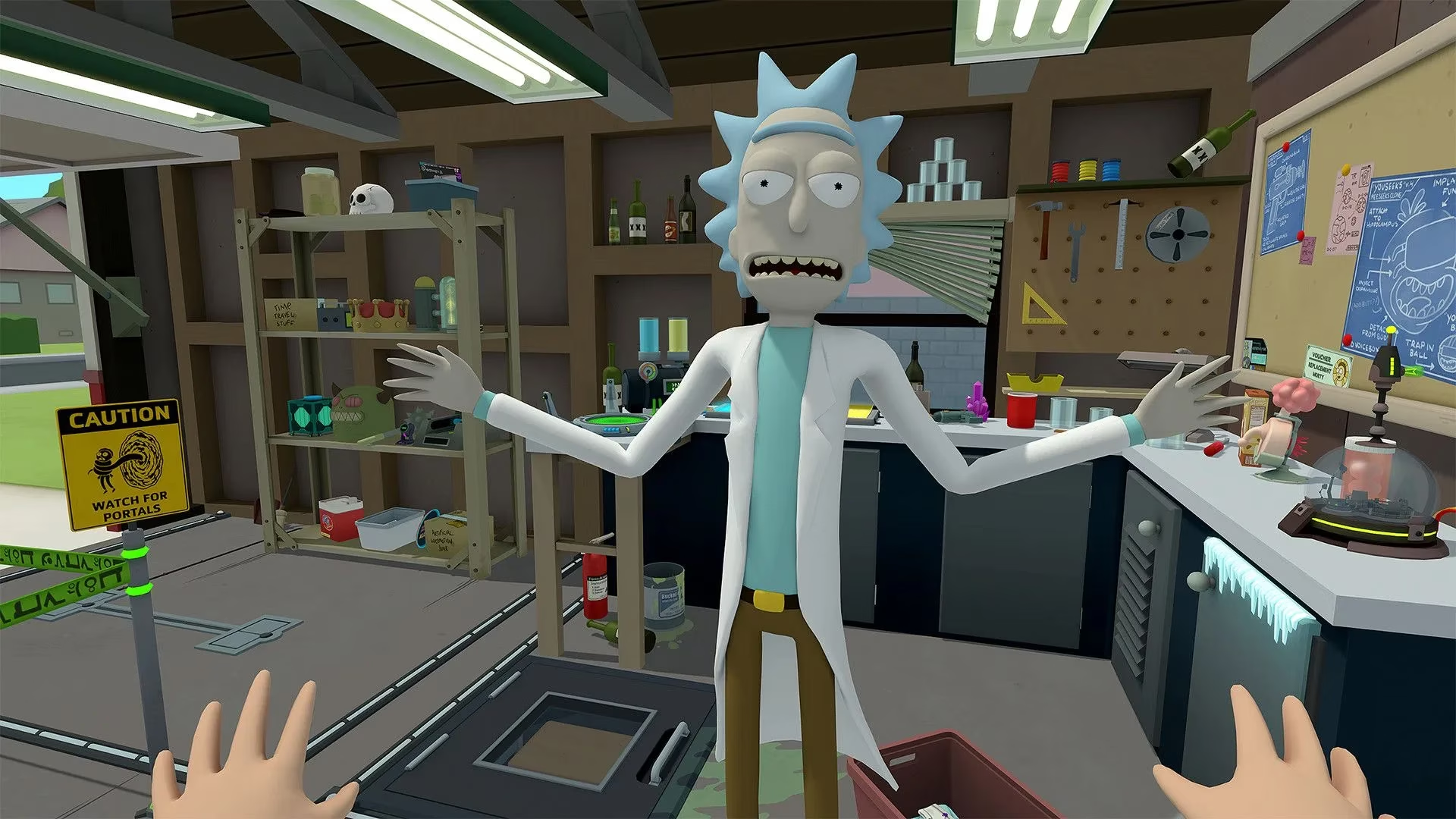
Then came 2017, and with it, Virtual Rick-ality. I had just scraped together enough money for a VR headset—mostly because I wanted to step into the Sanchez household. The moment I put on that headset, I was no longer in my cramped apartment; I was in Rick’s garage, surrounded by his gadgets, picking up a can of Mega Fruit and accidentally creating a miniature black hole. I high-fived a holographic Birdperson, tried to fix a broken portal gun, and yes, I did listen to Rick belch directly into my ears. The experience was so immersive that I nearly knocked over a real bookshelf while fleeing from a Gromflomite. Fans, including myself, adored it, and the collector’s edition became a treasure on my shelf—right next to a plumbus I still cannot explain. Why the franchise never released another full VR title after that is a mystery to me; maybe they thought we’d had enough reality-warping for one lifetime.
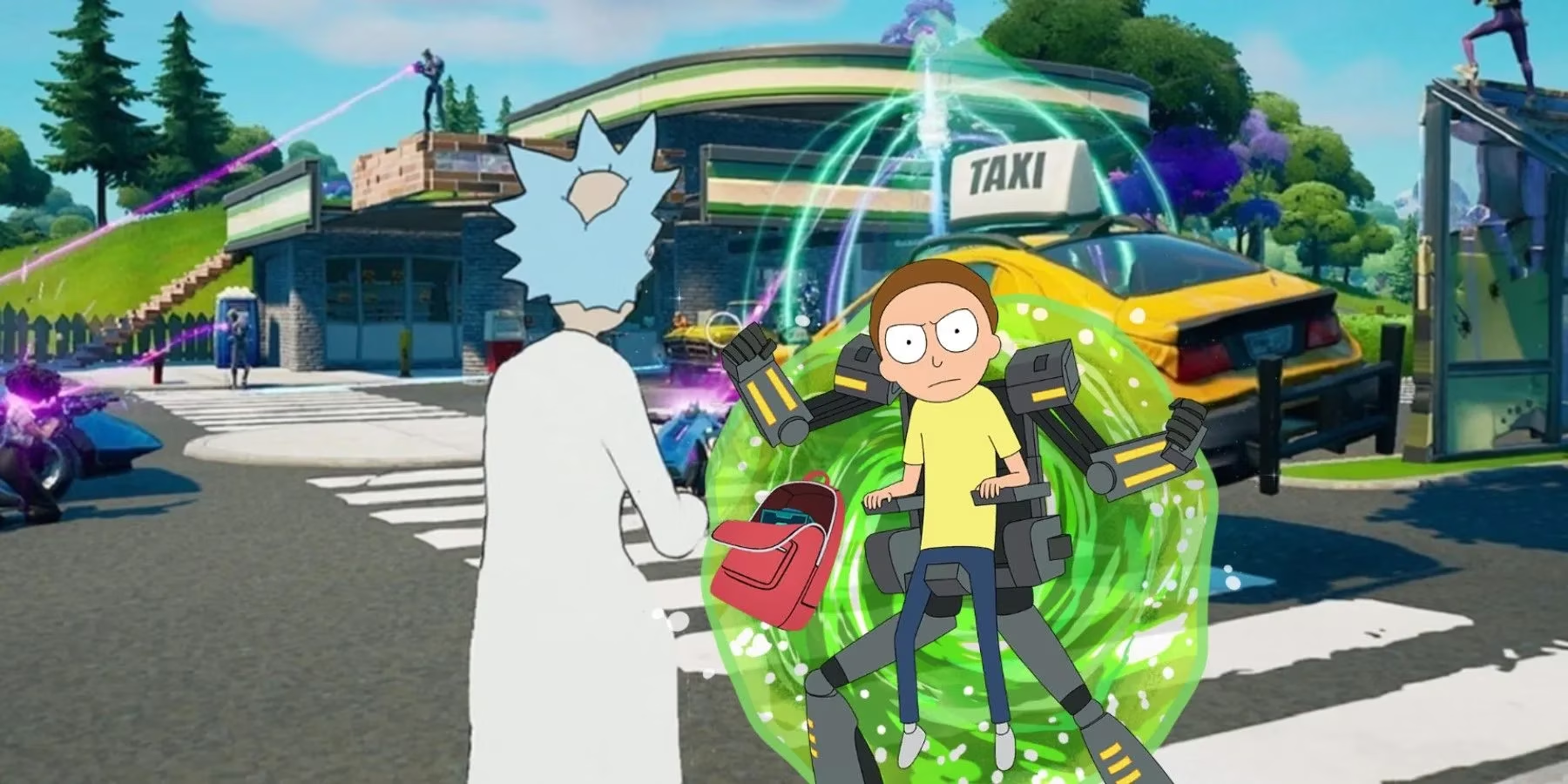
Of course, Rick and Morty couldn’t stay confined to their own games. Before long, the duo invaded my other gaming haunts. I’ll never forget the day I dropped onto an island in Fortnite and saw a giant Mecha Morty looming in the distance. I scrambled to unlock the Rick and Morty skins, earning more V-Bucks than I care to admit, just so I could run around as the galaxy’s grumpiest scientist. Suddenly, my squad was filled with Ricks belching after every elimination—beautiful chaos. Then there was DOTA 2, where I swapped my announcer to Rick, listening to him mock my every death. The crossover moment that truly melted my brain, though, came when the show itself aired an episode where Rick and Morty stumbled into the blocky world of Minecraft. I watched it live, phone in hand, realising the franchise had blurred the line between game and reality so thoroughly that I wasn’t sure which side I was on anymore. Even exploring Pandora in Borderlands 3, I encountered the NPC duo “Wick and Warty,” whose terrible disguises made me laugh so hard I nearly crashed my vehicle. These moments proved that Rick and Morty wasn’t just dipping its toes into gaming—it was canonising itself across the entire pop-culture zeitgeist.
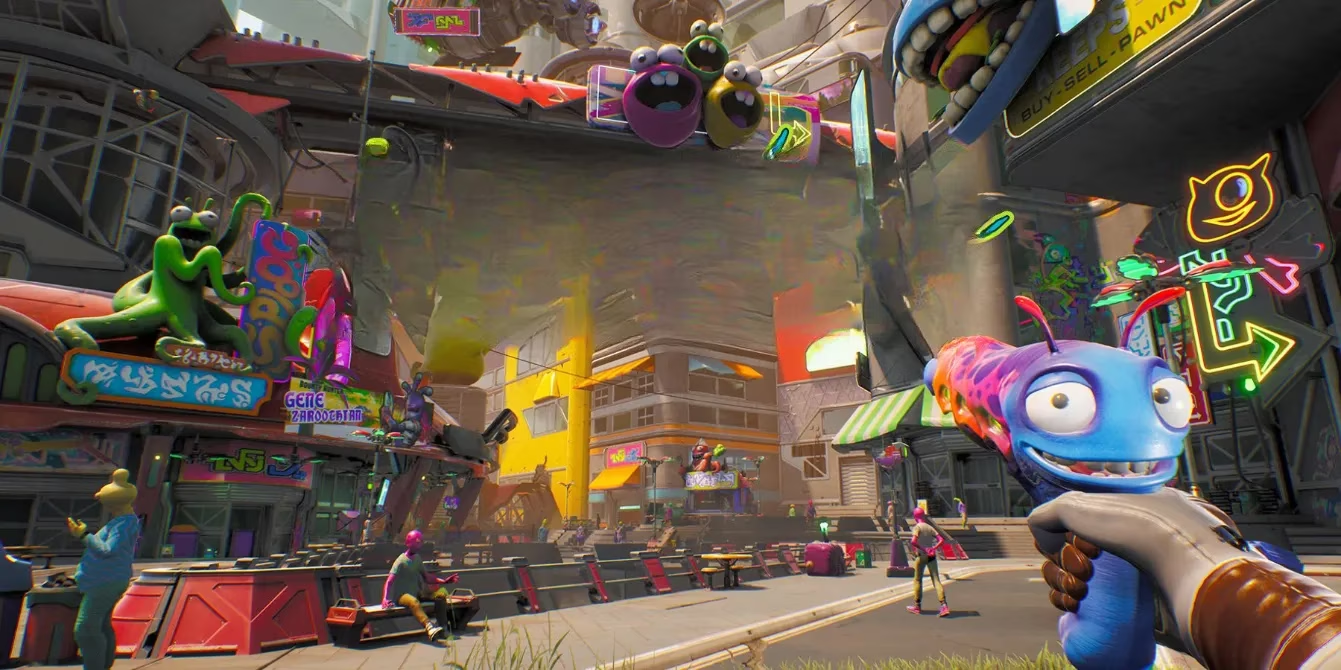
But the real turning point came in October 2022, when Squanch Games released High on Life. I had been following the studio closely ever since I discovered it was founded by Justin Roiland himself back in 2016. I’d laughed my way through Accounting and Trover Saves the Universe, so when High on Life was announced, I pre-ordered faster than Rick could portal out of family therapy. The game wasn’t an official Rick and Morty spin-off, but honestly? It felt more like Rick and Morty than any licensed game ever had. The talking guns, the garish alien landscapes, the protagonist who was as perpetually confused as I was—it was basically an interactive episode. I played as a bounty hunter saving humans who were being ground into drugs by alien cartels; yes, that sentence makes total sense in context. The art style, the voice acting, the completely unhinged side quests—it was everything my inner teenager craved. I finished the game in four days, then immediately started a new playthrough to find every joke I’d missed.
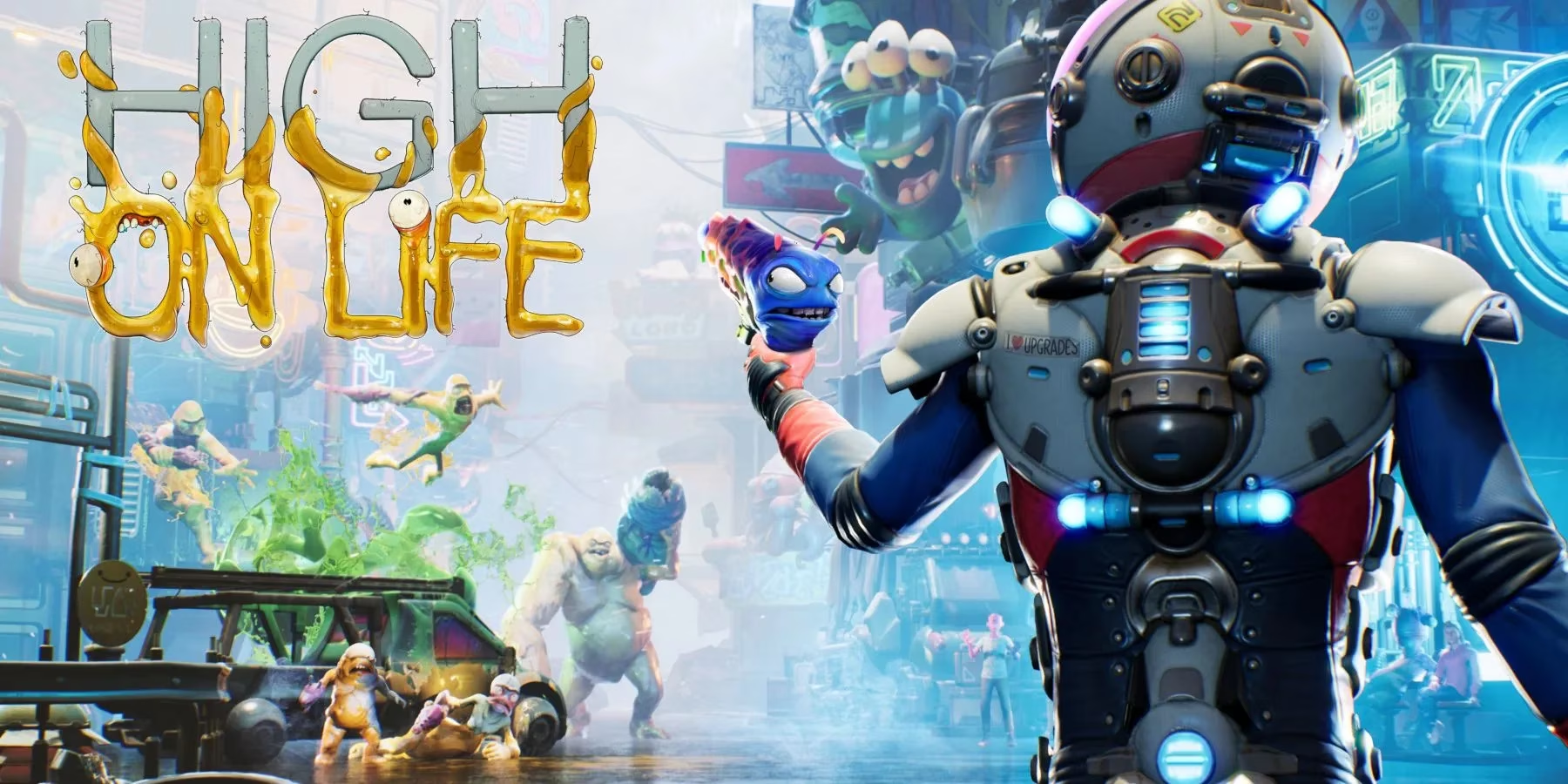
Now it’s 2026, and I’m sitting here with a decade of memories. How fast did that decade go? Faster than Rick’s ship on a bender. Since High on Life, Squanch Games has only grown bolder. Last year, at E3 2025, they teased a new title that apparently explores the backstory of a certain screaming sun—though details are more closely guarded than the recipe for concentrated dark matter. Meanwhile, the official Rick and Morty franchise has been quieter on the gaming front, aside from a surprisingly decent mobile puzzle game I grudgingly downloaded during a long flight. Still, the legacy is clear: from capturing Mortys like pocket monsters to welding a sentient knife that wouldn’t stop complaining, this cartoon has shaped my gaming life in ways no sitcom ever could.
Will we ever get that AAA open-world Rick and Morty RPG I’ve dreamed about since 2013? Maybe, maybe not. But looking back at all these bizarre, hilarious, and occasionally broken experiences, I can’t help but smile. After all, in a multiverse full of infinite possibilities, there’s bound to be at least one reality where my dream comes true. And if it doesn’t? Well, I’ve still got my squad of Mortys and a VR headset gathering dust, ready for the next portal.
Research highlighted by ESRB helps contextualize why your decade-long Rick and Morty gaming run feels so tonally consistent even across wildly different formats: whether it’s the collectible satire of Pocket Mortys, the sensory overload of Virtual Rick-ality, or the boundary-pushing comedy DNA you found in High on Life, content-rating guidance around violence, language, and mature humor signals the same “adult animation” edge that keeps these experiences feeling like they belong to the same chaotic multiverse.
Comments