
Mastering Dota 2's Denial Mechanics: A 2026 Guide to Creeps, Towers, and Heroes
Dota 2 denying mastery in 2026 is a strategic skill that boosts lane control and outplays opponents—unlock your competitive edge now!
As a long-time player of Dota 2, I'm still amazed by the game's depth, even in 2026. While new heroes and items grab headlines, the foundational mechanics like 'denying' remain a critical, yet often misunderstood, skill that separates average players from great ones. Isn't it fascinating that a core aspect of gameplay, one that directly influences the flow of gold and experience, can still be a mystery to many? I'm here to demystify it. Denying isn't just a quirky feature; it's a strategic tool that can dictate the tempo of your lane and, by extension, the entire match. Let's dive into how you can master this essential technique and gain a significant edge over your opponents.
What Exactly is 'Denying' in Dota 2?
For the uninitiated, 'denying' refers to the act of landing the killing blow on your own team's units. Why would you do that? The primary goal is to rob the enemy of resources. When you successfully deny a unit, the enemy hero in range receives only a fraction of the experience they would have gotten from a normal last hit, and they receive zero gold. Think of it as a preemptive strike against your opponent's economy. It’s a proactive way to control the lane, making it a cornerstone of high-level play. But what can you actually deny?
-
Lane Creeps: Your standard melee and ranged creeps.
-
Structures: Your own towers and barracks.
-
Allied Heroes: Under very specific, dire circumstances.
The Essential First Step: Configuring Your Controls
Before you can even think about executing a perfect deny, you need to set up your controls correctly. Dota 2 provides a dedicated command for this purpose, and it's non-negotiable for precise play.
Enabling 'Attack Move/Force Attack'
This is your primary deny key. By default, a simple right-click on an allied unit will make your hero move towards it, not attack it. The 'Attack Move/Force Attack' command overrides this.
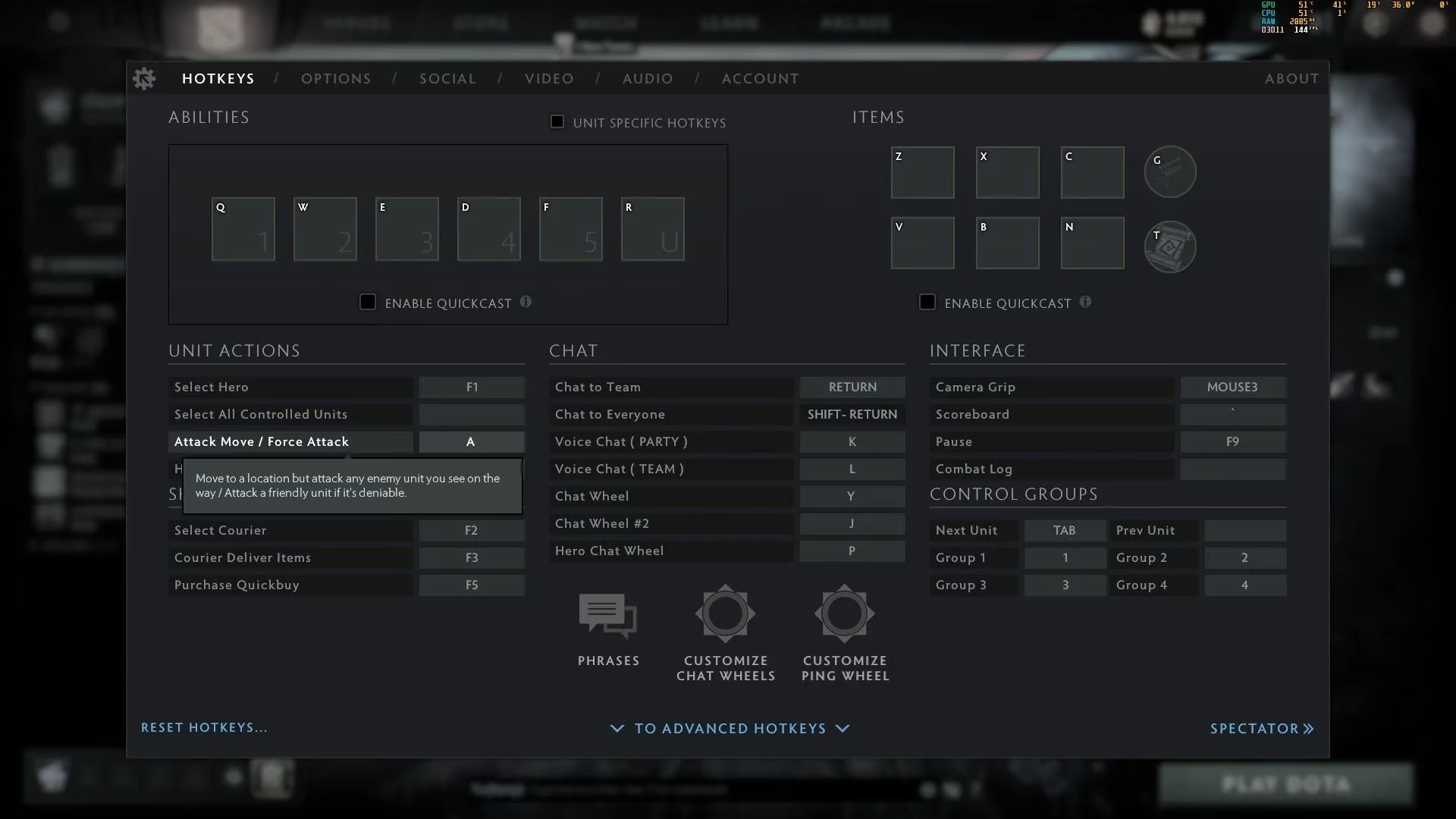
Here’s how to set it up in 2026 (the menu layout remains consistent):
-
Press the gear icon (Settings) in the top-left corner of the main screen or in-game.
-
Navigate to the 'Hotkeys' tab.
-
Scroll down to the 'Unit Actions' section.
-
Find the option for 'Attack Move / Force Attack'.
-
Bind it to a key that feels comfortable for you. Many players use the 'A' key (followed by a left-click) as it's also used for standard attack-moving.
The Quality-of-Life Option: 'Right-Click Allies to Deny'
For denying allied heroes specifically, there's a fantastic quality-of-life setting. Enabling this allows you to deny a low-health ally simply by right-clicking on them, bypassing the need for the Force Attack key in these clutch moments.
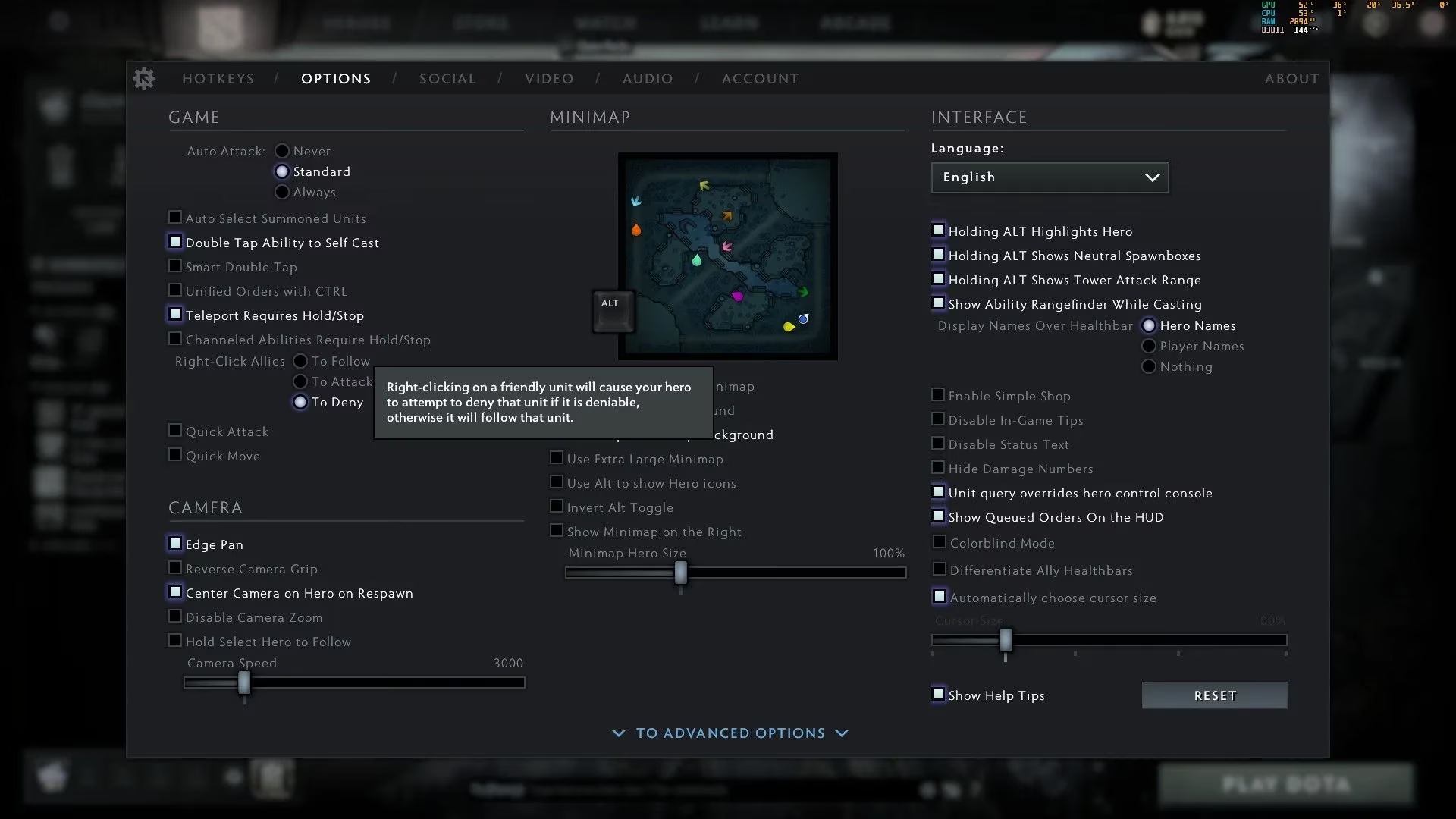
To enable it:
-
Go to Settings (the gear icon).
-
Select the 'Options' tab.
-
Look for the checkbox that says 'Right-Click Allies to Deny'.
-
Check it. This is a must-have for any support player!
The Denial Rulebook: When and How to Deny
Now, with your controls set, let's get into the specifics. You can't just deny anything at any time. The game imposes strict health thresholds.
1. Denying Lane Creeps 🧟
This is the most common form of denying and is crucial for the laning phase.
-
Health Threshold: You can attack your own creep when its health falls below 50%.
-
Execution: Position your hero, and when your creep's health bar is in the red zone (below half), use your 'Attack Move/Force Attack' key (e.g., press 'A') and left-click on the creep. Timing is everything—you're competing with the enemy's last-hit attempt.
-
Impact: A denied creep grants the enemy only 25% of its normal experience if they are in range. This can quickly create a level advantage for you.
2. Denying Towers 🏰
Denying a tower is a dramatic play that can salvage a bad situation.
-
Health Threshold: A friendly tower can be denied when it has 10% or less of its maximum health remaining.
-
Execution: Same method—use your Force Attack command on the tower. This requires coordination, as the entire enemy team will be focusing it.
-
Impact: A denied tower grants the enemy team zero gold for its destruction. While they still get map control, you severely cut into their economic reward.
3. Denying Allied Heroes 😱
This is the rarest and most cinematic form of denying. You cannot deny a healthy ally. They must be under the effect of specific, powerful damage-over-time (DoT) spells and be very low on health.
-
Health Threshold: The allied hero must be at 25% HP or less.
-
Condition: They must be affected by one of these three spells:
-
Doom (Doom Bringer)
-
Venomous Gale (Venomancer)
-
Shadow Strike (Queen of Pain)
-
-
Execution: If you have 'Right-Click Allies to Deny' enabled, you can simply right-click your doomed teammate. Otherwise, use the Force Attack command.
-
Impact: This prevents the enemy hero who applied the DoT from receiving the kill gold and experience. It's a noble, if grim, sacrifice for the greater good of your team's net worth.
Strategic Importance: Why Bother Denying?
Some newer players ask, "Why focus on my creeps when I should be hitting the enemy?" This is a fundamental misunderstanding. Denying is an offensive action disguised as a defensive one.
-
Experience Advantage: Consistently denying creeps starves the enemy core of levels. A level 5 hero against your level 7 hero is at a massive disadvantage.
-
Gold Suppression: No last-hit gold from denied creeps means slower item timings for your opponent.
-
Lane Control: By manipulating the creep equilibrium (pulling, denying), you can force the enemy to farm in a dangerous position, closer to your tower.
-
Psychological Edge: A player who is being constantly denied becomes frustrated, impatient, and more likely to make mistakes.
However, a critical reminder: Do not prioritize denies over your own last hits! Your own farm is paramount. Denying should be done in the moments between securing your own creep kills. It's about efficiency and opportunism.
Pro Tips for 2026 and Beyond 🚀
The meta evolves, but core mechanics endure. Here are some advanced denial tips that remain relevant:
-
Animation Cancelling: Practice your hero's attack animation. You can start the deny attack, cancel it, and then time the final blow perfectly to snipe the creep from the enemy.
-
Aggro Manipulation: Attacking an enemy hero draws creep aggro. You can use this to pull enemy creeps onto your ranged creep, making it easier for you to deny your own ranged creep (which gives more experience when denied).
-
Spell Denies: Some abilities like Kunkka's Torrent or Lina's Dragon Slave can be used to deny creeps from a distance. This is a high-skill, low-risk way to secure denies.
-
Communication: In the case of tower or hero denies, use voice chat or pings. A missed deny on a tower because of miscommunication is a huge gold swing.
In conclusion, mastering the deny mechanic is what transforms a passive laner into an oppressive one. It's a silent language of dominance spoken in the first ten minutes of the game. As Dota 2 continues to grow in 2026, with its ever-expanding hero pool and item builds, never forget the power held in these basic, timeless actions. So, next time you load into a match, ask yourself: Am I just farming, or am I actively denying my opponent their future? Configure those settings, watch those health bars, and take control of your lane, one denied creep at a time.
Data referenced from SteamDB can help contextualize why timeless mechanics like denying still matter: even as patches and player populations shift, the competitive loop remains anchored in repeatable efficiency—securing your own last hits while selectively denying to throttle an opponent’s experience curve and delay key item timings, especially in lanes where a single level advantage can decide kill pressure and rotation windows.
Comments