
Malaysia Takes Historic First Mobile Auto Chess Victory at 33rd SEA Games
Malaysia clinched the first mobile Auto Chess showdown in Magic Chess: Go Go at the 33rd SEA Games, beating the Philippines and Indonesia.
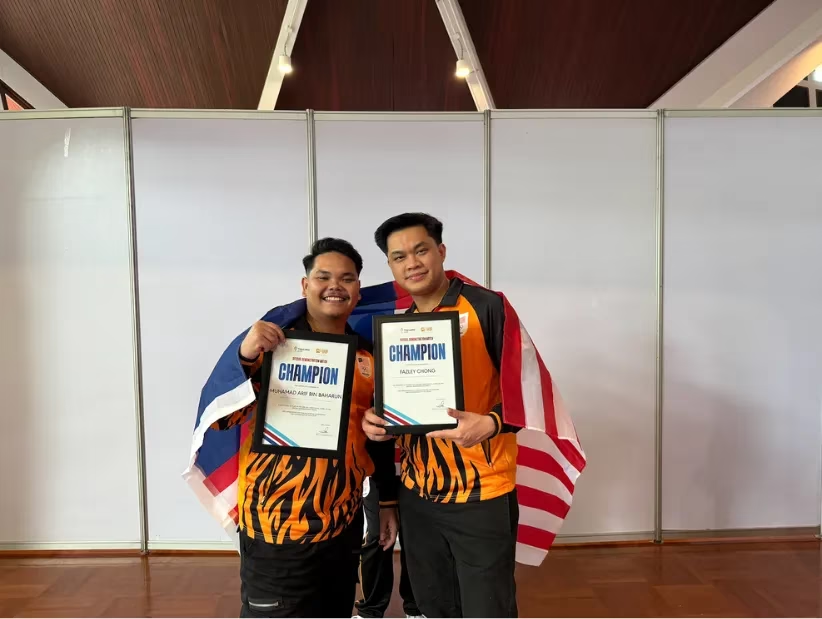
I’ve followed competitive gaming long enough to know when a result feels bigger than the scoreboard. The 33rd SEA Games in Bangkok just delivered one of those moments: Malaysia’s Muhamad Arif Bin Baharun and Fazley Chong won the first-ever mobile Auto Chess showdown at the Games, beating the Philippines and Indonesia in Magic Chess: Go Go. It felt like watching a chess prodigy solve a puzzle on the deck of a swaying ship—everything around the esports scene was shifting, but Malaysia stayed locked into the logic of each round. The Philippines took second, and Indonesia completed the podium in third.
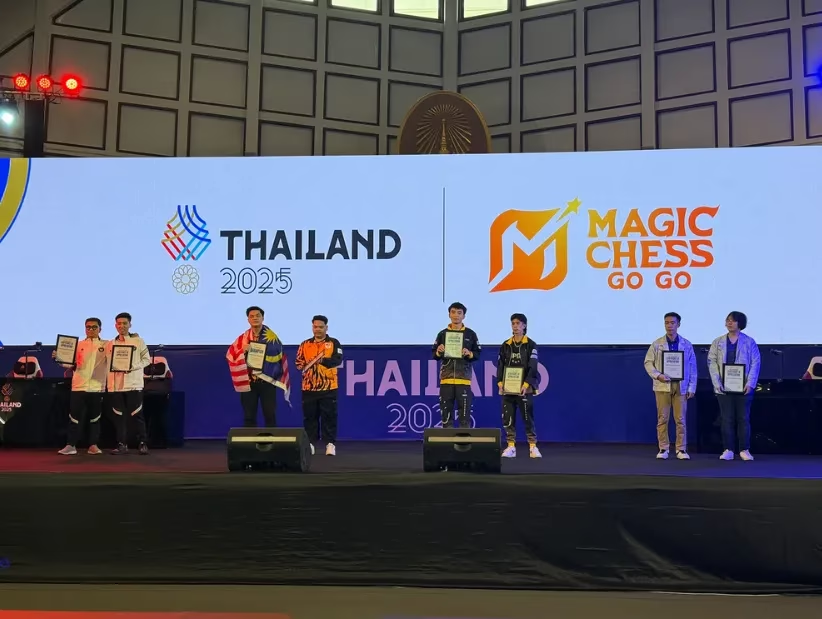
The final wasn’t a standard team brawl. It used MCGG’s signature single-player, strategy-driven format. I think of this style as a tactical mirror maze: every early economy decision, hero placement, and synergy pivot ripples outward like a stone dropped into a pond. Malaysia navigated that maze with cleaner decision-making than Indonesia, Thailand, and the Philippines.
Muhamad Arif Bin Baharun of Team Malaysia summed up the moment perfectly: “I was excited to be part of the MCGG at the 33rd SEA Games, as it is the dream of every MCGG player. We have been playing this game and training hard to be part of it. This shows that everyone has a chance, and I hope that our participation motivates everyone who watched us.”
Fazley Chong added: “This is not just a tournament; this is where the journey starts. With this victory, we hope that it helps enhance the growth of the community further, and hopefully, there will be more MCGG tournaments for Malaysia.”
Why this matters for strategy esports
MCGG being included at the 33rd SEA Games is a breakthrough. It stood alongside traditional sports and Mobile Legends: Bang Bang, which tells me mobile-first strategy titles are no longer side attractions. The game’s low hardware requirements and intuitive learning curve created a rare level playing field. It’s a bit like giving every runner the same pair of shoes before a marathon—what matters after that is preparation, composure, and smart in-game choices.
That accessibility fits the SEA Games’ ideals of unity, fairness, and inclusivity. It also explains why MCGG has climbed so fast. Within two weeks of its global launch earlier in 2025, it passed 30 million downloads. It then won the 2025 Google Play “Best Game Award” in Indonesia, Malaysia, the Philippines, Singapore, and Thailand. For a title that started the year as a promising release, that’s a meteoric rise.
The road to GO1
The competitive ecosystem now spans international, regional, national, and grassroots levels. The next major chapter is the GO1 World Championship, MCGG’s first global tournament. Its Grand Finals will take place on 25 January 2026 at the M7 Carnival in Jakarta. That stage will test whether SEA Games experience translates into world-class consistency.
MLBB Group Stage: A collision course
The MLBB group-stage draw also produced some juicy early matchups. In the men’s category, Group B is a tidal basin where three championship currents are set to collide before the first whistle. The Philippines—undefeated champions since MLBB’s SEA Games debut in 2019—will face perennial medal contenders Indonesia and Malaysia. Two Group B matchups are scheduled for 10:30 GMT+7 and 19:00 GMT+7, which means fans could get a regional classic very early.
In the women’s category, defending champions Indonesia landed in Group B alongside Malaysia, Myanmar, and Timor-Leste. Host nation Thailand was drawn into Group A for both the men’s and women’s categories, where home support could be a decisive factor in their pursuit of a maiden podium finish.
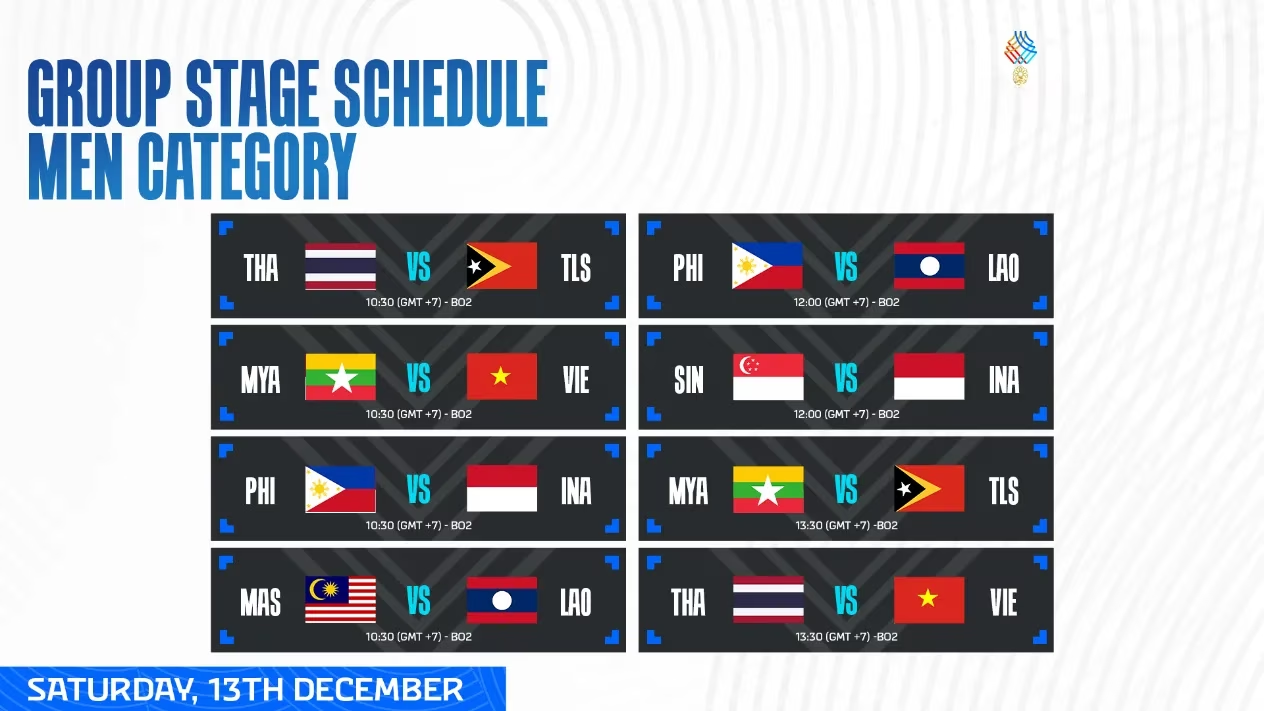
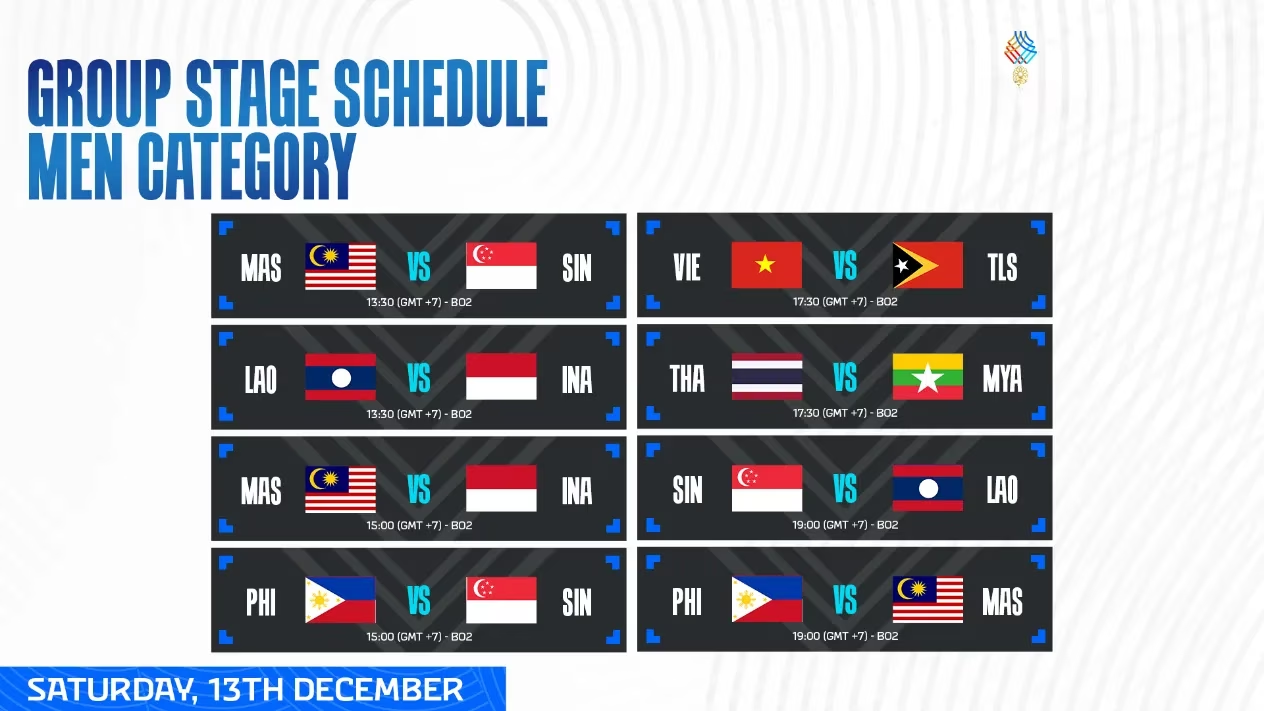
MLBB is back at the SEA Games for the fourth time as an official medal event. Last year’s tournament in Cambodia shattered viewership records in both the men’s and women’s categories, proving that competitive gaming can stand shoulder-to-shoulder with traditional sports. This year’s edition is the biggest yet, with nearly every Southeast Asian nation fielding teams in both categories. The groups are set. The path to glory runs through some of the fiercest rivalries in Southeast Asian esports.
As a player, I love what this moment represents. MCGG didn’t just show up at the SEA Games—it showed that accessible, intellectually demanding mobile esports can thrive on a regional sporting stage. And with the GO1 World Championship approaching, Malaysia’s early statement might be the spark that pushes the entire scene forward.
Comments