
K'Sante: League of Legends' Groundbreaking Champion and the Complexities of Global Representation
K'Sante, League of Legends' first gay Black champion, sparks crucial discussions on cultural adaptation and inclusivity in global gaming. His narrative reveals the nuanced balance between authentic representation and regional localization strategies.
In the ever-evolving landscape of competitive gaming, the introduction of new champions often sparks waves of discussion and analysis. The arrival of K'Sante in League of Legends was no exception, marking a significant moment in the game's history. As a formidable tank from the high mountains of Nazumah, K'Sante wields enormous stone tonfas, weapons forged from the very essence of his homeland's ancient beasts, to dominate the battlefield with raw, calculated power. His design immediately captured attention, blending a distinctive aesthetic with a gameplay style centered on aggressive defense and explosive engagements. Yet, beyond his imposing in-game presence, K'Sante carried a narrative weight that extended far beyond the Summoner's Rift, becoming a focal point for conversations about representation and cultural adaptation in globally distributed media.
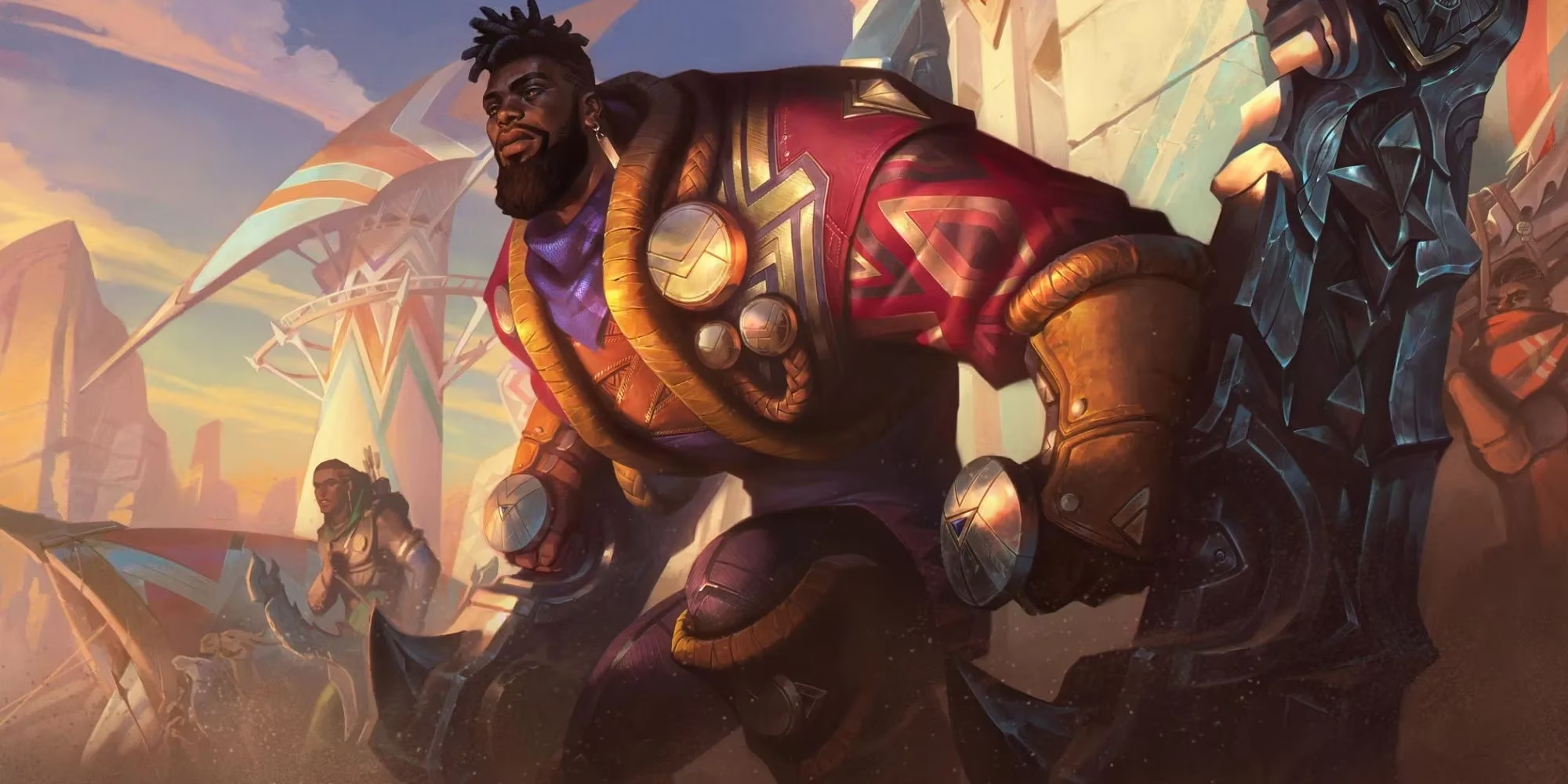
K'Sante's identity is multifaceted. He is a hunter-protector, a leader of his people, and, notably, he is League of Legends' first explicitly gay Black champion. This aspect of his character was woven into his backstory and relationships, representing a deliberate step by Riot Games toward greater inclusivity in its champion roster. The development team expressed pride in creating a character whose identity resonated with a broader spectrum of players. However, the global nature of League of Legends introduced complexities. Executive producer Jeremy Lee acknowledged in 2022 that for certain regional releases, specific narrative details were adapted; the term "lover" in his story was sometimes changed to "partner." This decision was framed within a philosophy of regional localization, where publishing partners adjust content to align with local cultural contexts while striving to maintain the core essence of the character. The goal, as stated, was to ensure players worldwide could find champions that resonated with them, even if the path to that resonance involved nuanced adjustments.
The conversation around these adaptations reveals a broader tension in game localization. Riot's public relations lead, Hanna Woo, confirmed that character stories might be presented differently to ensure access to various international markets. She emphasized that the game client and website remain largely consistent globally, with translations aiming for one-to-one accuracy for in-game text. The narrative and lore, however, occupy a more flexible space. Woo suggested that a character's identity, including K'Sante's, is ultimately for players to interpret. "Even if it's not explicit, even if it's not direct, even if there are changes made... it's like you are meant to see them," she explained, positioning the narrative as something players can discover and affirm for themselves rather than a rigid, unchangeable dossier. This approach contrasts with strategies employed by other developers. For instance, the team behind Apex Legends introduced Catalyst, a transgender character, with explicit and unambiguous narrative elements that were presented identically across all regions, a design choice intended to be non-negotiable in its representation.
K'Sante's release and the discussions it prompted highlight several key aspects of modern game development and publishing:
-
The Importance of Representation: Introducing diverse champions like K'Sante fulfills a growing player demand for characters that reflect a wider range of human experiences. It signals that the game's world is expansive and inclusive.
-
The Challenge of Global Consistency: Maintaining a unified character identity across dozens of countries with different cultural norms and regulatory landscapes is an immense challenge. Localization often involves compromise.
-
Player Agency in Lore: By leaving some elements open to interpretation, developers can engage a community that actively discusses and theorizes about champion backgrounds, fostering deeper investment.
-
Evolving Industry Standards: The different approaches taken by Riot Games and Respawn Entertainment with Apex Legends show an industry still experimenting with the best methods for handling global representation in narrative design.
As of 2026, K'Sante remains a popular and impactful champion in both professional and casual play. His legacy is dual-faceted: he is celebrated for his unique, high-skill-cap tank gameplay that rewards precise aggression, and he is remembered as a milestone in League's narrative evolution. The conversations his introduction sparked continue to be relevant as the gaming industry grapples with creating authentic, representative stories for a worldwide audience. The balance between artistic intent, cultural sensitivity, and commercial accessibility remains a delicate one, with each new champion adding another data point to an ongoing, global dialogue about identity in virtual worlds.
Comments