
How to Spend Your 600 Gold Like a Pro in Dota 2 (Even in 2026)
From Magic Stick checks to regen essentials, this Dota 2 starting items guide secures your early lane and gold.
Let's be real — Dota 2 is a game where you can lose a lane in the first 30 seconds without even realizing it. Those 600 starting gold coins? They’re not just pocket change; they’re a psychological test. Spend them wisely and you’re a god among creeps. Spend them on three pairs of Slippers of Agility and a dream, and you’ll be flamed into the next dimension. Over the years, I’ve gone from a Stout Shield junkie to a Quelling Blade enthusiast, and in 2026, the philosophy is clearer than ever: maximize stats, secure regen, and build for the future — even if it means selling that Iron Branch later at a loss. This is my hard-earned, slightly salty guide to starting items for every role.
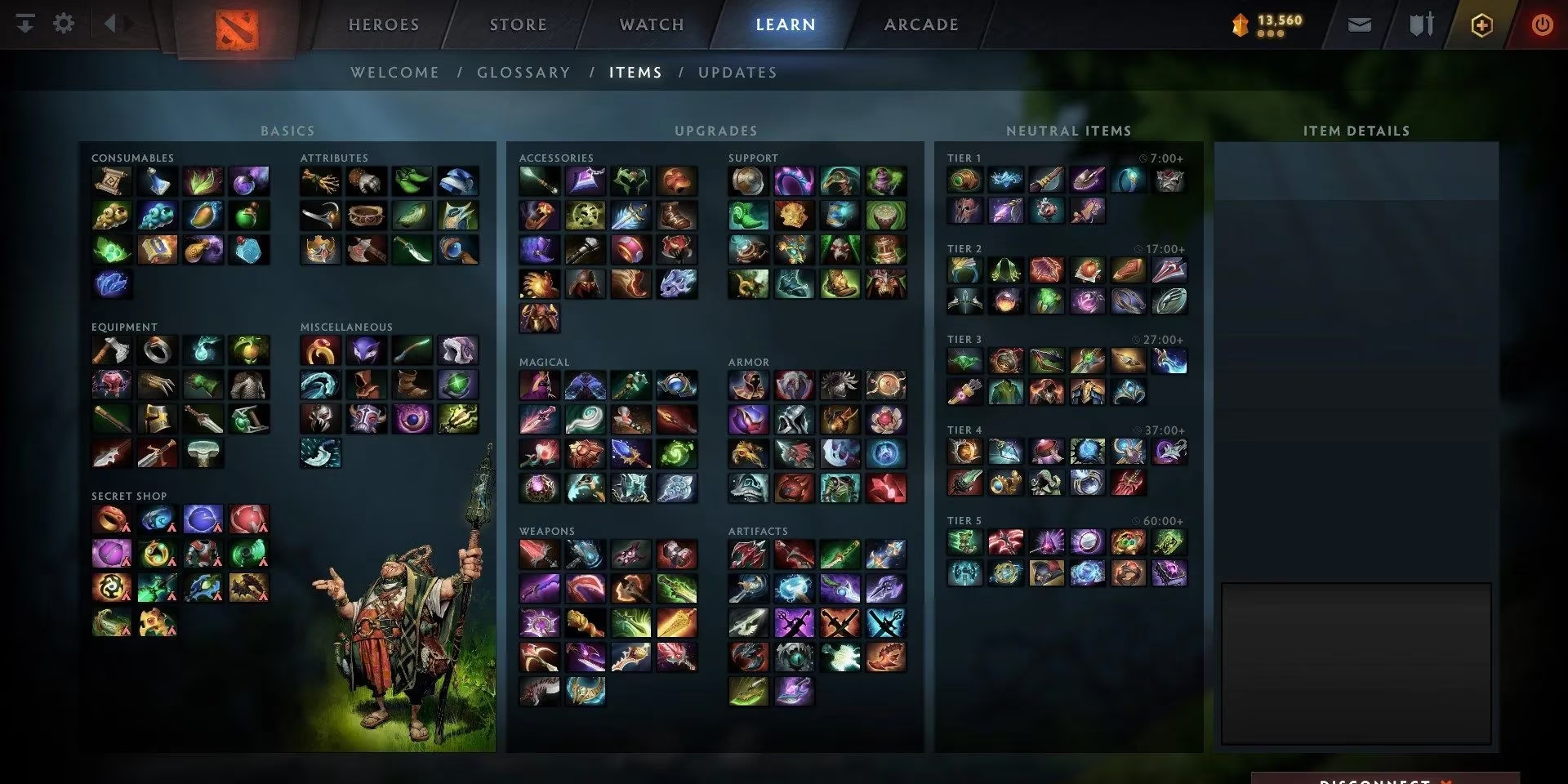
Now, I’m not just going to drop a shopping list and bolt. No, we’re walking through this step-by-step, like a polite (but judgmental) coach. And before you ask — yes, patches have come and gone since 7.31. New items pop up, old ones fade, but the sacred structure of starting gold spending remains shockingly stable. So even if you’re reading this in 2026, the principles are as fresh as a just-bought Healing Salve.
Step 1: The Magic Stick Brain Check
First question I ask myself in every loading screen: Will the enemy offlaner be spamming spells like there’s no tomorrow? If I see a Bristleback, Batrider, or Zeus across the river, my mouse is already clicking on a Magic Stick. This tiny twig of a trinket is easily one of the most gold-efficient items when the lane is a spell‑slanging fiesta. The full Magic Wand upgrade even later can turn a near‑death experience into a cheeky turn‑around kill. But here’s the trick — if the enemy team consists of right‑click‑heavy minimalists who cast one spell per lunar eclipse, save your gold. You can always grab the Stick after the horn sounds, but I find it incredibly satisfying to have it from second zero. It’s like having a little “nope” button that says, “Nice Quill Spray, now watch me heal.” 😏
Step 2: Regen — The Art of Not Dying (Repeatedly)
I’ve seen it all: midlaners buying zero regen and then pinging the support for a Salve. Don’t be that player. Every hero needs at least one set of Tangos. Personally, I treat Tangos like car insurance — you hope you don’t need them, but when you do, you’re very glad they exist. If you’re a support, you’re the designated Healing Salve carrier. Your carry is a delicate flower that needs babysitting when the enemy duo goes hyper‑aggressive. But here’s the 2026 nuance: don’t overstock on regen at minute zero. The courier is now faster than my last relationship, and you can have more sent from base in seconds. Two sets of Tangos and one Salve? Usually fine. Three Salves, two Clarities, and a Faerie Fire? You’ll be fighting with full HP and an empty soul.
Step 3: Stat Items Are Your New Best Friends
This is where the math nerds shine. Early‑game stat items — Gauntlets, Slippers, Mantles, Iron Branches, Circlets — give you the best bang for your gold in terms of last‑hit damage. I almost never buy a completed Bracer, Wraith Band, or Null Talisman at the start because their components are actually more efficient when purchased individually, slot‑management be damned. I typically grab two attribute items matching my hero’s primary stat and two Iron Branches, then hold off on the recipe until I need the inventory space. The result? My right‑click hits like a truck (or at least a slightly angry scooter), and I can later upgrade into a Wand and a stat item without wasting a single gold coin. Supports, you’re not exempt — a Circlet and a Branch go a long way toward keeping you tanky enough to not feed. 💪
Step 4: Quelling Blade — The Melee Core’s Love Letter
As a core player, I’ve developed an almost romantic attachment to the Quelling Blade. It’s the most cost‑effective damage item for last‑hitting, bar none. If my hero is melee and doesn’t have naturally absurd base damage (hello, Tiny), I’m buying this hunk of iron. Even some ranged cores can benefit, though I’ll admit the halved damage bonus makes me weep a little. But here’s a hot take: the Quelling Blade is also a psychological weapon. When I walk into lane with one, the enemy knows I mean business. Cutting trees for a sneaky path or destroying a Sprout instantly? Chef’s kiss. If there’s a Nature’s Prophet on the other team, even my support self will consider a Quelling Blade just to undo that leafy prison.
Step 5: The Situational Shopping Spree
Not everything fits neatly into a cookie‑cutter build, and that’s where the situational items come in. If I’m playing an aggressive position 4 who wants to make the offlaner’s life miserable, I might sneak an Orb of Venom into my starting pouch — that slow is delicious. Against a high‑armor offlaner, a Blight Stone can turn my pitiful right‑clicks into something resembling damage. Items like Fluffy Hat, Sage’s Mask, or Ring of Regen are generally less efficient than the tiny stat sticks, but they make sense if I’m rushing a specific item like Falcon Blade or Tranquil Boots. And let’s not forget the support oddities: a single Ring of Basilius can give the lane a surprising amount of sustainability. It’s all about reading the match‑up and asking yourself, “What makes my lane opponent groan the loudest?”
Step 6: Wards Win Lanes (And Friendships)
You’d think by 2026, supports would have learned to buy a Sentry Ward at the start. You’d be wrong. But I’m here to remind you: a single Sentry can block the enemy pull camp, de‑ward their defensive Observer, or, if you’re feeling spicy, secure a first‑blood de‑ward bounty. As a midlaner, I often snag an Observer Ward to give me uphill vision and rune control — it’s a 75‑gold investment that pays for itself in saved deaths. Cores, don’t be afraid to buy a Sentry if you spot an obvious enemy Ward location; it’s literally a net gold gain. And for the love of Gaben, if you’re a position 5, please have at least one Sentry ready. Your carry will love you, and I’ll stop passive‑aggressively typing “wards pls” in chat.
Step 7: Squeezing It All Into 600 Gold
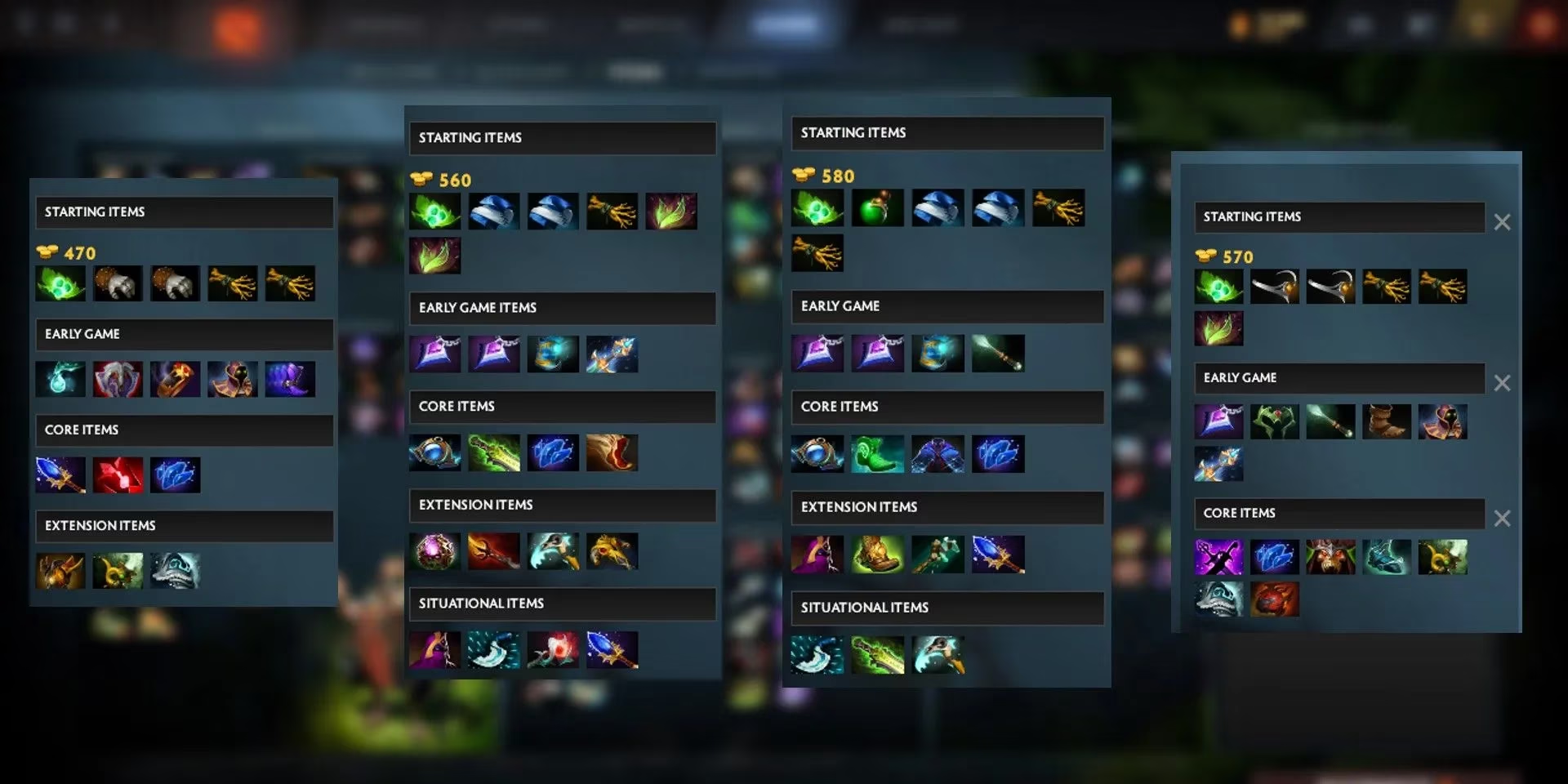
By now, you’re probably thinking, “That’s a lot of stuff for a measly 600 gold.” And you’re right. The final boss of starting items is prioritization. I like to keep two generic loadouts ready, depending on my role, and then tweak them based on the enemy lineup.
For a core hero, my golden template looks like this:
-
1 set of Tangos 🍃
-
2 attribute items (Gauntlets / Slippers / Mantles)
-
2 Iron Branches
-
1 Quelling Blade
This sets me up for two upgraded stat items and a Magic Wand later, while giving me enough last‑hit damage to feel like a farming god. If I know the lane will be a war zone, I might swap a Branch for an extra Tango or a Stick.
For a support hero, the focus shifts to enabling the core:
-
1 set of Tangos
-
1 Healing Salve (for the core – just give it to them, trust me)
-
1 Sentry Ward
-
1 Observer Ward
-
1 Circlet
-
1 Iron Branch
-
2 Enchanted Mangos (for that one clutch stun)
This builds into a small stat item and a Magic Wand, plus enough regen to keep you in lane and out of the respawn screen.
And there you have it. Starting items in Dota 2 are a beautiful puzzle that resets every match. The meta may evolve, new items may appear (I’m still holding out for a turbo‑tangos upgrade), but the core logic remains: don’t be greedy, don’t be wasteful, and always, always think about the first five minutes before you even leave the fountain. Now go forth, spend your gold wisely, and may your lanes be ever in your favor. 😎
Comments