
Heroes of the Storm: Four Years After Blizzard Ended Active Development
Heroes of the Storm persists in maintenance mode in 2026, a Blizzard MOBA now sustained only by nostalgia, with no new heroes or maps ever coming.
In 2026, the Nexus still lingers—yet its soul has long since departed. Heroes of the Storm, Blizzard's ambitious MOBA brawler, has now been in maintenance mode for over four years, a state officially confirmed back in July 2022. While the servers remain online and the community continues to queue for casual Quick Matches, any hope of new heroes, maps, or large‑scale content has been extinguished. What led to this quiet twilight for a game once poised to challenge League of Legends and Dota 2? And can a title survive purely on nostalgia and basic patchwork?
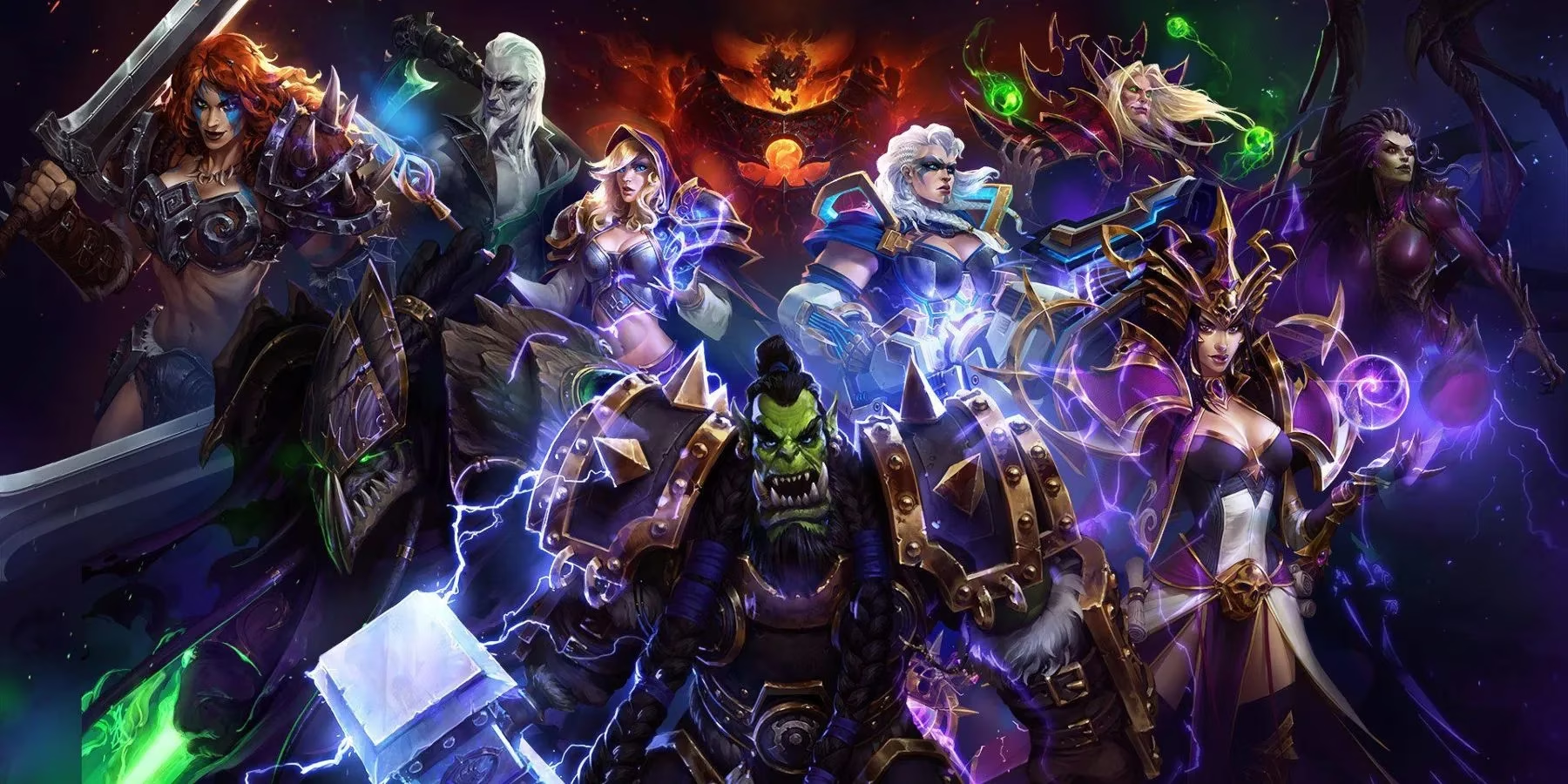
The announcement on July 8, 2022, was clear: Blizzard was moving Heroes of the Storm into the same long‑term support model already applied to StarCraft and StarCraft II. No new in‑game content—be it heroes, skins, events, or battlegrounds—would be developed. Instead, the development team would focus solely on bug fixes and balance adjustments as necessary. Seasonal rolls and hero rotations would continue, but the creative vision that once made the Nexus feel alive was officially frozen.
At that moment, the Heroes Global Championship and all official esports circuits were already two years gone, axed in December 2018 when Blizzard first downsized the team. The roadmap that had once promised a sprawling multiverse crossover had become a skeleton crew’s maintenance checklist.
🕹️ What Maintenance Mode Really Means
Four years later, in 2026, the reality of maintenance mode is sharply defined. The game client still opens, matchmaking still works, and the in‑game shop still displays familiar skins and mounts—but nothing new has appeared since 2022. The storefront remains operational only as a museum of past microtransactions. Blizzard has not released any fresh cosmetic items, nor has it introduced the kind of limited‑time events that once drove engagement. For veteran players, logging in is like stepping into a time capsule.
Occasional balance patches do arrive, mostly driven by the community’s loudest voices or internal analytics flagging extreme outliers. However, these patches are infrequent—often separated by months—and they rarely shift the meta in any profound way. The hero pool is static, and so is the strategic landscape. Heroes like Li‑Ming, Johanna, and Valla remain as they have been since the final balance update of the pre‑2022 era.
Despite this, the game’s core loop still shines. Heroes of the Storm’s unique design—shared team experience, no last‑hitting gold, multiple map objectives—ensures that even a frozen roster can deliver exciting team fights. But for how long can that sustain a player base?
🤔 Could Heroes of the Storm Have Thrived?
This question still echoes through Blizzard forums and Reddit threads. What if Blizzard had never pulled the plug on active development? The MOBA genre in 2026 remains dominated by a few titans, but there is a nostalgic hunger for polished, cooperative experiences that respect the player’s time. Heroes of the Storm’s shorter match lengths and emphasis on team synergy could have carved a stable niche—especially if Blizzard had leaned further into its cross‑IP magic.
Consider the unfinished business: iconic Diablo villains like Baal or Mephisto, classic StarCraft units like the Viking or Reaper, and even Overwatch’s Wrecking Ball were never added. A steady stream of such “dream crossover” heroes might have kept the casual and hardcore audiences engaged. But Blizzard seemingly chose to prioritize other projects, including Overwatch 2 and the eventual absorption of its talent into the Diablo IV and World of Warcraft expansions.
📊 The State of the Nexus in 2026
Analyzing the current state, we can break down Heroes of the Storm’s post‑maintenance existence into a few key numbers:
| Aspect | Status |
|---|---|
| Active development | Ended in 2022 |
| New heroes released | None since 2020 (Mei was the last) |
| New maps added | None since 2020 |
| Official esports | Canceled in 2018 |
| Balance patches | Sporadic, minor numerical tweaks |
| In‑game shop | Open, but no new items added |
| Community tournaments | Grassroots; run by fans, not Blizzard |
| Player population | Small but stable, no official numbers |
While Blizzard never disclosed player counts, anecdotal evidence suggests a modest yet loyal player base. Queue times for Quick Match in major regions are still acceptable in 2026, though ranked play often suffers during off‑peak hours. The absence of new content has filtered out the most competitive players, leaving a more relaxed, social atmosphere.
🎁 A Final Gift and a Thank You
When the maintenance mode announcement landed in 2022, Blizzard offered one last goodwill gesture: a free Epic Arcane Lizard mount for all players. Delivered with the following week’s patch, the mount was described as “incredibly rare,” and no expiration date was placed on its acquisition. For many, it symbolized the end of an era—a shiny but bittersweet memento of what the Nexus once promised.
Blizzard’s message at the time thanked the community for their support over the game’s seven‑year journey. Fast‑forward to 2026, and that gratitude feels like a distant echo. The official Heroes of the Storm social media accounts have been silent for years, and the subreddit, while still active, often indulges in reminiscence rather than speculation about the future.
🧩 The Legacy of a Different MOBA
Heroes of the Storm’s legacy is one of bold experimentation. It dared to remove gold farming, individual levels, and item shops—the holy trinity of traditional MOBAs—in favor of shared experience and talent trees. This design philosophy, while divisive, influenced later titles that sought to reduce toxicity and emphasize team play. Even in 2026, it stands as a proof of concept that a MOBA can be both accessible and strategically deep.
Blizzard’s own catalog ranking, as aggregated by Metacritic, once placed Heroes of the Storm among the company’s better‑reviewed titles, though it never breached the top tier of critics’ lists. Its Metacritic score sits in the mid‑80s, reflecting a polished product that simply arrived too late to a saturated market.
Looking back, one has to wonder: in an era where live‑service games are routinely resurrected (think of the countless MMO reboots and the revival of classic shooters), could Heroes of the Storm receive a second chance? As of 2026, Blizzard has given no indication of such plans. The company’s focus remains on World of Warcraft, Diablo IV, and its fledgling survival game. The Nexus, it seems, will quietly orbit its maintenance‑mode sun until the day server infrastructure costs finally outweigh sentimental value.
But for the dedicated few who still queue up, that day isn’t here yet. And as long as the Arcane Lizard mount can still gallop across Cursed Hollow, the memory of what Heroes of the Storm aimed to be will endure.
Comments