
From Mod to Masterpiece: The Unseen Journeys of Virtual Worlds
Explore the transformative legacy of mods like Cry of Fear and Garry's Mod, where passionate communities reshape existing games into groundbreaking experiences, showcasing the alchemy of player-driven creativity.
I wander through the digital archives of our time, a curator of echoes and origins. In this year of 2026, I find myself reflecting not on the monolithic releases from corporate giants, but on the quiet, seismic shifts that began in the workshops of passion. These are the stories of worlds that were not born, but became—transmuted from the clay of existing realms into forms their original creators never dreamed of. Each one is a testament to the alchemy of community, where a player's tinkering can blossom into a universe of its own. My journey is one of tracing these lineages, following the ghostly afterimages of mods that refused to stay contained.
Cry of Fear: A Nightmare Forged in Half-Life's Engine
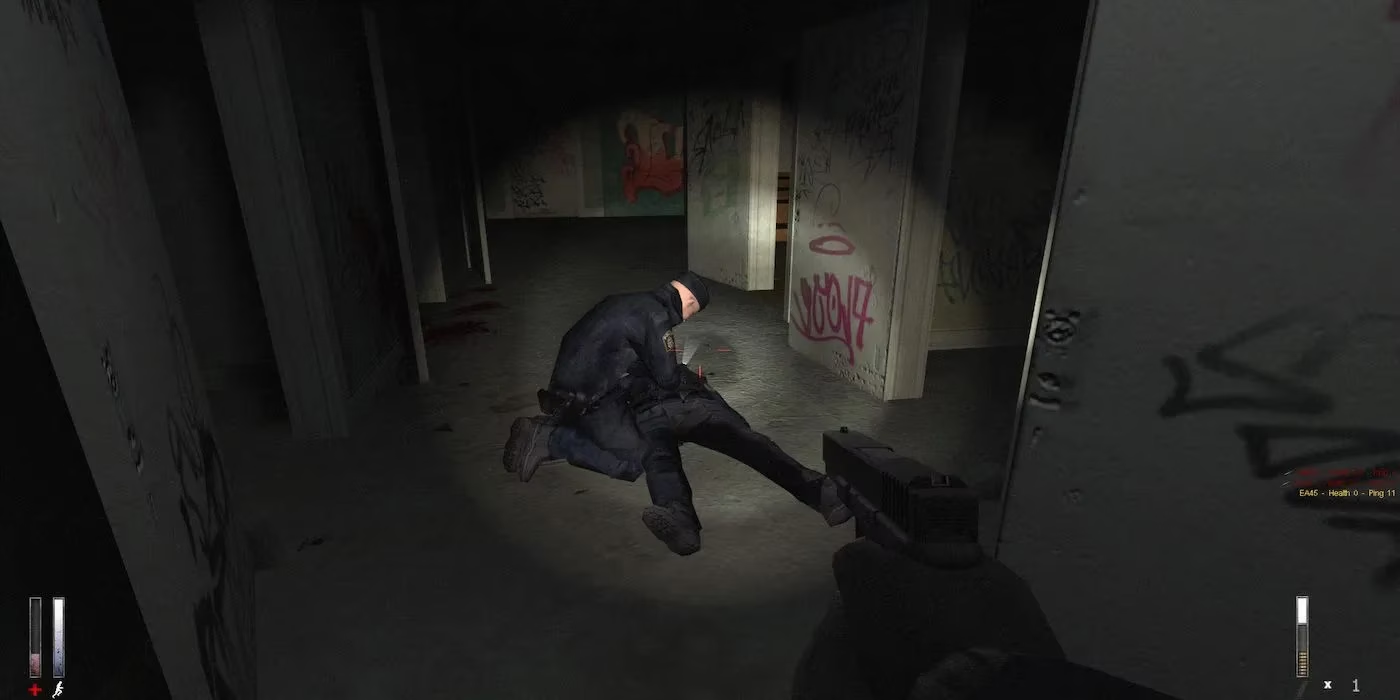
My first stop is a chilling alleyway, a place where the familiar geometry of Half-Life twisted into something deeply personal and terrifying. Cry of Fear began not as a commercial venture, but as a heartfelt homage—a love letter to psychological horror, penned in the language of GoldSrc. To play it is to walk through a collective nightmare, a shared subconscious where the anxieties of adolescence are given fanged and grotesque form. It was like finding a secret, haunted room built into the foundation of a house you thought you knew. The genius of its multiple endings is that they aren't just branching paths; they are different interpretations of the same traumatic memory, each one a shard of a broken psyche. Its legacy, still free and potent today, reminds me that the most profound horror often grows in the fertile, unchecked soil of a fan's imagination.
Garry's Mod: The Infinite Sandbox of Possibility
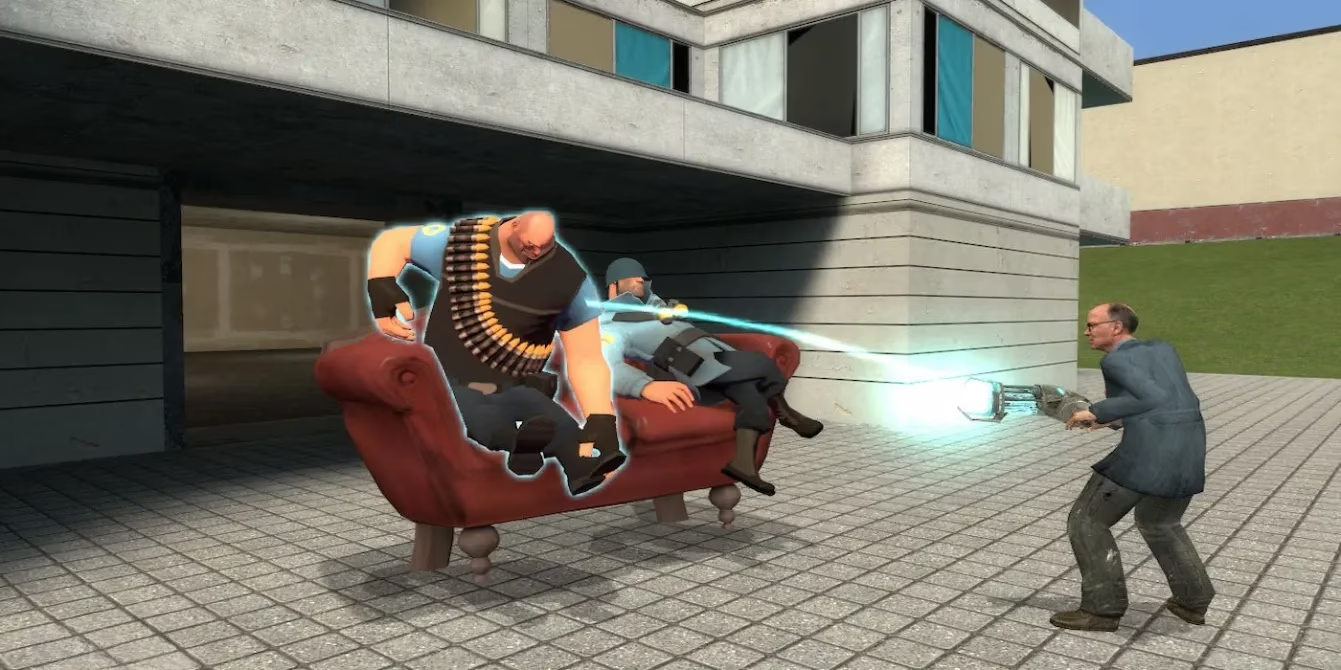
From structured terror, I step into pure, unbounded chaos. Garry's Mod was less a game and more a declaration of independence—a severing of the rules that bind a physics engine to a single purpose. It handed players the keys to the universe and said, "Build your own fun." What started as a playful experiment with Valve's Source tools became a cultural phenomenon, a digital Lego set of infinite scale. It transformed the act of play into an act of creation. Spawning a flock of wheeled toilets to chase a friend wasn't nonsense; it was collaborative poetry. The community's "addons" were like seeds carried on the wind, sprouting into everything from intricate role-play servers to the global hide-and-seek frenzy of Prop Hunt. Now, with s&box on the horizon using Source 2, the cycle begins anew. Garry's Mod taught us that a game engine is not a finished painting, but a tube of paints waiting for an artist.
No More Room in Hell: The Gritty Pulse of Survival
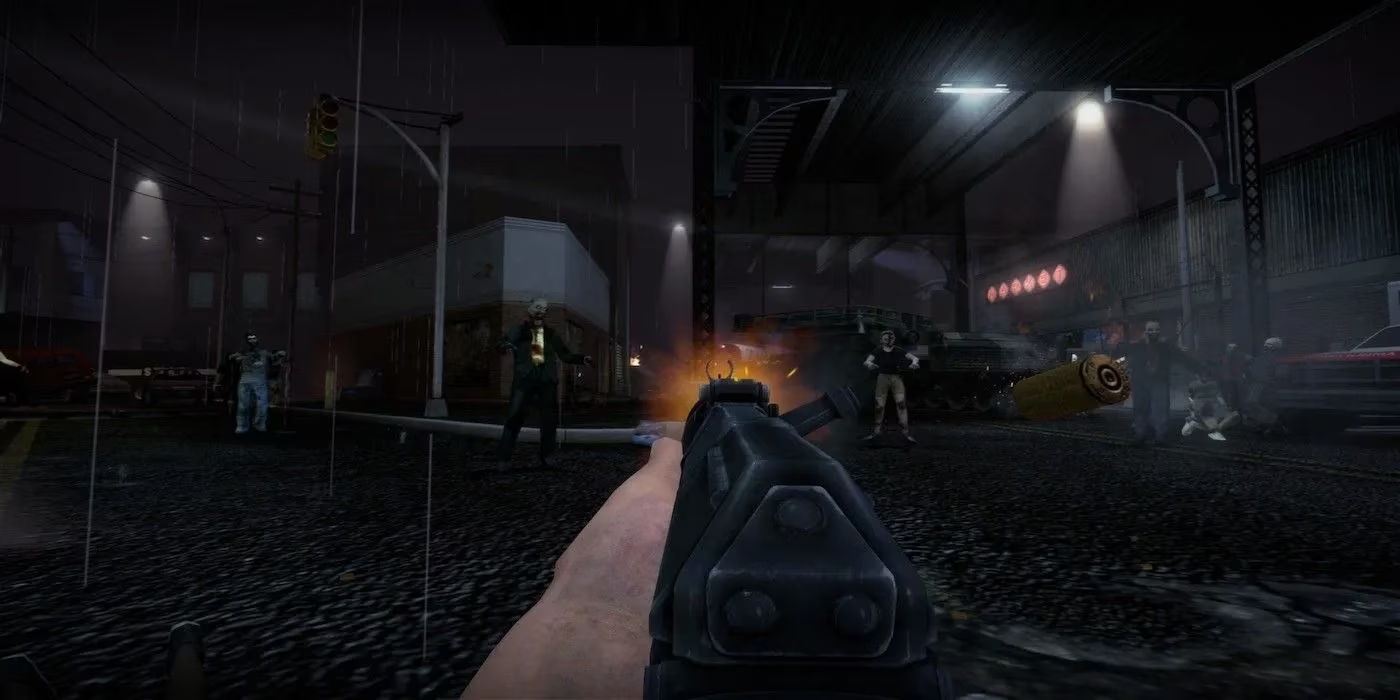
Seeking a different kind of tension, I enter a world stripped bare of comfort. No More Room in Hell took the co-op zombie formula and submerged it in ice water. By ruthlessly limiting resources and stripping away the guiding hand of a HUD, it turned survival into a desperate, whispered collaboration. Every bullet counted, every bite was a potential death sentence. This mod-turned-standalone felt less like a power fantasy and more like a grueling historical reenactment of collapse. The tension it cultivated was as palpable as a frayed nerve. The news of No More Room in Hell 2, slated for release years ago, shows how these roots continue to seek new ground. In an age of polished, forgiving games, this title's brutal honesty was a stark, necessary reminder of fragility.
The Forgotten City: Philosophy Etched in Code
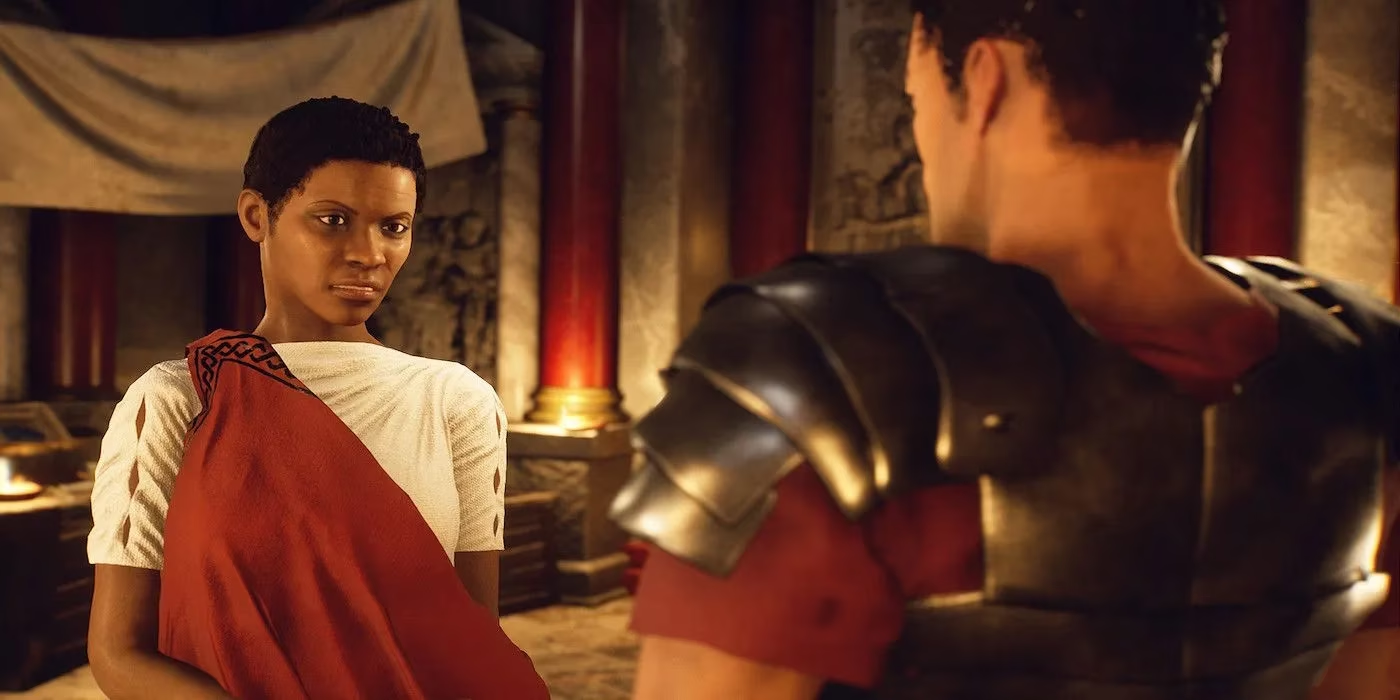
My journey takes a profound turn with The Forgotten City. What began as a meticulously crafted story within Skyrim's vast expanse grew into a masterpiece about consequence and morality. Transporting a player to a doomed Roman city governed by a divine "Golden Rule" was a narrative stroke of brilliance. The city itself functions like a perfect, cruel logic puzzle; one sin condemns all. Exploring its sun-drenched plazas and shadowy secrets, I wasn't just solving a mystery—I was engaging in a deep, interactive dialogue about justice, belief, and the social contract. Its transition from a beloved mod to a celebrated, award-winning standalone title in 2021 is perhaps the purest example of an idea outgrowing its initial home. It proved that the framework of a massive RPG could be the cradle for a story of intimate, philosophical scale.
The Alchemy of Community: A Reflection
As I survey these born-from-mods masterpieces, a pattern emerges. They are not mere copies or extensions, but metamorphoses. Each one represents a moment where a player's vision collided with a developer's toolkit, sparking a chain reaction of creativity.
| Mod Origin | Standalone Legacy | Core Transformation |
|---|---|---|
| Half-Life Mod | Cry of Fear (2013) | Action FPS → Personal Psychological Horror |
| Source Engine Toy | Garry's Mod (2006) | Scripted Game → Physics & Creativity Sandbox |
| Half-Life 2 Mod | The Stanley Parable (2013) | Linear Narrative → Meta-Commentary on Choice |
| Skyrim Mod | The Forgotten City (2021) | Open-World Fantasy → Tight Narrative Mystery |
| Warcraft III Mod | Dota 2 (2013) | RTS Map → Defining the MOBA Genre |
These creations are like spores released from a mature fungus, destined to find new ground and grow into entirely new organisms. They are also echo-locations in the dark, sent out by passionate creators and returning to them as fully-formed worlds shaped by the contours of player desire. And in the case of titles like Dear Esther, they were the first gentle cracks in a dam, releasing a flood of "walking simulators" that prioritized atmosphere and story over traditional action.
In 2026, this spirit is more alive than ever. The anticipation for mods like Half-Life Alyx: Levitation shows the cycle continues. We stand not at the end of this creative lineage, but in its ever-expanding present. These games remind me that the most enduring virtual worlds are often those that were never meant to be. They are happy accidents, stubborn dreams, and collective visions that refused to remain as simple modifications. They are the proof that sometimes, the most authentic voice in gaming doesn't come from a boardroom, but from a bedroom, where a fan, armed with nothing but passion and a modding tool, decides to build a door where the original creators only built a wall.
Comments