
From Mod to Marvel: The Hilarious Journeys of Fan-Made Games That Conquered the World
Explore the fascinating origin of legendary video games that began as humble mods, from the bizarrely brilliant Chex Quest to the mind-bending Antichamber and the empire-building Killing Floor. These digital creations prove that the most innovative and hilarious gaming experiences often emerge from passionate fan modifications, transforming simple add-ons into standalone masterpieces that captivate players worldwide.
Ever wondered where your favorite digital time-sinks come from? Sure, some are born in boardrooms from a spark of genius, while others are lovingly crafted in indie garages fueled by ramen and dreams. But the most delightfully chaotic origin stories belong to the games that started life not as games at all, but as humble modifications—or mods—tacked onto existing titles by passionate fans. These digital Frankensteins, stitched together from other games' code, have a habit of breaking loose, growing far beyond their creator's wildest dreams, and sometimes even eating their parent games for breakfast. It's a journey from the digital basement to the big leagues, and it’s far more common—and hilarious—than you might think. Let's dive into the wonderfully weird world of mods that grew up to be gaming legends.
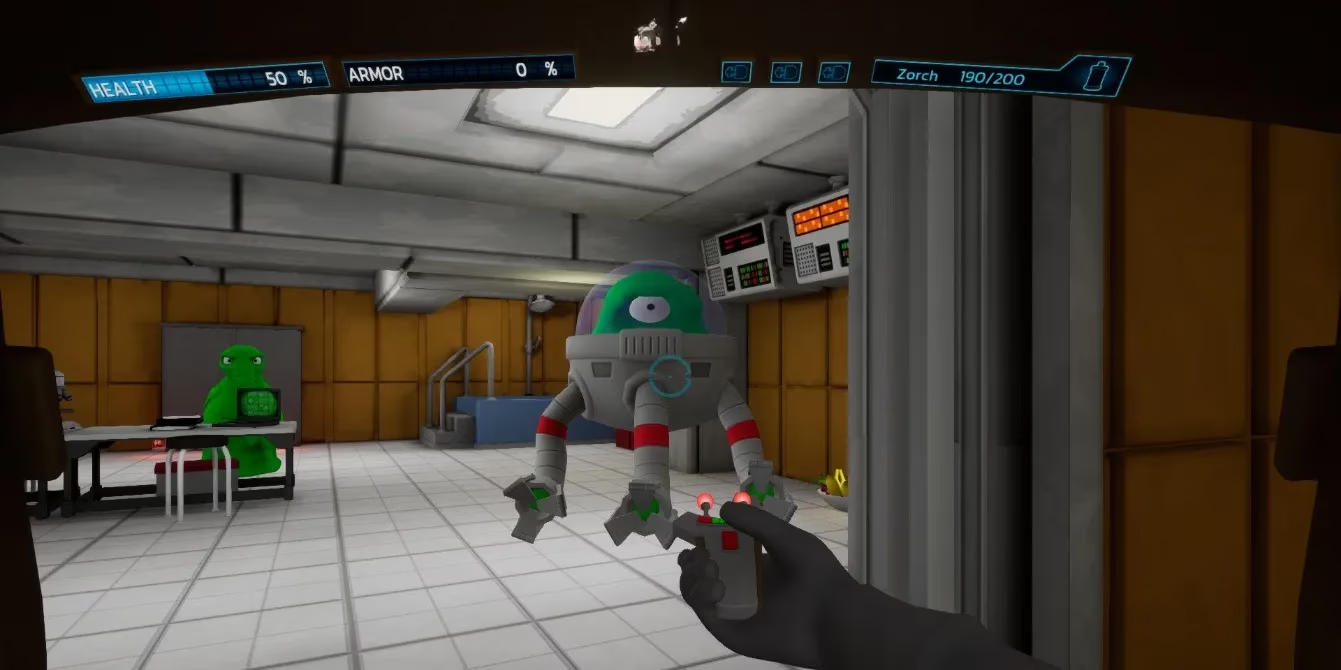
Who says breakfast cereal and interdimensional warfare don't mix? In a bizarre marketing move that feels like it was brainstormed after one too many bowls of sugary goodness, Chex Quest was born. This wasn't some cheap tie-in game; it was a full-blown, non-violent first-person shooter mod for the legendary Doom. Players were tasked with 'zorching' (not killing, heaven forbid!) the slimy Flemoid aliens back to their home planet of Bazoik. Imagine explaining that pitch: 'We'll take the hyper-violent demon-slaying engine of Doom, replace the demons with gooey aliens, the guns with cereal-themed zappers, and sell it in a box of Chex.' It's the kind of idea that should have been laughed out of the room, but instead, it became a cult classic, proving that sometimes, the weirdest mods have the most staying power.

If Chex Quest is the weird uncle of mod-to-game success stories, then Antichamber is the philosophical art student. It began its life as a mod inside Unreal Tournament 3, a game known for fast-paced arena shooting, not mind-bending spatial puzzles. Originally titled 'Hazard: The Journey of Life,' this mod was less about adding new guns and more about completely dismanting a player's perception of reality. With its impossible geometry, psychedelic visuals, and a gun that manipulates the environment instead of destroying it, Antichamber was a brain teaser that eventually escaped its shooter origins to become a standalone masterpiece. It’s the ultimate 'don't judge a book by its cover' tale—or in this case, 'don't judge a puzzle game by the murder-arena it was built in.'
Some mods aren't content with just being weird; they want to build empires. Take Killing Floor. What started as a mod for Unreal Tournament 2004, featuring players mowing down hordes of monstrous ZEDs, evolved into a full-fledged standalone title and eventually a successful sequel. Its success was so profound that it propelled its developer, TripWire Interactive, from a modding team into a full-blown game publisher. That’s the modding equivalent of starting a lemonade stand and ending up as the CEO of a multinational beverage corporation. Not too shabby for a project that probably began with someone saying, 'You know what Unreal Tournament needs? More zombies.'
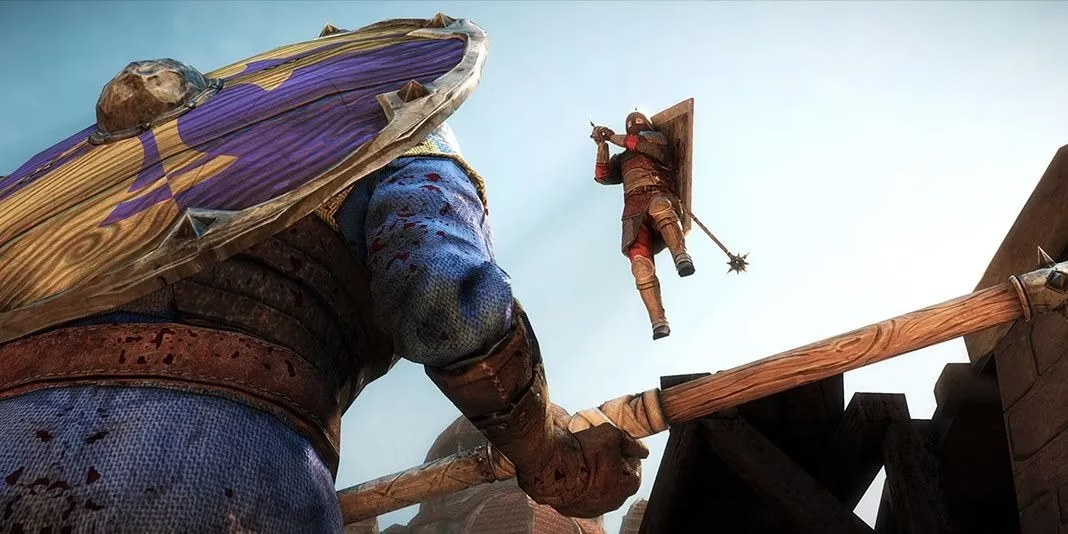
The Source engine, Valve's legendary game-making toolkit, has been a fertile playground for modders. While Half-Life 2 gave us a gripping narrative, its community gave us... medieval chaos. Chivalry: Medieval Warfare sprouted from the 'Age of Chivalry' mod, transforming Gordon Freeman's physics-based world into a brutal, first-person melee battleground. Imagine taking a game known for its gravity gun and headcrabs and deciding its true purpose was to simulate getting your arm chopped off by a broadsword. With up to 32 players clashing in arenas with dozens of historically-inspired weapons, Chivalry proved that sometimes the best way to honor a groundbreaking game is to use its tools to build something completely, gloriously different.
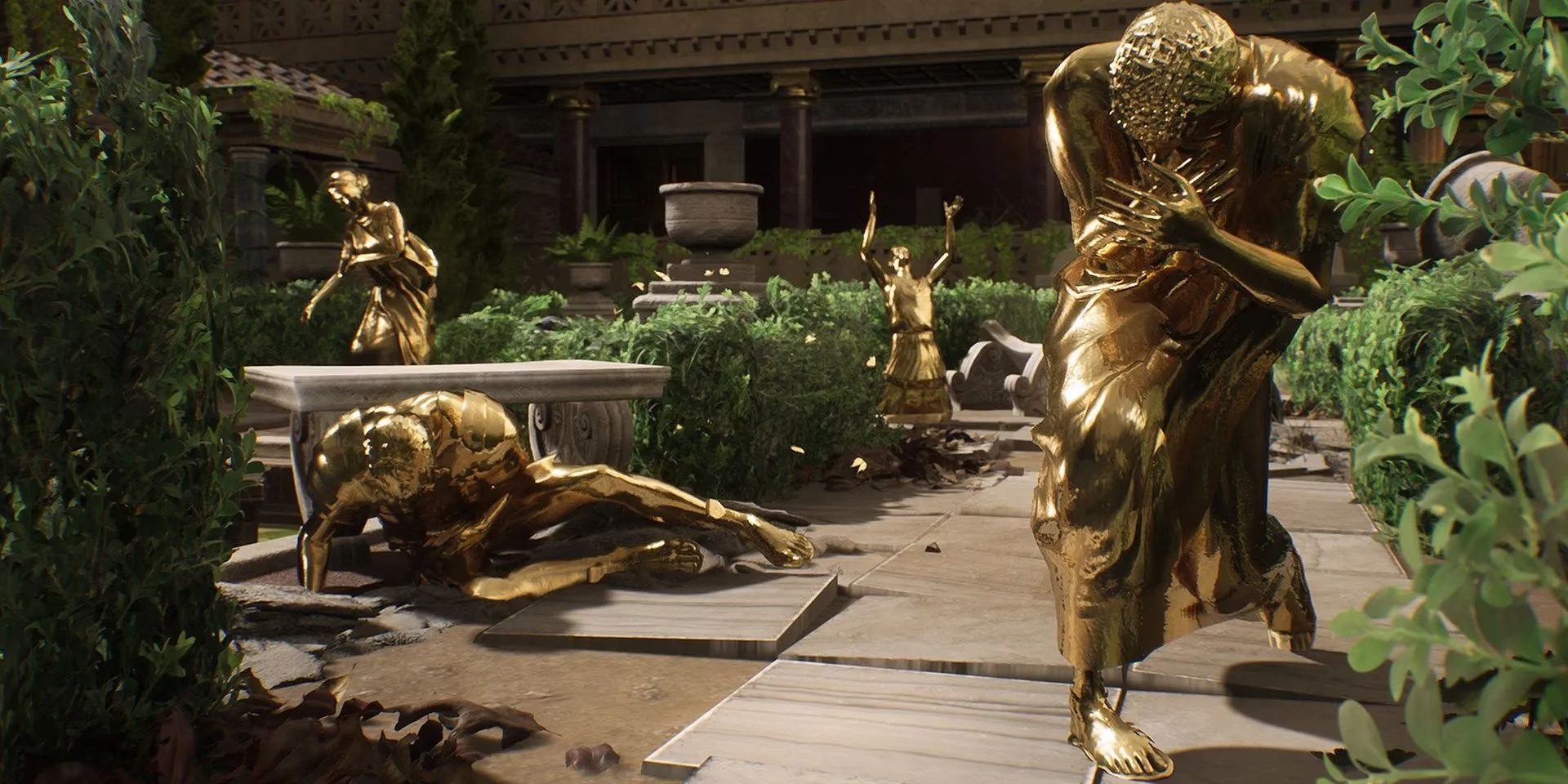
Other mod-turned-game stories are less about action and more about profound narrative ambition. The Forgotten City began as a wildly popular and award-winning mod for The Elder Scrolls V: Skyrim. While Skyrim is about shouting dragons off mountains, this mod was a tightly-wound, philosophical mystery involving a time-looping ancient Roman city. The creator didn't just tweak the gameplay; they built an entirely new narrative experience within the engine, focusing on moral choices and consequence. Its success as a mod was so overwhelming that it was rebuilt from the ground up as a standalone game, winning critical acclaim. It’s the story of a fan project so good, it graduated summa cum laude and got its own diploma.
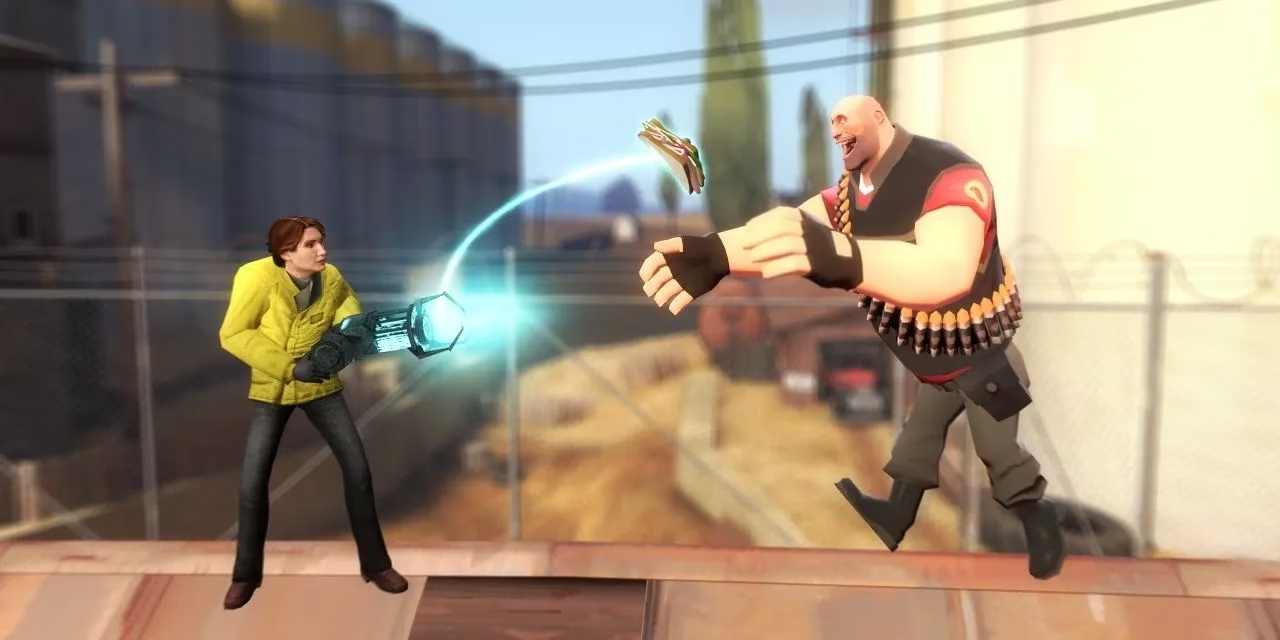
Then there's Garry's Mod, the ultimate celebration of playful chaos. This Half-Life 2 mod started with a simple, brilliant premise: 'What if we gave players the same physics toybox the developers use and just... let them go nuts?' The result wasn't a game with a set objective, but a physics sandbox where players could spawn characters, props, and tools from Valve's games to create anything from ridiculous scenes to complex game modes. Garry's Mod essentially weaponized creativity, spawning countless memes, videos, and community modes. It's the digital equivalent of being given the keys to a movie studio's prop warehouse and special effects department with zero instructions.

Speaking of meta-commentary, few games have deconstructed gaming itself as brilliantly as The Stanley Parable. Another Half-Life 2 mod alumnus, it took the grim, dystopian world of City 17 and turned it into a sterile office building narrated by a smug, omniscient voice. The mod was so distinct in tone, humor, and purpose that its journey to a standalone release felt inevitable. It's a game about choice, obedience, and the very nature of video game narratives, which is a pretty high-concept outcome for something that started as a reskin of a first-person shooter.
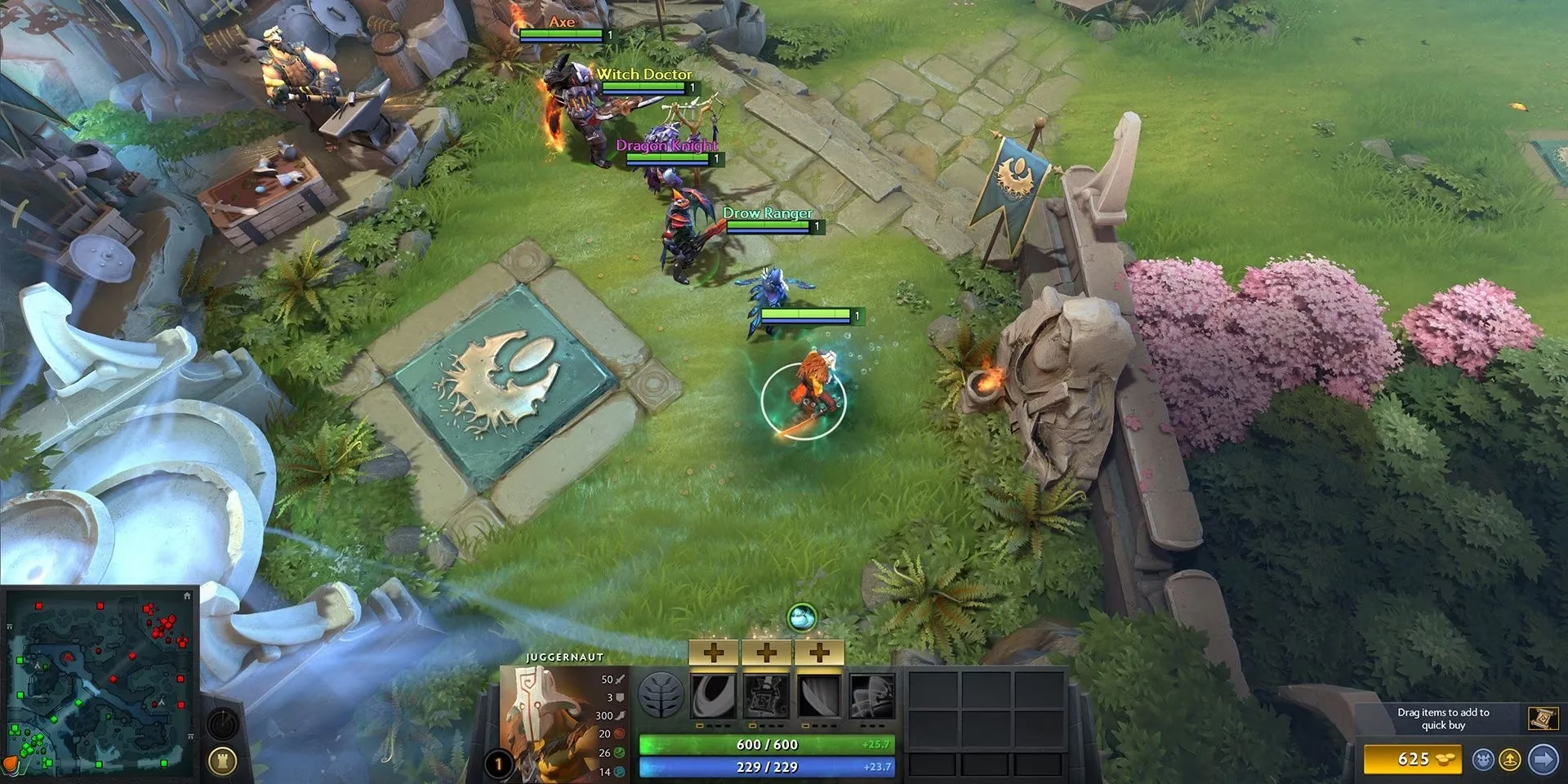
The modding-to-mainstream pipeline isn't a new trend; it's a cornerstone of gaming history. Valve itself is a master of spotting modding talent and bringing it into the fold. Team Fortress Classic, which defined class-based multiplayer for a generation, began as a Quake mod before Valve acquired it. The company repeated this trick with the MOBA genre-defining Defense of the Ancients (DotA), a Warcraft III mod. They didn't just publish it; they built the esports titan Dota 2 around its concepts. Valve's strategy seems to be: 'Why waste money on R&D when you can just watch the coolest stuff the community makes and give them a budget?'
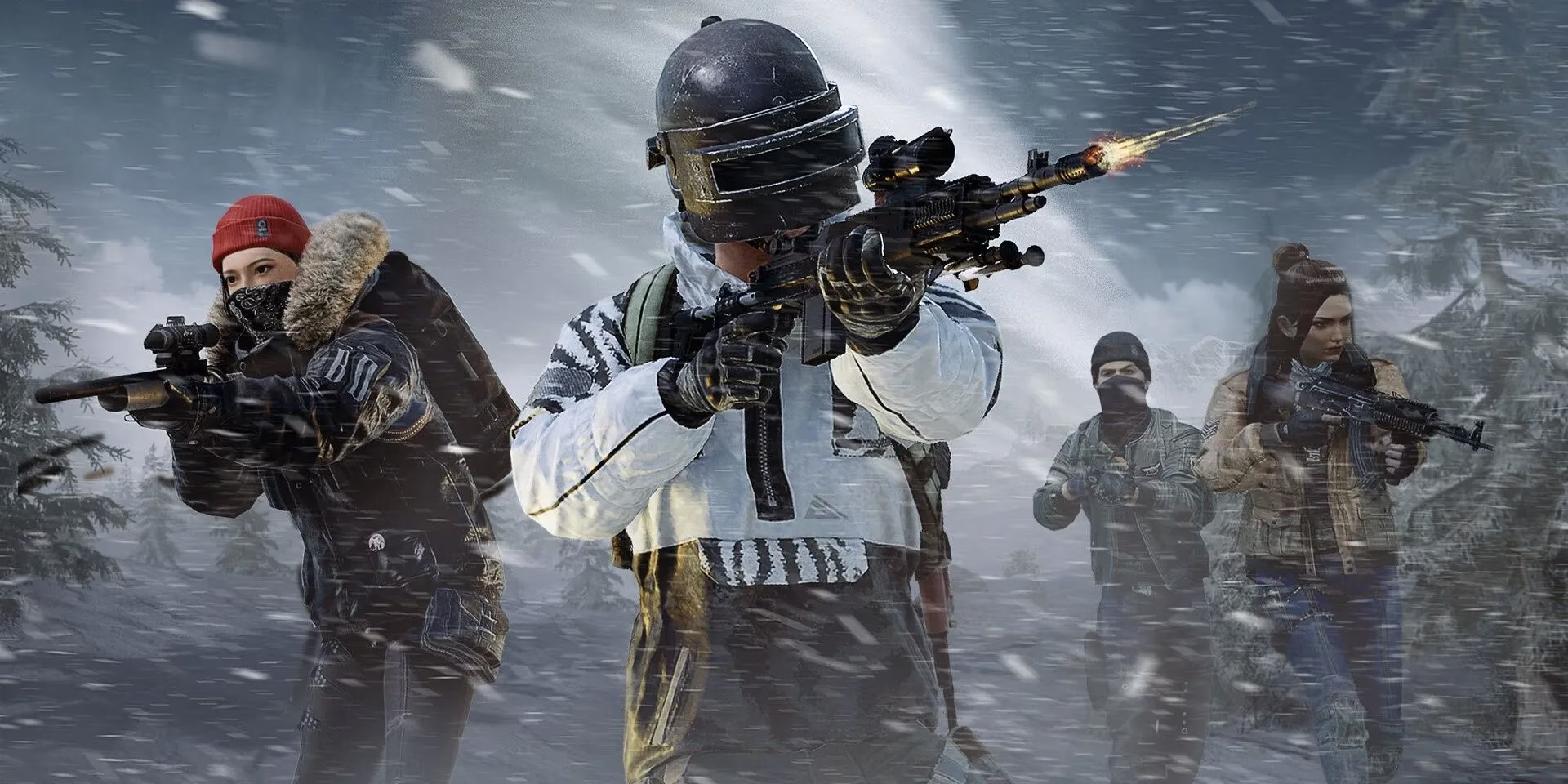
Perhaps the most explosive example in recent memory is PlayerUnknown's Battlegrounds (PUBG). The battle royale craze that took over the world in the late 2010s can trace its lineage directly back to a series of mods for military simulators like ARMA 2. Creator Brendan 'PlayerUnknown' Greene iterated on the 'last man standing' concept for years through various mods before the stars aligned for a standalone release. PUBG’s journey from a niche mod in a hardcore simulator to a global phenomenon that spawned an entire genre is the ultimate Cinderella story of the modding world. It’s proof that the next big thing in gaming is probably already out there, hiding as a fan-made add-on waiting for its moment.
So, what’s the lesson here? The line between 'fan project' and 'industry-defining masterpiece' is thinner than a hitbox in a fighting game. These stories show that mods are more than just add-ons; they are incubators for innovation, talent, and genre creation. They allow developers to cut their teeth, communities to shape their own experiences, and wild ideas to find an audience without a multi-million-dollar marketing campaign. As we look to the future in 2026, the next generation of groundbreaking games is undoubtedly being prototyped right now in some other game's engine, by someone sitting at their kitchen table, thinking, 'What if this game, but different?' And honestly, we can't wait to see what they come up with. 🎮✨
Comments