
DOTA 2: Dragon's Blood Season 3 - Easter Eggs and Game References Only True Fans Will Notice
DOTA 2: Dragon's Blood Season 3 dazzles with intricate references and iconic characters, delighting fans and deepening the show's lore.
As I watched the latest season of DOTA 2: Dragon's Blood, I was thrilled to spot the intricate web of references woven into the narrative, a testament to the show's deep reverence for its source material. Released in 2026, the series continues to be a masterclass in adaptation, blending original storytelling with countless nods that resonate profoundly with players like myself. These aren't just fleeting cameos; they are foundational elements that enrich the lore and create a delightful treasure hunt for those familiar with the game's universe. The third season, while pushing the story forward, feels like a love letter to the community, packed with details that reward the observant viewer.
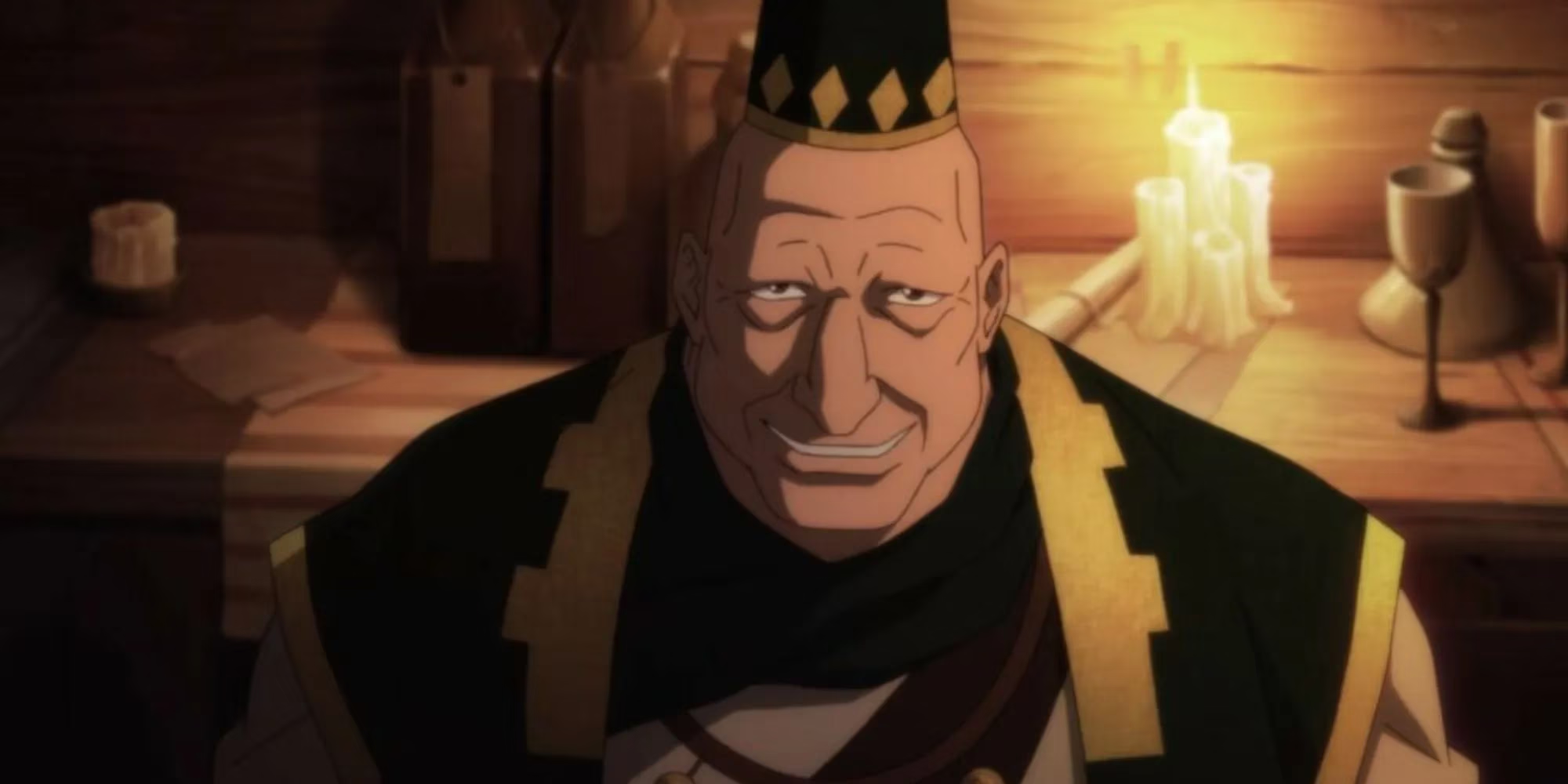
One of the most satisfying recurring appearances is The Secret Merchant, also known as the Shopkeeper. His role in the game is iconic—a neutral vendor in the Secret Shop, offering powerful items to all players regardless of their allegiance. In the series, he makes a crucial, albeit brief, return in the final episode of season three. This time, however, the dynamic is flipped; he's not selling, but buying. Mirana presents him with the Archronicus, and he asks what she desires in return. Her request is simple: for him to keep it safe. This subtle shift from merchant to custodian adds a new layer to his enigmatic character, perfectly capturing the neutral, almost omnipotent presence he holds in the game. It's a brilliant touch that connects the show's economy of magic and knowledge directly back to the in-game experience.
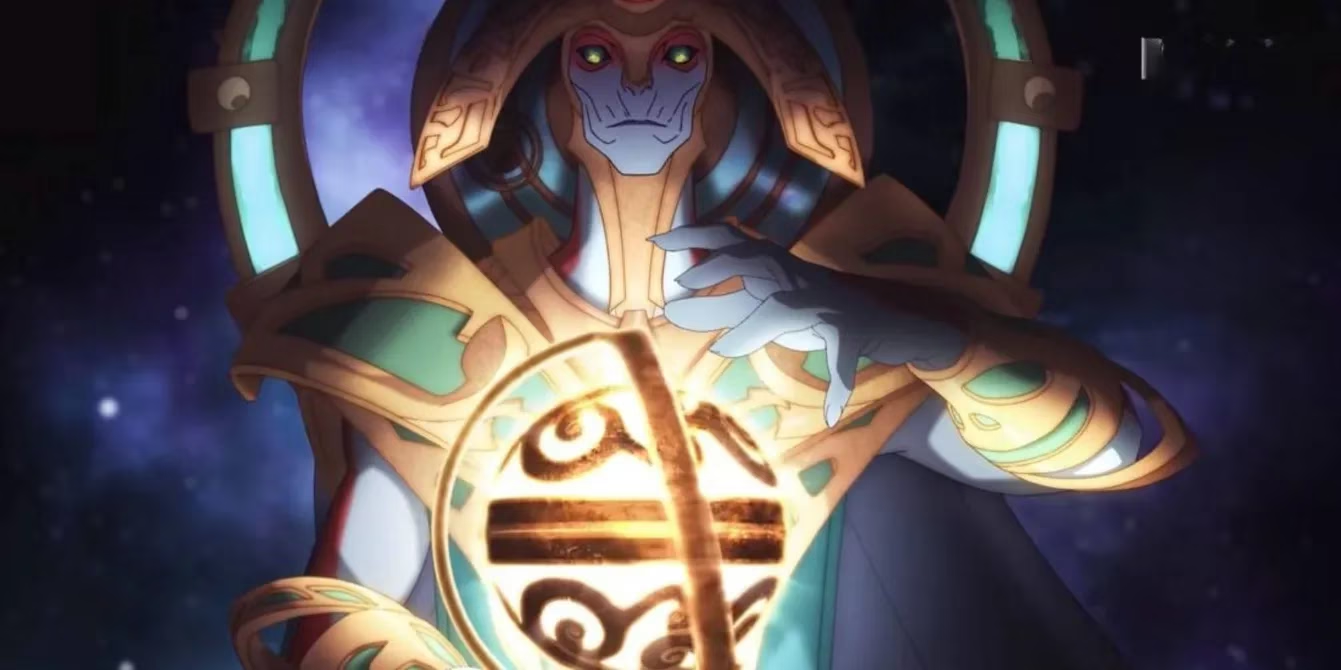
The lore deepens significantly with the personal introduction of The Oracle. Previously only mentioned as the source of the world-altering prophecy, he finally steps onto the stage in season three. Speaking to Mirana about the alternate realities crafted by the Invoker, his presence is both ominous and enlightening. As a game player, seeing Nerif The Oracle translated so faithfully was a joy. Unlike many other adapted heroes, his design undergoes minimal cosmetic changes. More importantly, his core identity remains intact: an overpowered entity whose power lies in foreseeing and manipulating future events. His dialogue in the show, cryptic and fateful, is a direct reflection of his in-game persona, making his scenes some of the most lore-dense moments for fans.
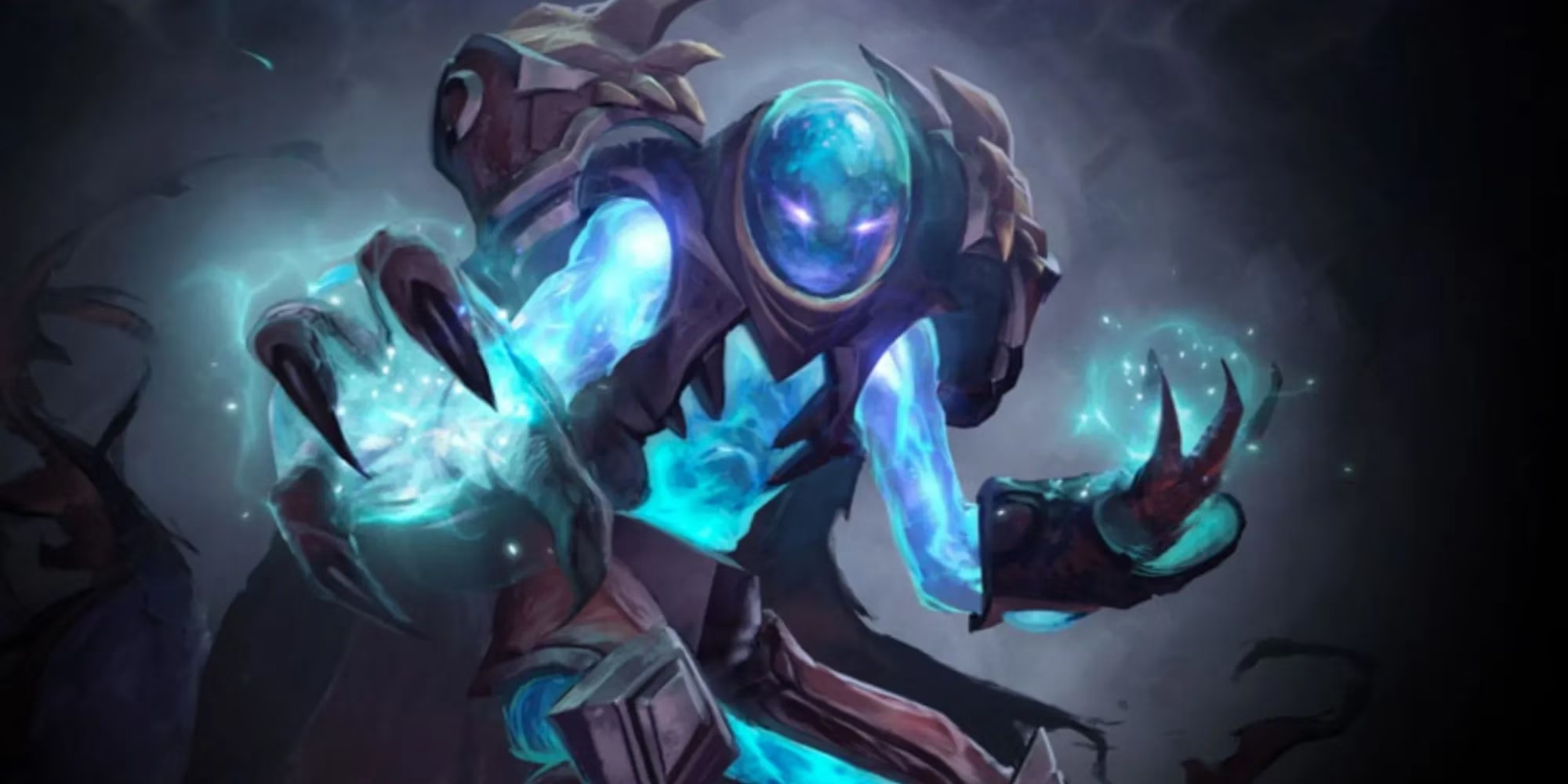
Perhaps the most dramatic game-reference moment involves the arrival of Zet, the Arc Warden. This primordial being, as old as the universe itself, appears to deliver a humbling lesson to the Invoker. For viewers who know the game, Zet's appearance is a massive deal. His incredible backstory and power level are legendary. In the show, he doesn't just talk; he acts, leading to a confrontation that results in the destruction of a moon. This event isn't just cool spectacle—it's a direct pull from the game's central lore. The falling Direstones that rain down afterward are a key component of the eternal conflict between the Dire and the Radiant. This scene is a reference within a reference: the moon's destruction mirrors a cataclysmic event in the game's history that Zet himself set in motion, involving a schism with his primordial siblings. Seeing this pivotal piece of lore play out on screen was utterly exhilarating.
Here are some of the key items and lore elements referenced in this climactic fight:
-
Direstones: The crystalline fragments of the destroyed moon, embodying the corrupting power of the Dire.
-
Radiant Ore: Their opposing force, though not shown here, is implied in the eternal balance.
-
The Self: Zet's term for his own consciousness, highlighting his unique, singular nature.
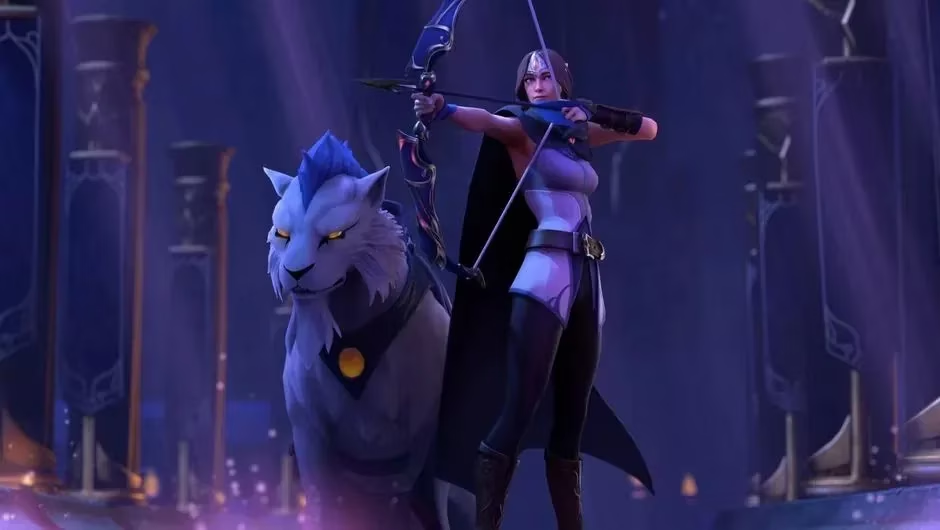
A more meta, but equally cherished, reference is the inclusion of Mirana's "Nightsilver" Persona. In DOTA 2, a Persona is a special kind of cosmetic that fundamentally changes a hero's appearance and aesthetics, similar to a 'skin' in other games. The Nightsilver Persona was originally a reward for players who participated in the Aghanim's Labyrinth event. What makes it special is that it's modeled directly on her anime design from Dragon's Blood. The show effectively came full circle, influencing the game's own cosmetics. While the original acquisition period ended years ago, the persona remains a coveted item, symbolizing the successful synergy between the series and the game. It's a detail only players would instantly recognize and appreciate, a badge of honor for fans of both mediums.
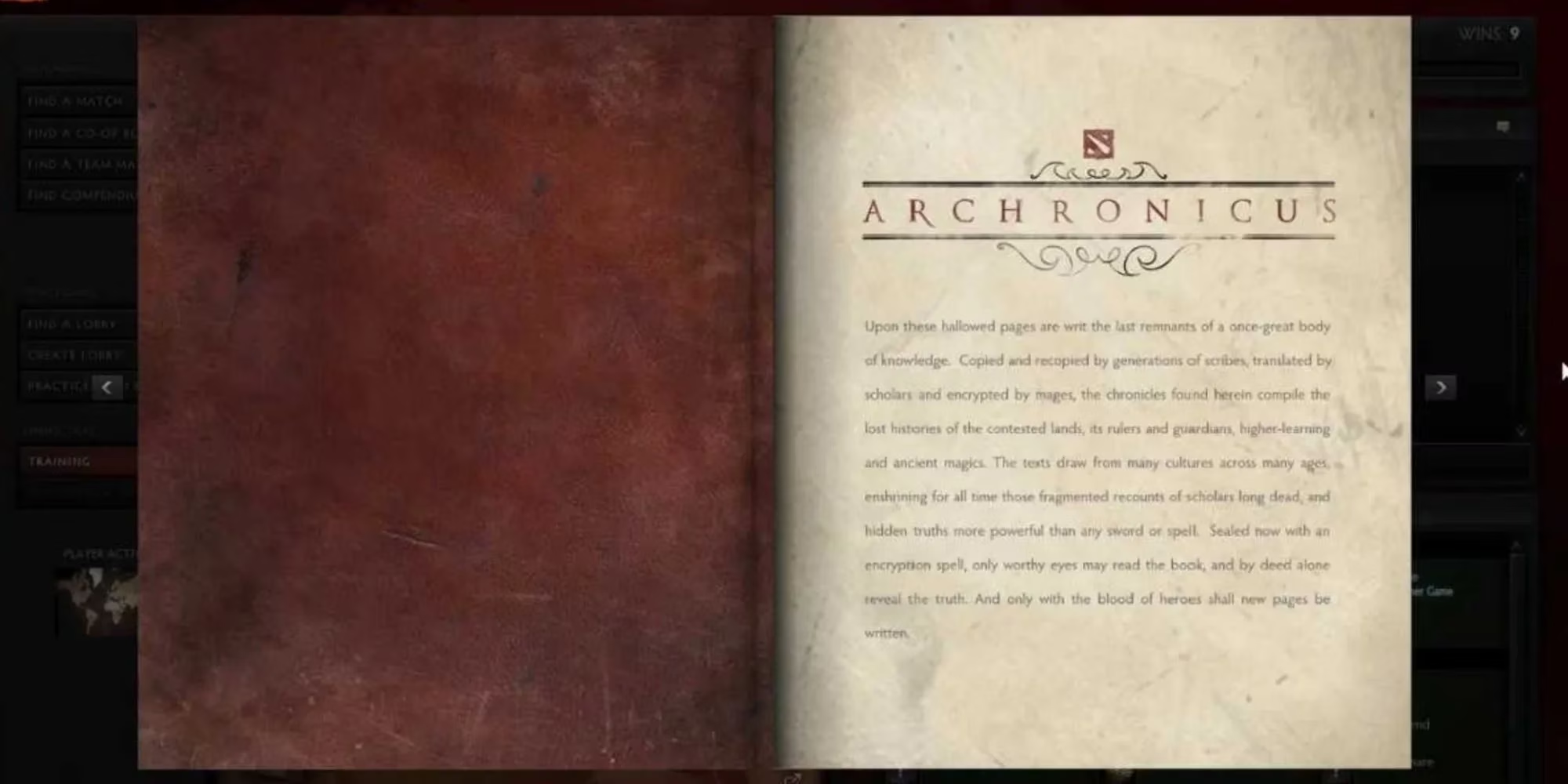
The final, deeply nostalgic Easter egg revolves around The Archronicus. In the series, this ancient tome contains the magical formulas for the Forge and is entrusted to the Secret Merchant. In the game's history, however, The Archronicus refers to an item that no longer exists. It wasn't a magical artifact; it was a collectible. Players could find scattered pages throughout the world that, when compiled, told the rich stories and history of DOTA's universe. The show reimagines it as a singular, powerful object, but the essence—a repository of world lore—remains the same. Mirana's act of giving it away for safekeeping mirrors how players once sought out these lore pages to understand the deeper narrative behind their battles. It's a beautiful homage to an obsolete game mechanic that old-school fans will remember fondly.
Easter Egg Summary Table
| Element in Show | Reference in DOTA 2 Game | Significance for Fans |
|---|---|---|
| The Secret Merchant (Buying) | The Secret Shop Keeper | Reverses his classic role, emphasizing his neutral, pivotal nature. |
| The Oracle's Prophecy | Hero: Nerif The Oracle | Brings a key lore hero to life with accurate personality and power. |
| Moon Destruction & Direstones | Arc Warden Lore & Core Game Conflict | Visually depicts a major lore event central to the Dire/Radiant war. |
| Mirana's Appearance | Nightsilver Persona Cosmetic | Shows the show's influence on the game, rewarding dedicated players. |
| The Archronicus Book | Obsolete Lore-Collectible Item | Nostalgic callback to early world-building efforts in the game. |
Beyond characters and items, the show continues a subtle tradition: naming episodes after lines from poetry, particularly T.S. Eliot's "The Waste Land." Season three draws from other Eliot poems like "The Hollow Men." This literary layer adds a sense of epic melancholy and fragmentation that oddly mirrors the complex, often non-linear nature of DOTA's own lore. It's a sophisticated touch that, while not a direct game reference, creates a thematic bridge that die-hard fans of both the game and literature can enjoy decoding.
Watching Dragon's Blood in 2026, I'm struck by how it has evolved beyond a simple adaptation. It has become a complementary pillar of the DOTA 2 universe. The Easter eggs are not afterthoughts; they are structural beams. From the cosmic intervention of the Arc Warden to the intimate handing over of the Archronicus, every reference serves to deepen the connection between the screen and the server. For us players, it transforms viewing from a passive activity into an interactive experience of recognition and discovery, proving that the heart of the game beats strongly within the soul of the show. 😊
Comments