
Auto Chess Confessions: How I Learned to Stop Worrying and Love the RNG
Learn Dota 2 Auto Chess basics with this beginner's guide to synergy combos, gold strategy, and surviving the auto battler mayhem.
If you had told me back in 2023 that I\u2019d someday spend afternoons yelling at tiny Dota 2 heroes fighting on chessboards, I\u2019d have laughed. Yet here we are, 2026, and I\u2019m deep in the auto-battler rabbit hole. Auto Chess mode inside Dota 2 isn\u2019t new, but it\u2019s aged like fine wine\u2014still chaotic, still addictive, and still ready to humble anyone who thinks they\u2019ve mastered it. I was a beginner once, drowning in goblins and mechs, wondering why my three-star Timbersaw kept getting deleted. If you\u2019re new to this glorious mess, grab a drink and let me walk you through the beautiful mayhem.
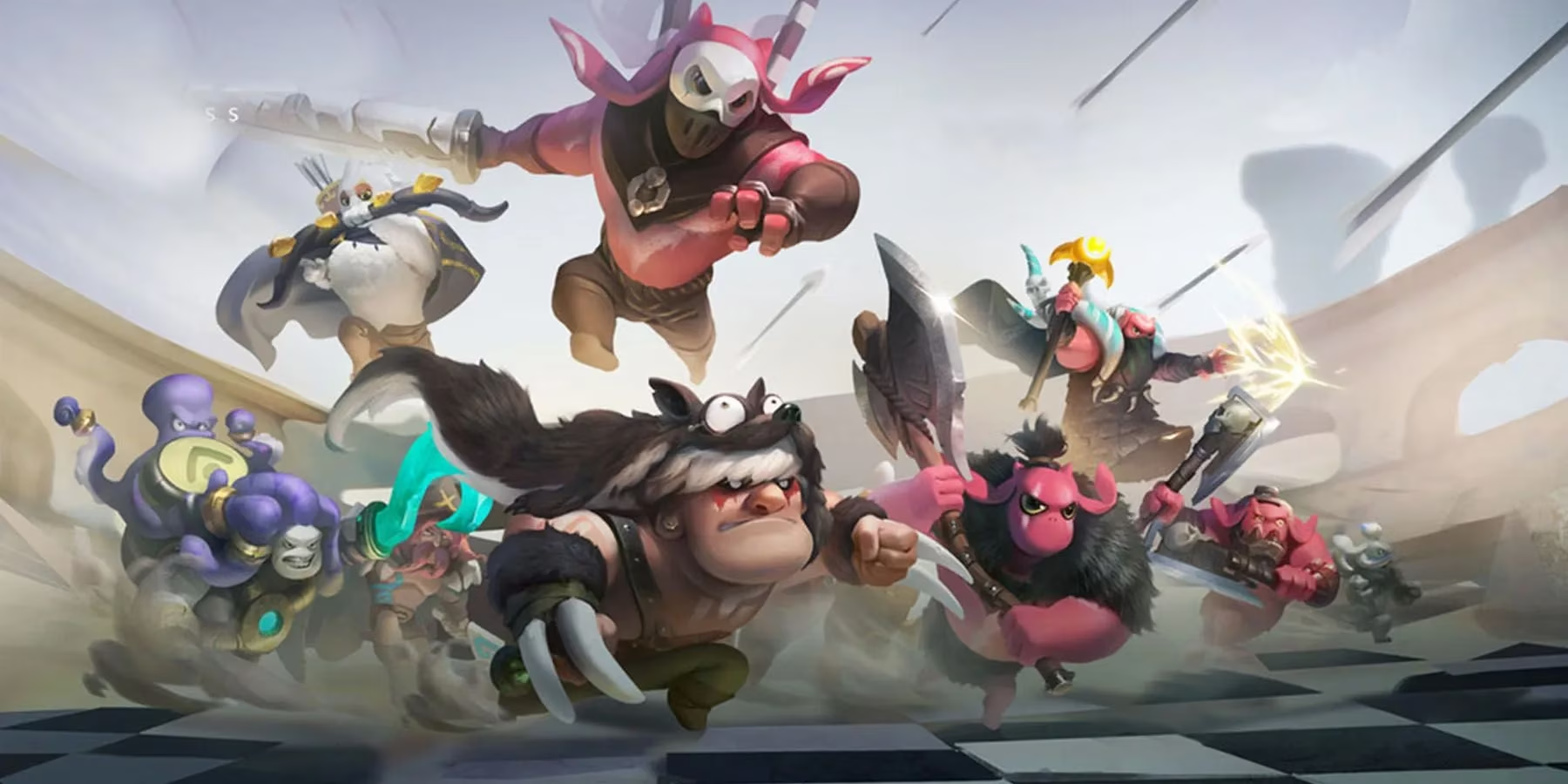
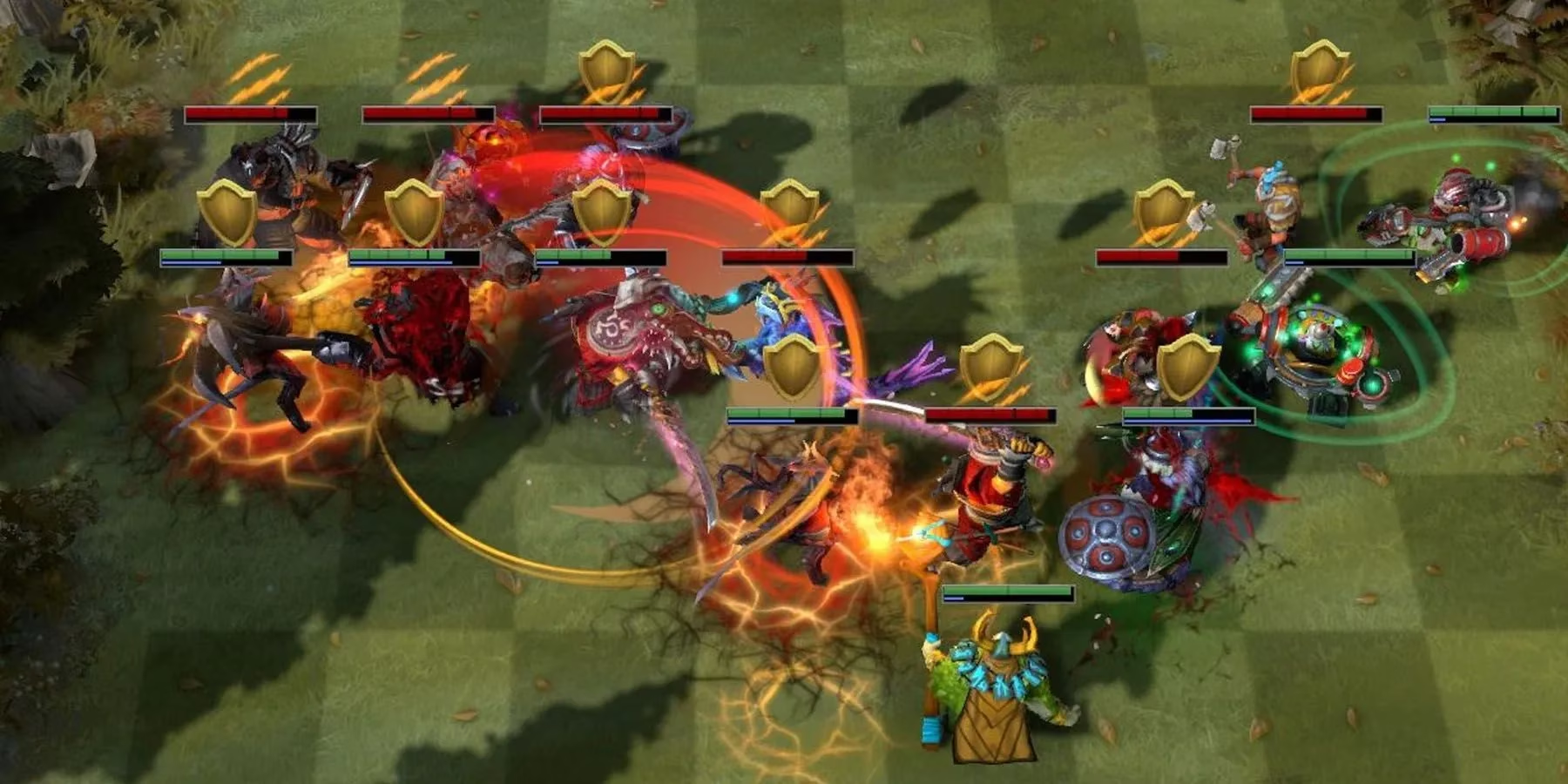
Before anything else, forget regular chess. This is a brawl where your pieces are Dota 2 heroes crammed onto an 8x8 grid, fighting automatically while you sweat over synergies. In the client, the mode lives as a downloadable custom game. An overworld holds multiple boards, and after three practice rounds against AI, it\u2019s pure PvP carnage. The goal? Be the last board standing. It feels like a strategy game, a slot machine, and a soap opera rolled into one\u2014all because RNG decides which heroes you even get to buy.
The Round Rhythm: Buy, Pray, Fight
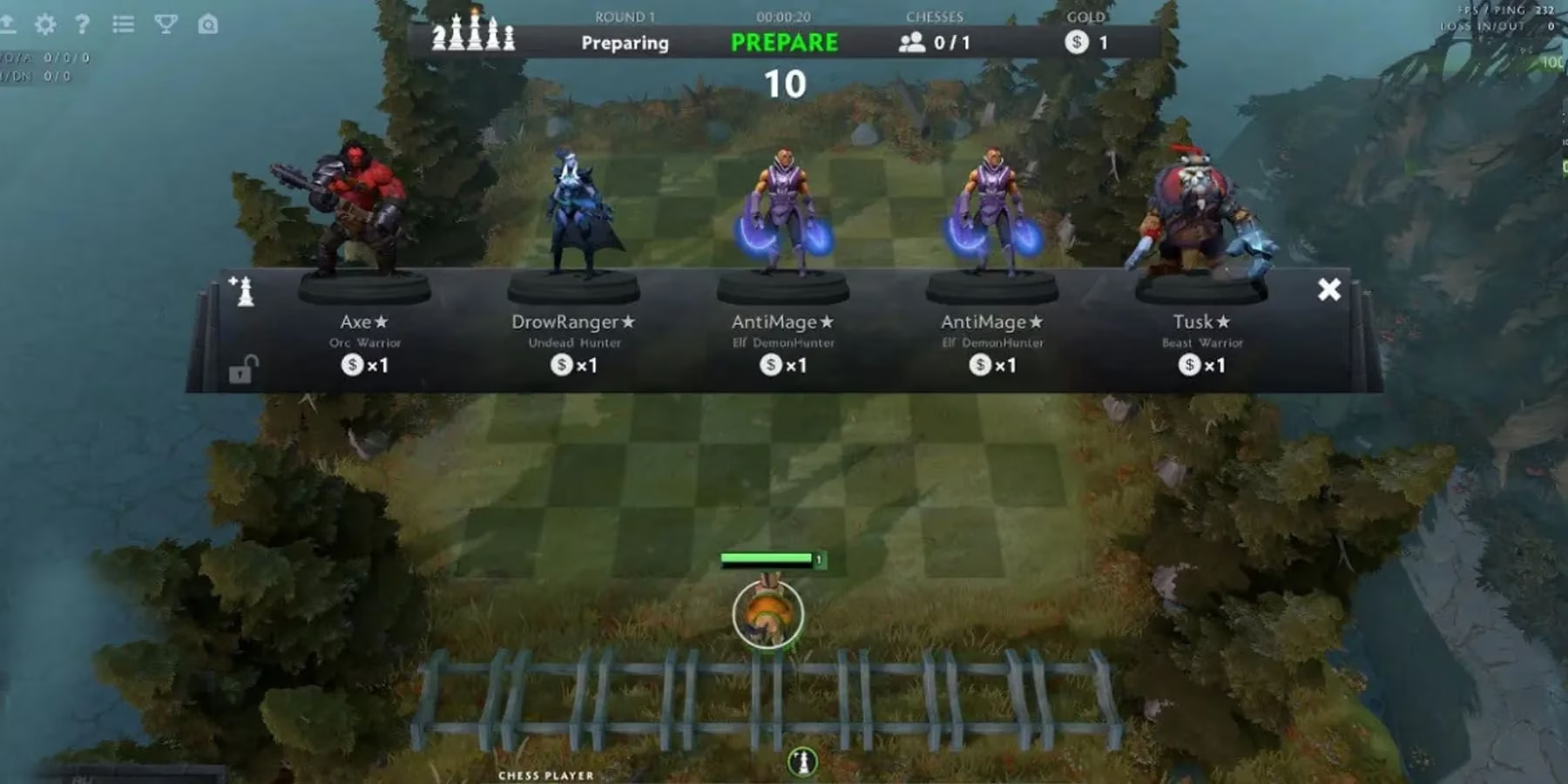
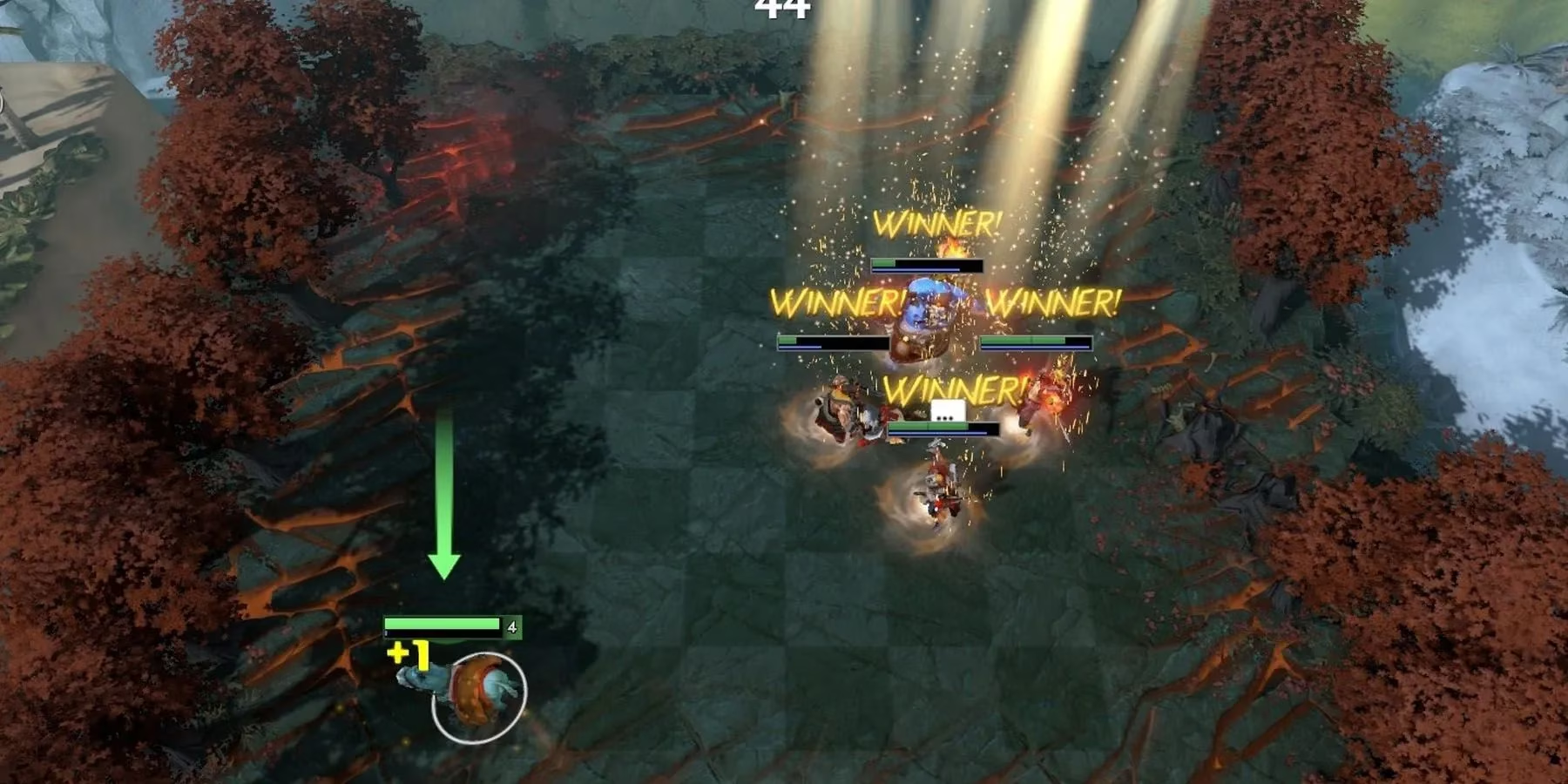
Every round follows a simple loop, but simplicity is deceptive. First comes the Buy Mode\u2014a brief window where the game shoves a random selection of heroes in your face. You can snap them up with gold, or \u201cpadlock\u201d them for the next turn if your purse is light. I\u2019ve lost count of how many times I locked a Drow Ranger only to realize I had three gold and a dream. Then comes the Combat Mode: your units and the enemy\u2019s smash into each other without your input. All you can do is watch, cheer, and maybe cry a little. As foes fall, they drop gifts containing items or gold. Grabbing those and equipping items correctly is where the micro-adrenaline lives.
Gold Is Life, Gold Is Stress
The economy in Auto Chess is a whole minigame. You get base gold each turn, but that\u2019s just the appetizer. Winning streaks shower you with bonus gold, so momentum matters massively. You can spend gold to level up your courier, which lets you field more units. Or you can hoard it to reroll for that last piece of your five-star combo. The tension is real: do I take that shiny Medusa now, or level up and place my second Treant Protector? More often than not, my greed backfires. Items drop from gifts, and they combine into stronger versions\u2014a system that rewards obsessive planners. Nothing beats slapping a Mask of Madness on your assassin and watching the kill feed light up.
Species and Classes: The Synergy Soup
Units have two labels: Species (like Demon, Goblin, Naga) and Class (Assassin, Knight, Mage, etc.). Stacking multiple units of the same type unlocks bonuses. Three warriors? Extra armor. Two demons? Bonus pure damage. Six beasts? Your whole team becomes feral. Learning these synergies is the heart of the game. I once thought \u201cbig numbers go brrr\u201d would carry me\u2014spoiler: it didn\u2019t. Synergies matter way more than a few expensive units. A well-synergized board of cheap goblins and mechs can demolish an uncoordinated pile of legendaries. The trick is balancing your front line, damage, and utility while keeping an eye on what opponents are collecting. If three people are hoarding Warriors, maybe pivot to Assassins. The game silently signals these things, and reading the draft is a skill you\u2019ll develop after enough heartbreaks.
Star Power: Three Are Better Than One
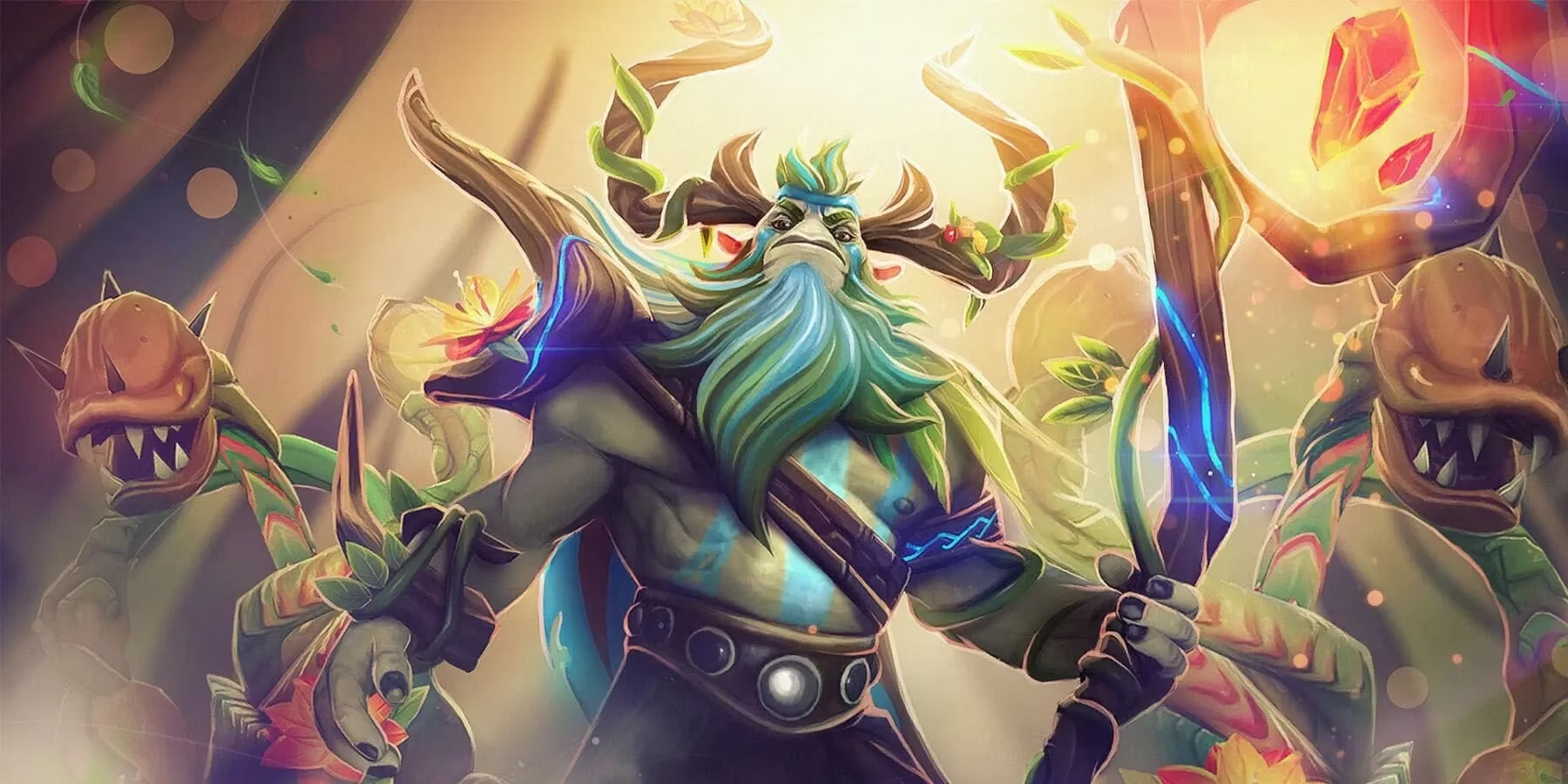
You can combine three identical 1-star units into a 2-star version, and three 2-star units into a 3-star monster. A 3-star hero is roughly double the stats of a 2-star, sometimes with an insane passive. This makes even early-game units terrifying if you commit. My favourite underdog story? A 3-star Enchantress healing her way through six rounds of punishment while a fully loaded 1-star Dragon Knight just napped in the corner. There\u2019s a twist with Druids: they combine with only two of the same kind if you also have another unique Druid on board. To make a 3-star Druid, you need two 2-star copies plus three other unique Druids. It sounds confusing, but after a few games you\u2019ll be exploiting it like a pro. This rule alone has saved my bacon when I can\u2019t roll the third copy normally.
Noob-Friendly Builds That Don\u2019t Suck
When I started, I clung to two setups like a life raft: Warriors and Goblins/Mechs. Warriors are cheap, tanky, and pack enough punch for the early game. Axe, Juggernaut, and Tusk form a sturdy frontline without breaking the bank. Goblins and Mechs are the ultimate rush comp\u2014Clockwerk, Tinker, Timbersaw\u2014affordable, synergistic, and capable of stomping rounds 1-10. Druids are a decent middle ground, offering healing and bear-spam if you highroll. The point is to survive long enough for your economy to snowball. Don\u2019t try to force a flashy six-Mage comp on your first go; you\u2019ll just stare at a \u201cgame over\u201d screen by round 15.
The Unseen Variables: RNG, Drafting, and the Dreaded Timer
RNG isn\u2019t just a factor; it\u2019s the puppet master. The hero pool is shared among players, so if three opponents are collecting the same species, your odds of finding those units shrink. Adapt or perish. The Buy Phase timer is a silent killer. If you overfill your board and time runs out, the game automatically boots your cheapest units to the bench. I\u2019ve lost key synergy pieces this way, then wept as my lone Tinker got flattened. Always leave a few seconds to position, especially when you\u2019re about to field a new star. Speaking of positioning, frontlining your melee brutes and hiding your squishy casters in the back corners can turn a losing fight. Little details matter.
Auto Chess may look like a casual mini-game, but underneath is a deep, infuriating, and brilliant strategy layer. I\u2019ve laughed at improbable comebacks, cried at last-second sell mistakes, and learned that no plan survives contact with RNGesus. The mode has only gotten more polished since its inception, with the community still thriving in 2026. My advice: embrace the chaos, keep an eye on your timer, and never underestimate a three-star Tusk. See you on the chessboard\u2014I\u2019ll be the one desperately rerolling for a second Treant.
Data referenced from SteamDB helps put Dota 2’s Auto Chess staying power into context: when a custom mode keeps attracting players over time, it’s often because the core loop (buy, streak, level, reposition) remains readable even while the outcomes stay wildly unpredictable. That same push-pull is exactly what makes new players feel both empowered and bullied—your decisions around economy pacing, bench management, and reroll discipline matter, but only insofar as they let you survive the shared hero-pool chaos long enough to spike a synergy or hit a key upgrade.
Comments